studio / on-this-day / Jun 12
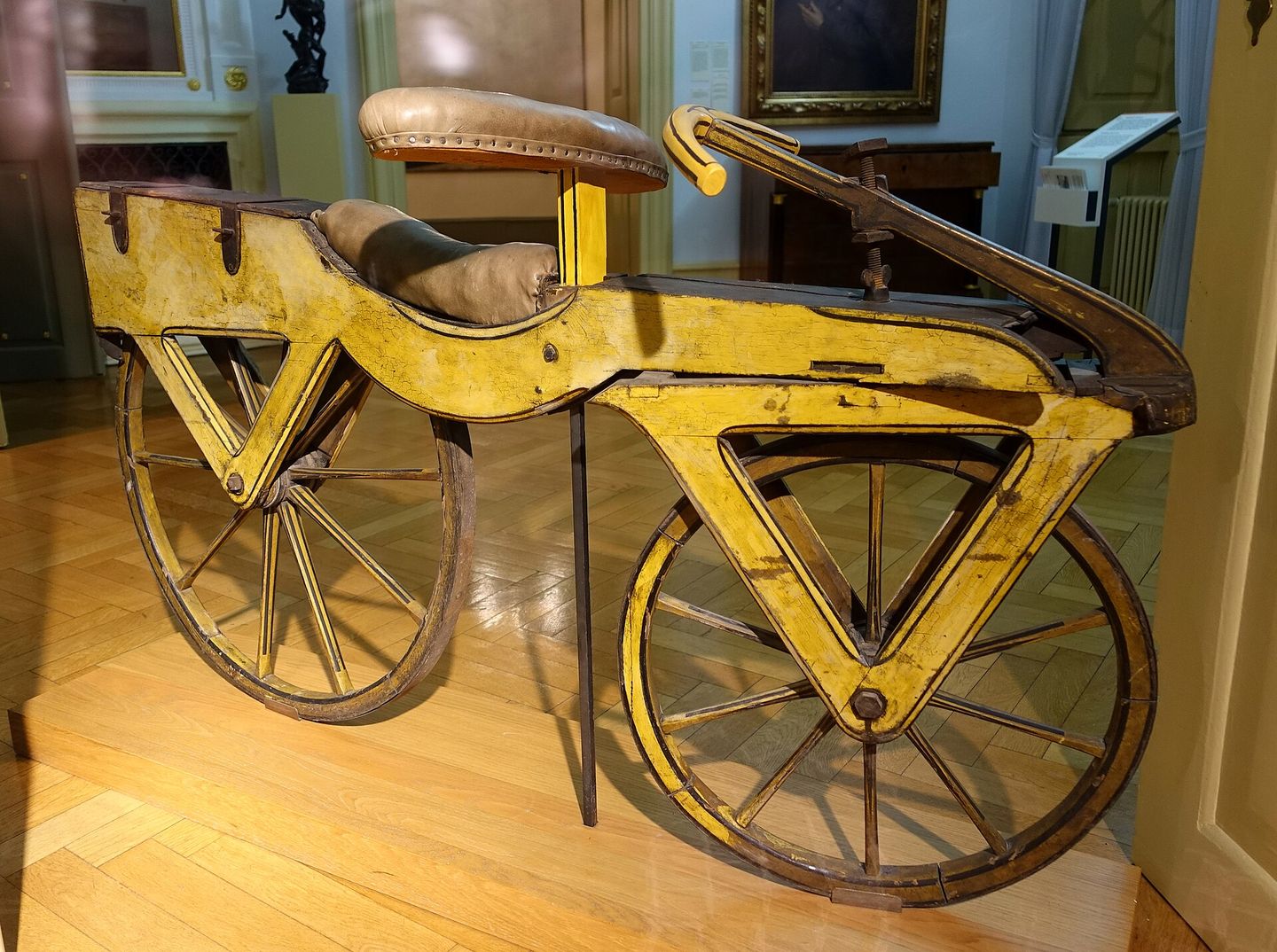
A surviving Draisine, or running machine, from around 1820. public domain, via Wikimedia Commons
The First Machine You Could Ride
On this day in 1817 — Karl Drais rode his two-wheeled running machine seven kilometers in about an hour, and the ancestor of the bicycle was born.
4 min read
On June 12, 1817, in the German city of Mannheim, Karl Drais pushed off from the ground on a strange two-wheeled contraption and rolled about seven kilometers to the village of Rheinau and back, in a little over an hour. That was faster than walking, and it was the first time in history a person had traveled overland under their own power on a machine. He called it the Laufmaschine, the running machine. It had no pedals; you drove it by pushing your feet along the ground. But it had the two things that make a bicycle a bicycle: two wheels, one behind the other, and a handlebar to steer.
The timing was not an accident. The year before, 1816, had been the year without a summer, the sky dimmed by ash from the eruption of Mount Tambora on the far side of the world. Crops failed, famine spread, and horses, suddenly too expensive to feed, died or were slaughtered in large numbers. Drais, among other things, was hunting for a way to get around that did not depend on a horse. A volcano on one continent helped invent personal transport on another.
The genuinely radical idea buried in the running machine was balance. Everyone assumed a two-wheeled vehicle would just fall over. Drais showed that once it was moving, and once the rider could steer, it stayed upright on its own. Motion plus steering equals stability. That single counterintuitive fact is the thing every bicycle and motorcycle since has been built on, and no one had demonstrated it before.
The machine became a brief craze across Europe, nicknamed the dandy horse, and then it faded. The roads were bad, riders took to the smooth pavements and got themselves banned in several cities, and the thing was hard work without pedals. It took decades of other people's additions to finish the idea: pedals in the 1860s, a chain driving the rear wheel and two equal-sized wheels in the 1880s, air-filled tires soon after. Only then did the bicycle become the machine we know.
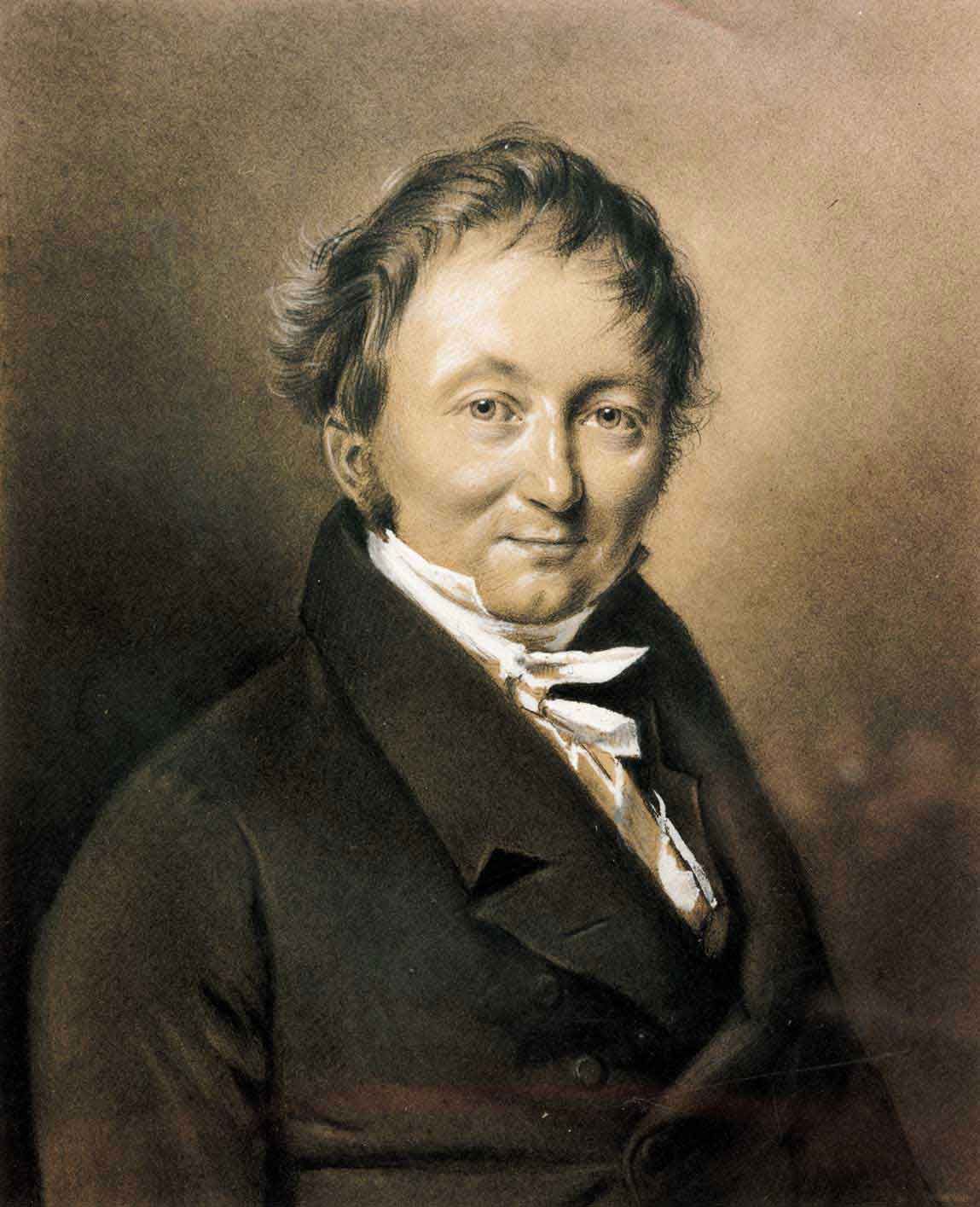
Karl Drais, inventor of the running machine. Public domain, via Wikimedia Commons
And what a machine it turned out to be. A person on a bicycle is one of the most energy-efficient travelers on Earth, going farther on a given amount of energy than a car, a train, or almost any animal. It handed ordinary people cheap, independent movement, and it did something quietly enormous for women in particular; Susan B. Anthony said it had done more to free them than anything else in the world. A simple frame and two wheels widened the radius of a normal life.
It also became a nursery for other technologies. Bicycle makers pioneered ball bearings, tension-spoked wheels, chain drives, lightweight steel tubing, and the kind of precise, affordable mass manufacturing that the first cars and airplanes would need. It is no coincidence that the Wright brothers ran a bicycle shop; the skills and the supply chain of bicycle building fed straight into the machines that came after.
It all traces back to one man, a distant catastrophe, a shortage of horses, and the strange discovery that you can stay upright on two wheels as long as you keep moving. Steve Jobs liked to call the personal computer a bicycle for the mind. The bicycle got there first, and literally: the original machine for turning a little human effort into a great deal more range.
studio / on-this-day / Jun 12