studio / on-this-day / Jun 11
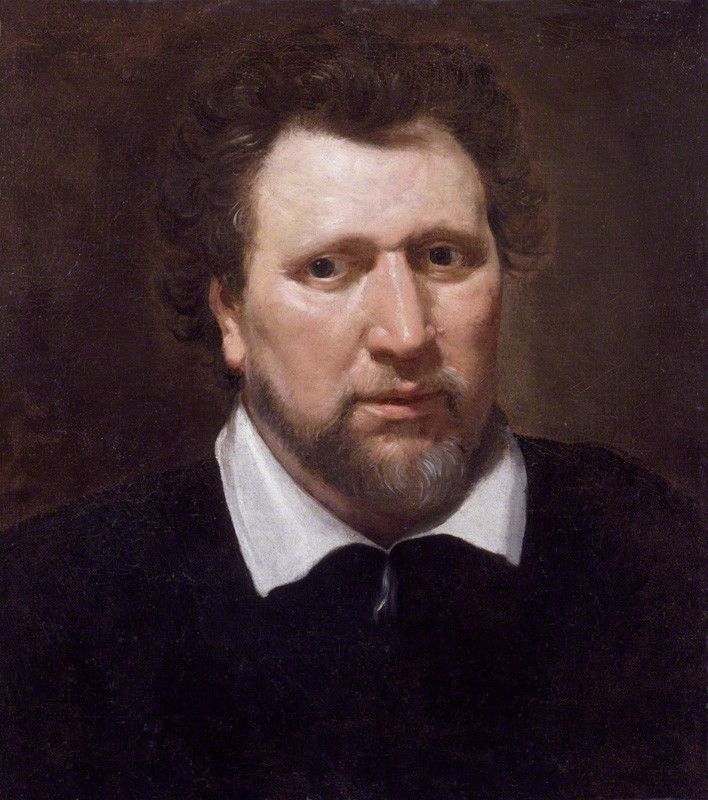
Ben Jonson, playwright and poet, painted by Abraham van Blyenberch, c. 1617. After Abraham van Blijenberch, Public domain, via Wikimedia Commons
Building in Language
On this day in 1572 — Ben Jonson was born, a playwright and former bricklayer who built his plays the way a mason builds a wall.
3 min read
Ben Jonson was born on June 11, 1572, in London, a month after his father died. His mother remarried a bricklayer, and Jonson learned the trade as a boy. He laid bricks, mixed mortar, and built walls. He hated it. What he wanted was to write, and eventually he did, but the experience of construction stayed with him. His plays were not improvised. They were engineered. He wrote with the precision of someone who knew that if a foundation was weak, the whole structure would collapse.
Jonson attended Westminster School, where he studied Latin, Greek, and classical rhetoric. He never went to university, a fact that bothered him his entire life. He envied the formal education of his contemporaries, but he compensated by reading obsessively and cultivating friendships with scholars. He was self-made in the truest sense, building his knowledge the same way he had built walls: one piece at a time, carefully, with attention to where the weight would fall.
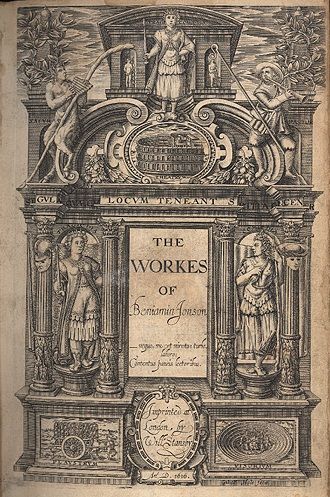
Title page of Ben Jonson's 1616 Folio Works — the First time an English author had collected their own plays and poems into a single volume. Ben Jonson, Public domain, via Wikimedia Commons
His first major success as a playwright came in 1598 with "Every Man in His Humour," a comedy of manners that dissected human folly with surgical precision. William Shakespeare acted in it. The two men knew each other well, and their relationship was complex. Jonson admired Shakespeare but also found him frustrating. Shakespeare's plays were sprawling, loose, full of improbabilities. Jonson's were tight, controlled, constructed according to classical principles. He believed in the unities of time, place, and action. He believed in satire that had a point. He believed that if a play was going to be performed, it should be worth the audience's time.
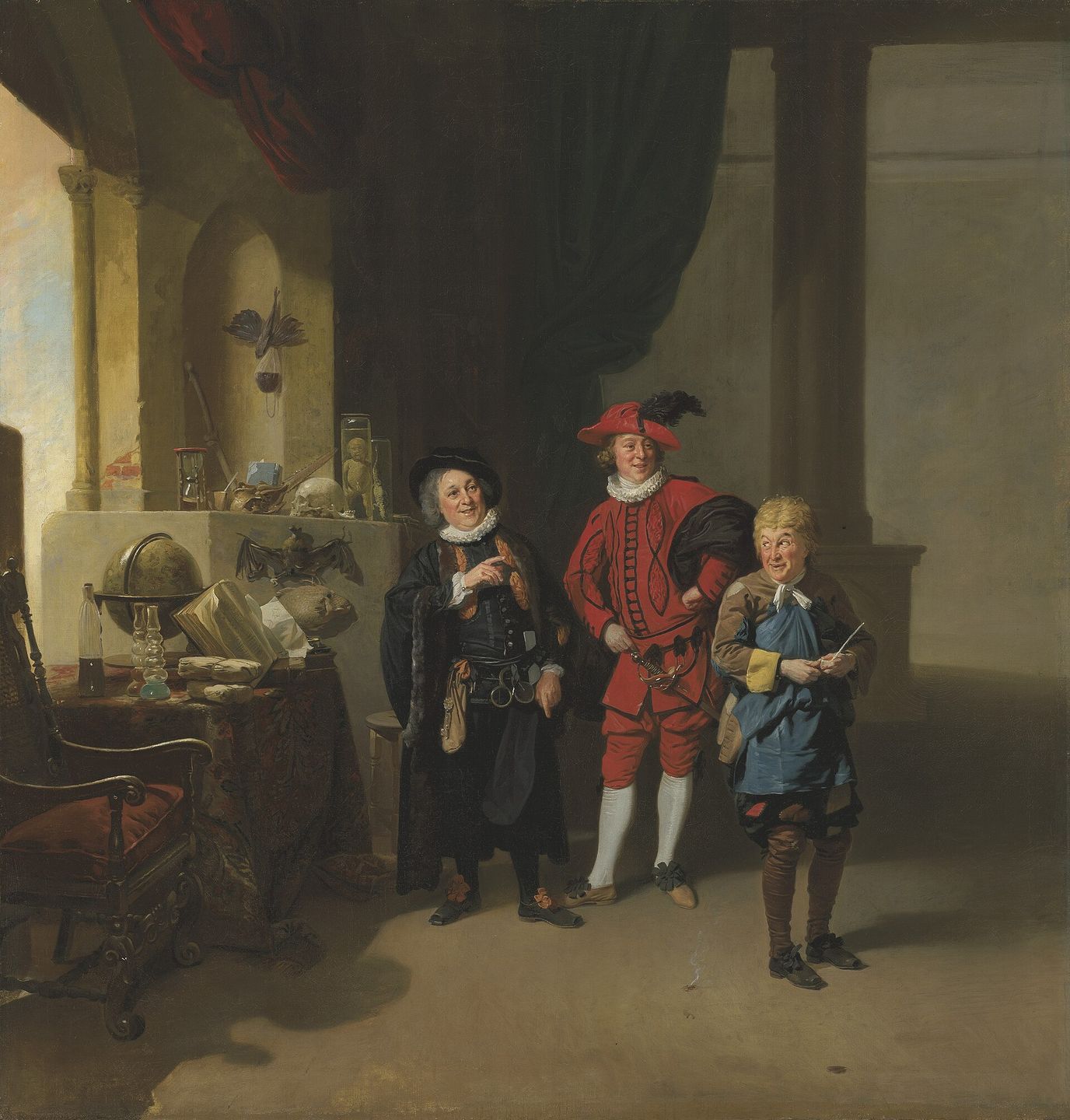
David Garrick as Abel Drugger in Ben Jonson's "the Alchemist," painted by Johann Zoffany — the comedy still drawing audiences more than a century after Jonson's death. Johann Zoffany, Public domain, via Wikimedia Commons
Jonson's best-known works are his comedies: "Volpone," "The Alchemist," and "Bartholomew Fair." They are not gentle. They mock greed, hypocrisy, gullibility, and pretension. The characters are types more than individuals, each one embodying a specific vice or delusion. The plots are intricate, with multiple layers of deception that collapse at the end in a rush of consequences. Jonson did not write to make people feel good. He wrote to make them think, and occasionally to make them uncomfortable.
In addition to plays, Jonson wrote masques for the court of King James I. Masques were elaborate spectacles, combining poetry, music, dance, and stagecraft. They were expensive, ephemeral, and primarily designed to flatter the king. Jonson collaborated with the architect and designer Inigo Jones on these productions. The two men argued constantly. Jonson believed the words were the most important part. Jones believed the visual design mattered more. Their partnership produced some of the most innovative theatrical work of the period, but it ended in mutual resentment.
Jonson was also the first English poet to publish a collected edition of his own works, titled "The Works of Benjamin Jonson," in 1616. The decision to call them "works" rather than "plays" or "poems" was controversial. Critics mocked the idea that ephemeral entertainment could be treated as serious literature. Jonson did not care. He believed his plays were as worthy of preservation as any classical text. He was right. The 1616 folio established a precedent that Shakespeare's colleagues would follow seven years later when they published the First Folio of Shakespeare's plays.
Jonson died in 1637 and was buried in Westminster Abbey. His gravestone is marked with the words "O Rare Ben Jonson," a pun on "orare," Latin for "to pray for." He was a difficult man, prickly and proud, but he was also a craftsman who understood that writing was a form of construction. You needed a plan. You needed materials. You needed to know which parts bore the load and which were decoration. He built his plays the way a mason builds a wall, and some of them are still standing.
studio / on-this-day / Jun 11