studio / on-this-day / May 7
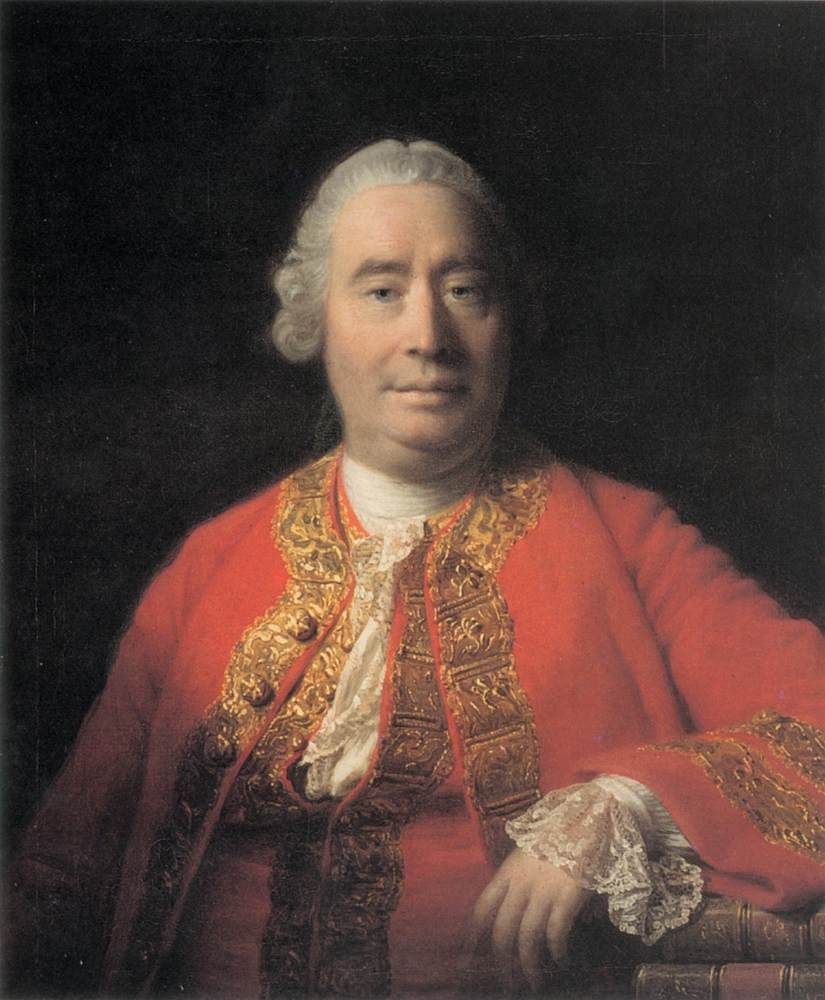
Portrait of david Hume, philosopher and empiricist, 18th century. Allan Ramsay, Public domain, via Wikimedia Commons
The Problem of Causality
On this day in 1711 — David Hume was born, and would point out that the sun rising every day so far is no proof it must rise tomorrow.
3 min read
David Hume was born on May 7, 1711, in Edinburgh, Scotland. He became one of the most important philosophers of the Enlightenment, known for his skepticism about nearly everything people took for granted. His central insight was simple and unsettling: we cannot prove that the future will resemble the past. Just because the sun has risen every day for all of recorded history does not logically guarantee it will rise tomorrow. Causality, the bedrock of science and everyday reasoning, is not something we can deduce. It is something we assume, based on habit.
Hume argued that when we observe one event consistently following another, we come to expect that pattern to continue. We see a billiard ball strike another, and the second ball moves. We do this enough times, and we conclude that the first ball caused the second to move. But Hume pointed out that we never actually observe causation. We observe sequence and correlation. The rest is inference, built on repeated experience, not logical necessity. We believe in cause and effect because it has always worked, not because we can prove it must work.
This was a problem for science, which relied on the assumption that the laws of nature are consistent. If Hume was right, induction itself, the process of generalizing from observations, had no rational foundation. Scientists could describe patterns, but they could not justify the belief that those patterns would hold in the future. Hume admitted this openly. He did not propose a solution. He simply pointed out that reason alone could not solve the problem. Custom and habit filled the gap.
Hume's skepticism extended beyond causality. He questioned the existence of the self as a continuous, unified entity. When he looked inward, he found only a stream of perceptions, thoughts, and feelings, but no enduring self that persisted beneath them. The self, he suggested, was a convenient fiction, a narrative we construct to make sense of the flow of experience. Identity was not a thing. It was a pattern recognition problem.
His philosophy was deeply unsettling to his contemporaries, and it remains so. It undermines certainty without offering a replacement. Hume did not deny that we should act as if causality is real or that the self exists. He simply argued that these beliefs are not grounded in reason. They are grounded in human psychology, in the way our minds are wired to interpret experience. We are pattern-matching machines, optimized for survival, not for metaphysical truth.
Modern philosophy and science have grappled with Hume's problem ever since. Immanuel Kant called Hume's work the thing that woke him from his dogmatic slumber and spent much of his career trying to answer it. Karl Popper built a philosophy of science around the idea that theories can never be proven, only falsified. Machine learning systems today are fundamentally Humean: they identify patterns in data and generalize from them, with no deeper understanding of why those patterns exist. They are induction engines, operating on the same assumptions Hume questioned.
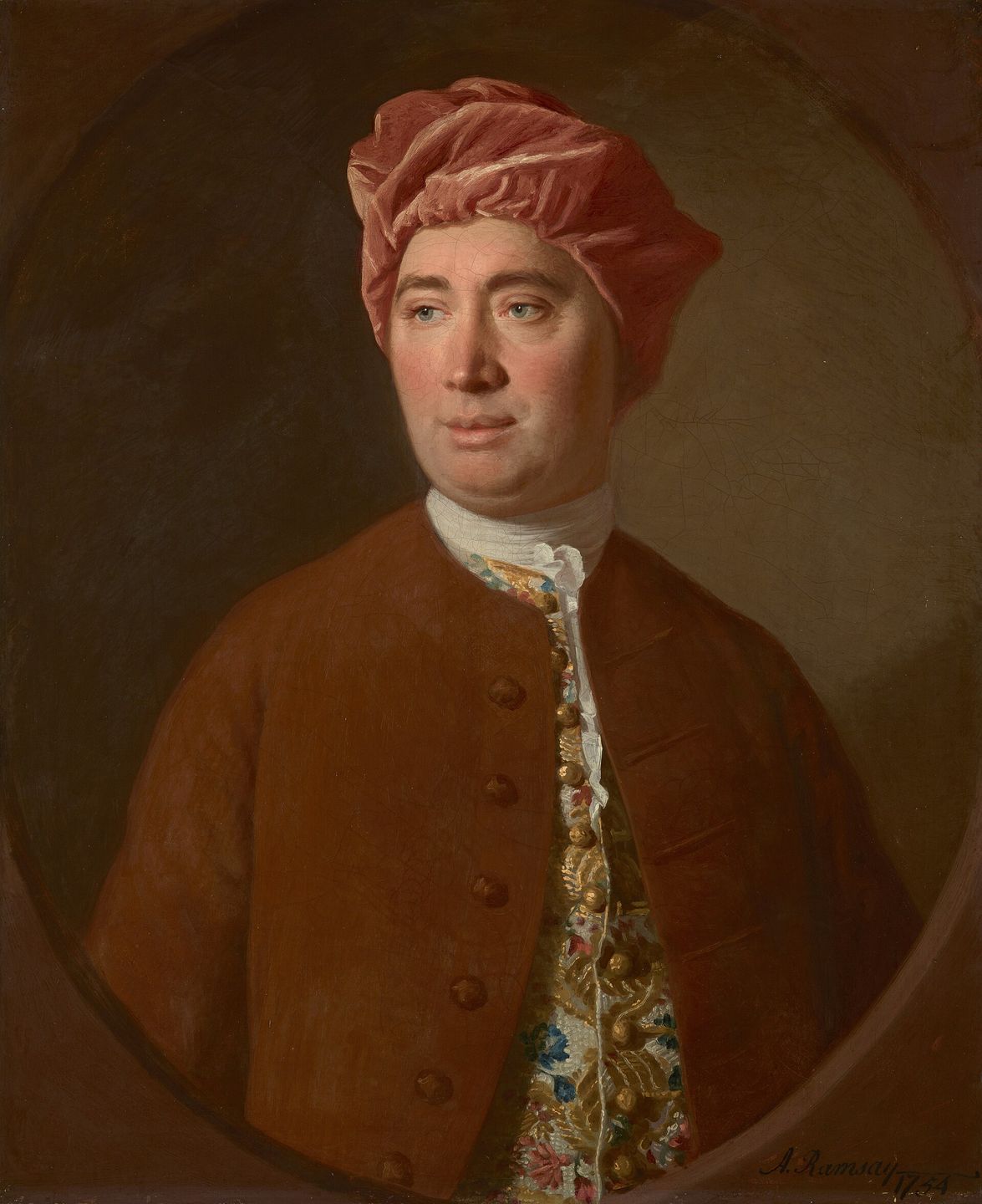
Portrait of david Hume by allan Ramsay, c. 1754, national galleries of Scotland. Allan Ramsay, Public domain, via Wikimedia Commons
Hume spent much of his life writing, though his books were not always well received. His Treatise of Human Nature, published when he was 28, famously fell stillborn from the press, as he put it. He later rewrote parts of it in a more accessible form. He worked as a librarian, a tutor, and briefly as a diplomat. He was sociable, well-liked, and remarkably cheerful for someone who questioned the foundations of knowledge. He died in 1776, the same year as the American Revolution, untroubled by the implications of his own philosophy.
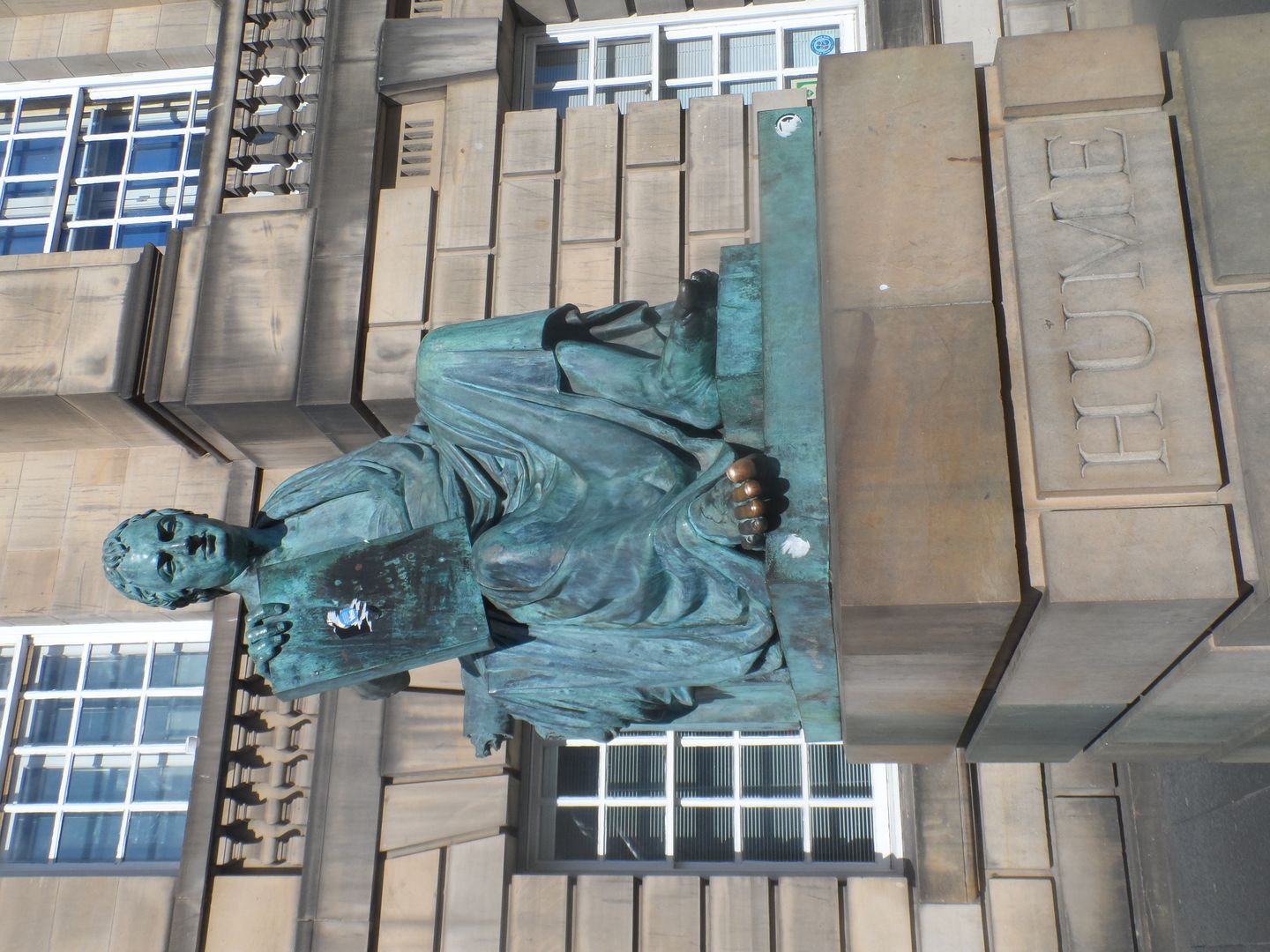
Statue of david Hume on the royal mile in Edinburgh, his birthplace. Sheila1988, CC BY-SA 4.0, via Wikimedia Commons
What Hume left behind was not a system but a challenge. If reason cannot justify our most basic beliefs about the world, what does? His answer was experience, habit, and human nature. We believe in causality because we must, not because we can prove it. Every designed system, every algorithm, every prediction rests on the same assumption: the patterns we have seen will continue. Hume would say that is faith, not reason. And he would be right.
studio / on-this-day / May 7