studio / on-this-day / May 8
The Coca-Cola script logo, designed by Frank Robinson in 1886 and still in use today. The Coca-Cola Company, Public domain, via Wikimedia Commons
The Formula
On this day in 1886 — a pharmacist mixed the first Coca-Cola syrup, and a headache remedy became the most recognized brand on Earth.
3 min read
On May 8, 1886, Dr. John Stith Pemberton, a pharmacist in Atlanta, Georgia, mixed together a batch of caramel-colored syrup in a brass kettle. He combined coca leaf extract, kola nut, sugar, and other flavorings, creating a medicinal tonic he believed could cure headaches and nervous disorders. He sold it at Jacobs' Pharmacy, where it was mixed with carbonated water and served from a soda fountain for five cents a glass. In the first year, he sold an average of nine drinks per day. The product was called Coca-Cola, a name suggested by his bookkeeper, Frank Robinson, who also designed the distinctive script logo that is still in use today.
Pemberton did not live to see what his invention would become. He sold portions of the business to various partners and died in 1888, two years after creating the formula. By then, Asa Candler, an Atlanta businessman, had acquired the rights to Coca-Cola for $2,300. Candler understood something Pemberton did not: the drink was not a medicine. It was a product that could be marketed, distributed, and scaled. He removed it from the pharmacy context and positioned it as a refreshing beverage. By 1895, Coca-Cola was sold in every state in the U.S.
The key to Coca-Cola's expansion was not the formula but the distribution model. Candler franchised the bottling rights to independent operators, allowing rapid geographic expansion without requiring massive capital investment from the company. Bottlers purchased syrup from Coca-Cola and mixed it locally with carbonated water. This system turned a regional product into a national one almost overnight. By 1920, there were over 1,000 bottling plants across the country. The company controlled the brand and the concentrate. The bottlers handled the logistics.
The formula itself became a closely guarded secret, a piece of corporate mythology as much as intellectual property. The exact recipe has never been publicly disclosed. For decades, it was reportedly kept in a vault at a bank in Atlanta. In 2011, the company moved it to a purpose-built vault at the World of Coca-Cola museum. Whether the secrecy is necessary or theatrical is beside the point. The mystique is part of the brand. The formula is not just a list of ingredients. It is a story about exclusivity and permanence.
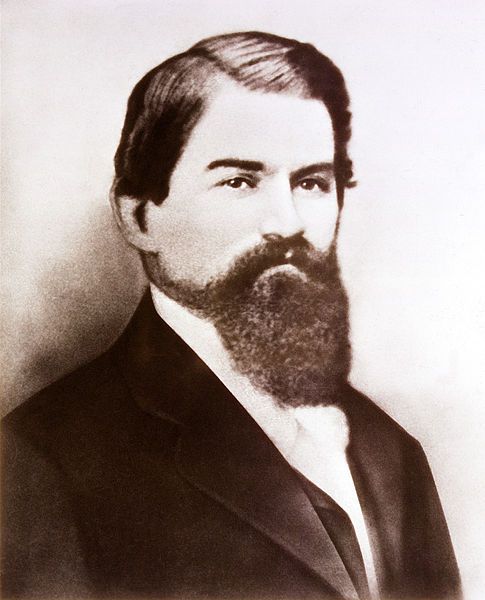
John Stith Pemberton, the Atlanta pharmacist who invented Coca-Cola in 1886. Public domain, via Wikimedia Commons
Coca-Cola's visual identity, designed in 1886 and refined over the decades, is one of the most successful examples of brand consistency in history. The Spencerian script logo has remained essentially unchanged. The contour bottle, designed in 1915, became so iconic that it is trademarked as a shape, recognizable even in silhouette. The red and white color scheme is globally synonymous with the brand. This is design as infrastructure: a system of visual and material elements that transcends language and culture.
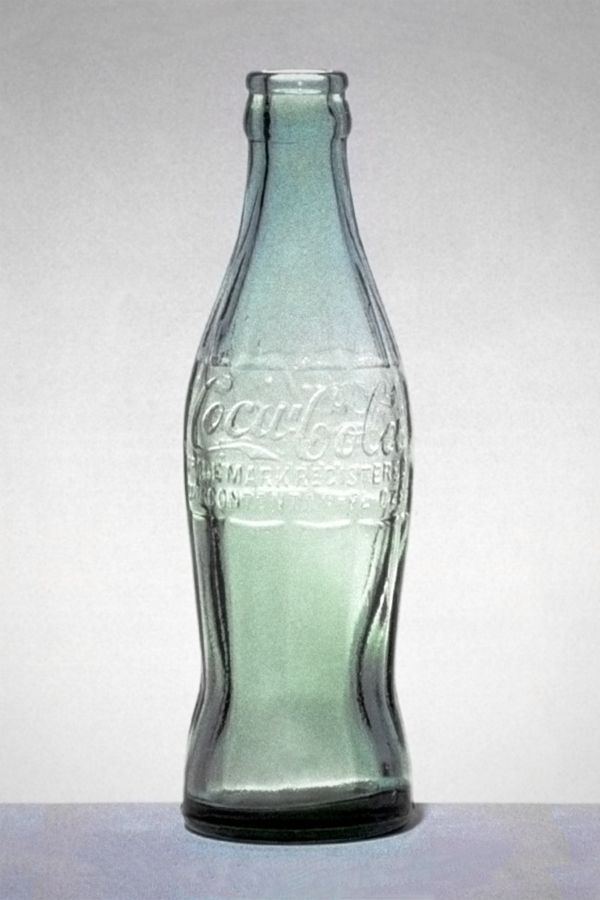
The contour bottle, designed in 1915 and so distinctive it is trademarked as a shape. Nagualdesign, CC0, via Wikimedia Commons
The drink's global reach is staggering. Coca-Cola is available in more than 200 countries. The company produces over 500 brands, but Coca-Cola itself remains the flagship, consumed over 1.9 billion times per day. It has survived wars, economic collapses, and shifting consumer tastes. It has been criticized for health impacts, labor practices, and environmental damage, yet it persists. The product is not just a beverage. It is a logistics network, a marketing system, and a cultural symbol all at once.
What Pemberton created in 1886 was a formula. What Candler and his successors built was a platform. The drink itself is replicable. Competitors have tried for over a century to match it. What cannot be replicated is the infrastructure: the bottling network, the brand equity, the global recognition. Coca-Cola is not the best-tasting cola. It is the most distributed, the most marketed, the most embedded in daily life. That is not chemistry. That is design at the scale of civilization.
The brass kettle where it all started is long gone. The formula remains, locked in a vault, a symbol more than a secret. The real innovation was not the syrup. It was the system that turned a pharmacist's experiment into the most recognized product on earth.
studio / on-this-day / May 8