studio / on-this-day / May 5
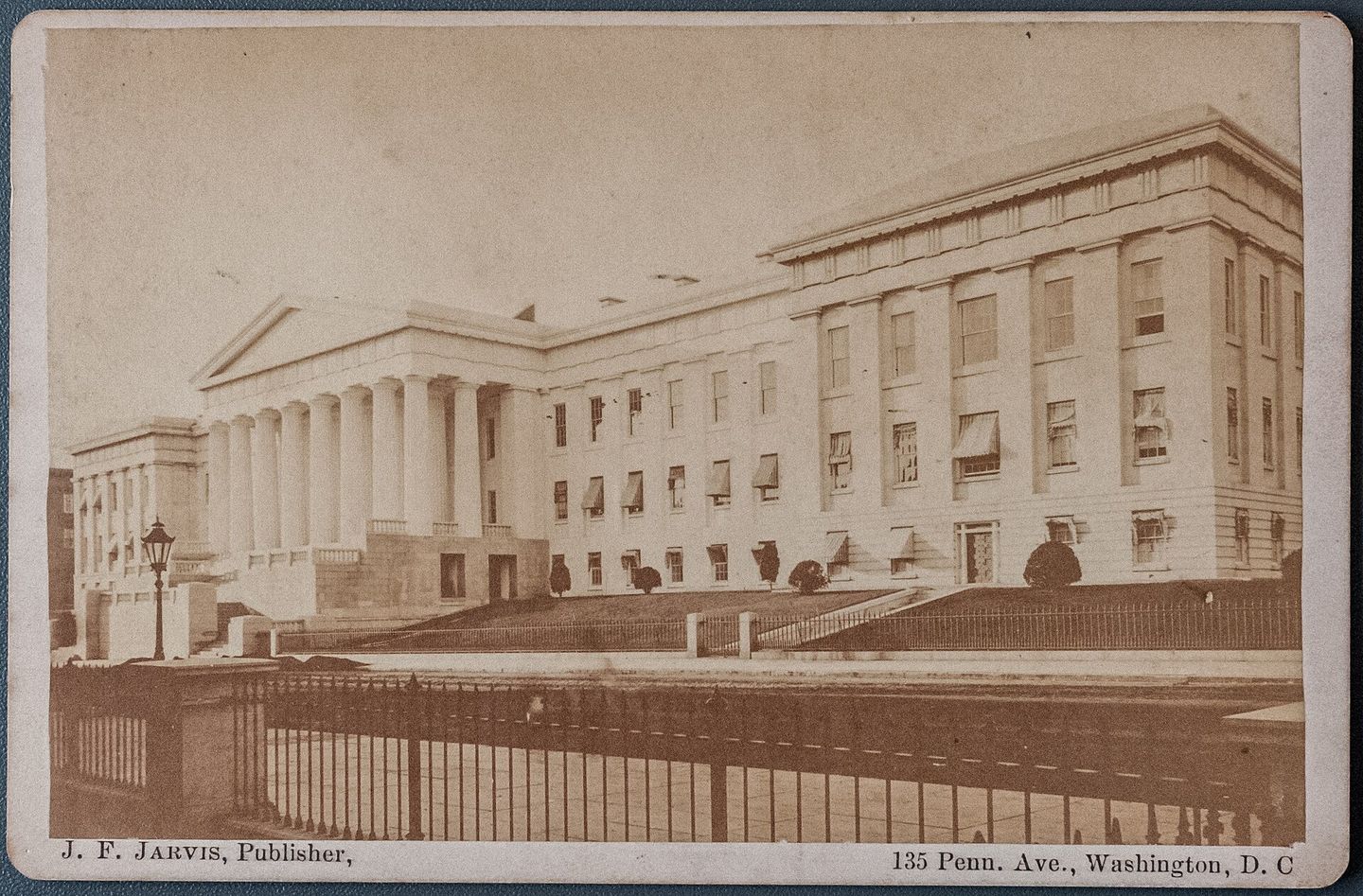
The old Patent Office building in Washington, D.C., where early U.S. patents were processed and stored. J.F. Jarvis, Publisher, 135 Penn. Ave., Washington, D.C., Public domain, via Wikimedia Commons
The First Patent
On this day in 1809 — Mary Kies became the first American woman granted a patent, for a method of weaving straw with silk.
3 min read
On May 5, 1809, Mary Kies of Connecticut received U.S. Patent No. X1089 for a method of weaving straw with silk and thread to make hats. She was the first woman to be granted a patent under her own name in the United States. The invention itself was practical and economically significant. At the time, American hat makers relied heavily on imported European straw hats. Kies's technique allowed domestic production using local materials, reducing dependence on foreign goods during a period of trade disruptions caused by the Napoleonic Wars.
The patent law that made this possible was only 19 years old. The U.S. Patent Act of 1790 established a system to protect inventions, granting inventors exclusive rights to their work for a limited period. It was designed to encourage innovation by ensuring that creators could profit from their ideas. Women could apply for patents, but legal and social constraints made it rare. Married women, under the legal doctrine of coverture, could not own property independently. Any invention they created technically belonged to their husbands. Mary Kies was unmarried, which allowed her to hold the patent herself.
Her invention arrived at a useful moment. The Embargo Act of 1807 and subsequent trade restrictions had cut off American access to European goods, including the fine straw bonnets fashionable at the time. Domestic manufacturers needed alternatives. Kies's weaving method produced hats that were both functional and stylish, filling a gap in the market. First Lady Dolley Madison praised the technique, lending it social credibility. The method spread, supporting a small but growing American millinery industry.
What is striking is how little we know about Mary Kies beyond the patent itself. No likeness of her survives. Most details of her life are lost. The patent document exists, but the original was destroyed in an 1836 fire at the Patent Office. We know the invention, not the inventor. This was common for women of the period, whose work often went unrecorded or was attributed to men. Even when they did receive credit, as Kies did, the historical record remained sparse.
The significance of Kies's patent is not just the invention but the precedent. It demonstrated that women could participate in the formal structures of innovation and commerce, even within a legal system that systematically restricted their rights. Over the following decades, more women received patents, though the numbers remained small. By 1850, only about 20 patents had been issued to women. By 1900, that number had grown to over 3,000. The system was opening, slowly.
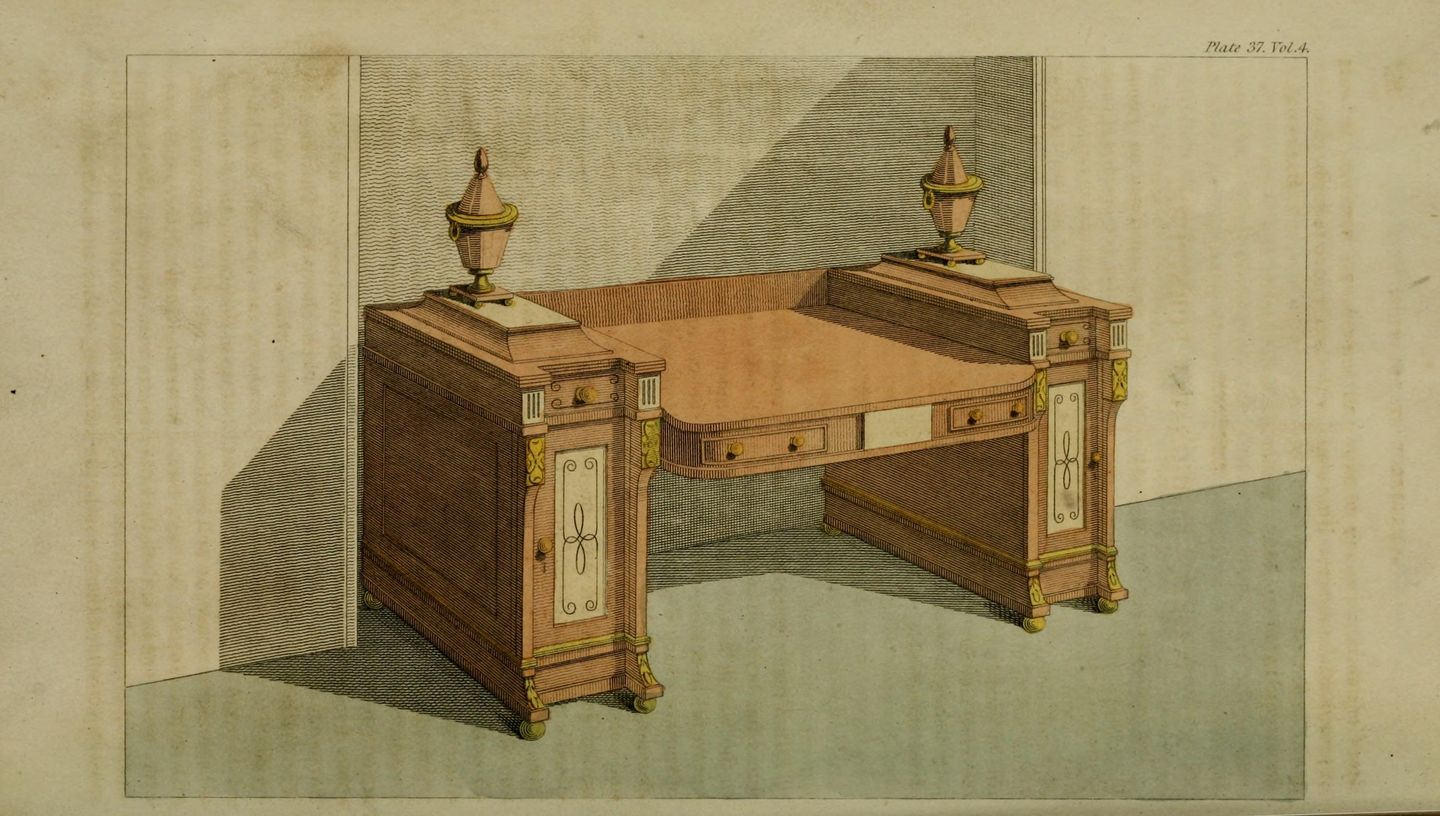
Fashion plate from the repository of arts, 1810, showing the style of bonnets Mary Kies's technique helped produce. Internet Archive Book Images, No restrictions, via Wikimedia Commons
Today, the gap has narrowed but not closed. Women still account for a minority of patent holders, a disparity shaped by access to education, capital, and networks that facilitate invention. The problem is not a lack of ideas but a lack of structural support. Kies's patent in 1809 was an outlier because the system was not designed for her. Modern patent systems are theoretically neutral, but outcomes reflect who gets to participate in the invention economy.

Daniel Pasmore, plaiting straw near st albans, 1854 — the hand craft of straw plaiting that underpinned the hat trade Kies's method served. Daniel Pasmore I, Public domain, via Wikimedia Commons
Mary Kies's patent was a practical solution to a material problem, but it also marked a small opening in a closed system. It proved that women could be inventors in the eyes of the law, even when the law did not otherwise recognize them as full citizens. The hat-weaving technique itself faded from use, but the precedent remained. Every invention is also a claim to legitimacy, a statement that the inventor's work deserves protection and recognition. Kies made that claim and won.
studio / on-this-day / May 5