studio / on-this-day / May 3
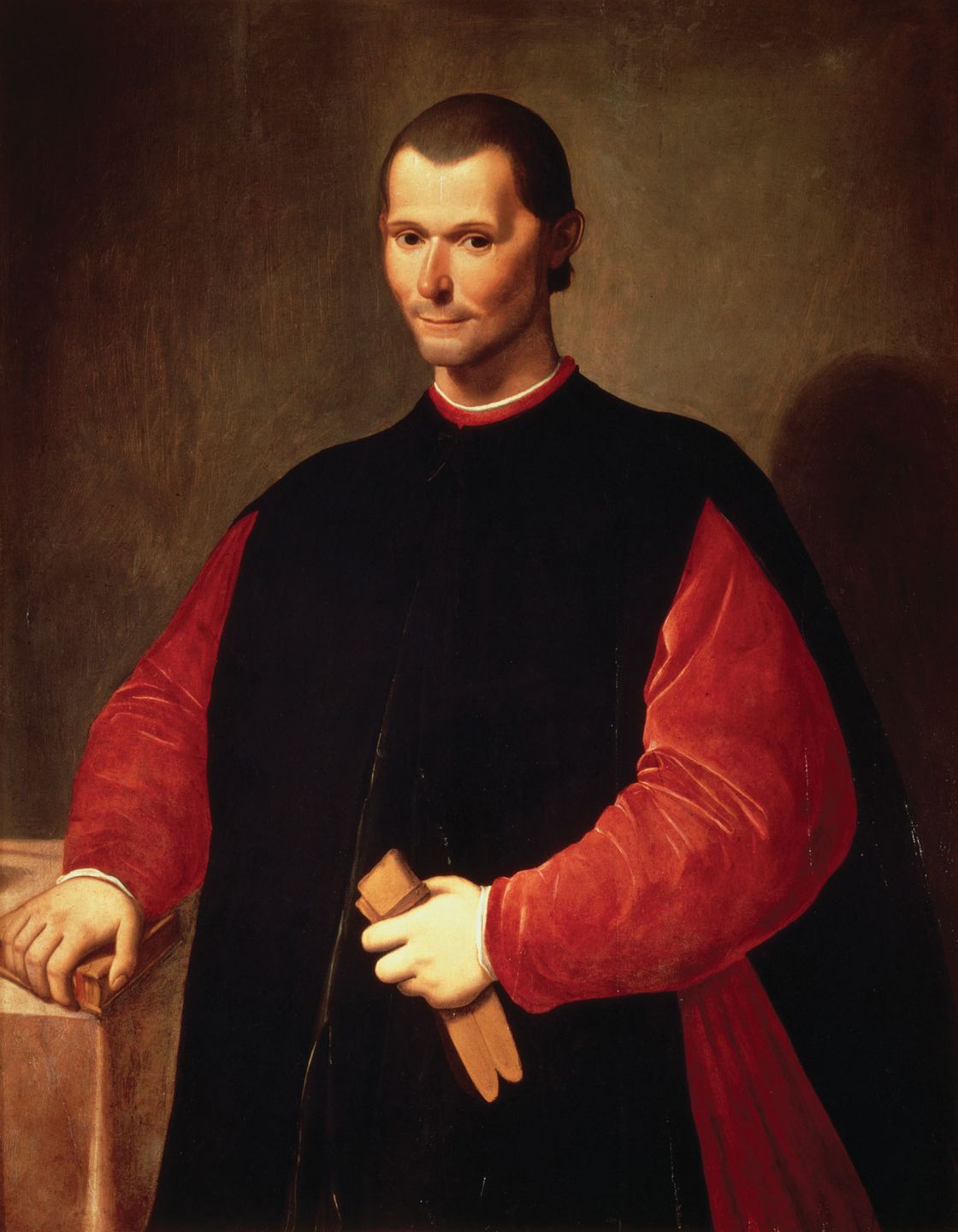
Portrait of niccolò Machiavelli by santi di tito, late 16th century. Santi di Tito, Public domain, via Wikimedia Commons
The System Without Morality
On this day in 1469 — Niccolò Machiavelli was born, and would pry politics loose from morality and describe it coldly, as a system.
3 min read
Niccolò Machiavelli was born on May 3, 1469, in Florence, into a city that was both a republic and a business. Political power shifted with wealth, alliances formed and dissolved based on advantage, and survival required clear-eyed calculation. Machiavelli grew up watching this machine operate. Later, he would describe it with a precision that made people deeply uncomfortable.
He spent fourteen years as a Florentine diplomat and military coordinator, traveling across Italy and beyond, observing how rulers maintained control and how they lost it. He saw the mechanisms of power up close: the treaties, the betrayals, the uses of violence and mercy. In 1512, the Medici family returned to Florence, and Machiavelli was removed from office, briefly imprisoned, and tortured. He retired to his farm and began writing.
The Prince, his most famous work, was written in 1513 and circulated in manuscript before being published in 1532, five years after his death. It is a manual for rulers, but not a moral one. Machiavelli's advice is ruthlessly practical. A prince should keep his word when it benefits him and break it when necessary. He should be feared rather than loved, if he cannot be both. Cruelty, if used efficiently and early, can prevent greater suffering later. Virtue, in Machiavelli's framework, is not ethical goodness. It is effectiveness.
This was shocking because it violated centuries of political philosophy that insisted rulers should be just, pious, and guided by divine or natural law. Machiavelli dismissed that as wishful thinking. He argued that politics operates by its own logic, separate from moral ideals. A ruler who tries to be good in a world where others are not will be destroyed. The system does not reward virtue. It rewards understanding the system.
What Machiavelli described was, in essence, a design problem. Political power is a structure with its own mechanics. If you want to build something that lasts, you must understand the forces acting on it. Morality is an input, but it is not the governing principle. Stability, control, and survival are the constraints. The prince is a user navigating an interface where the wrong choice leads to immediate failure. The feedback loop is brutal and final.
Modern readers often misunderstand The Prince as endorsing amorality. It does not. It simply describes a system where moral behavior is often punished and strategic ruthlessness is rewarded. Machiavelli was not advocating for cruelty. He was observing that cruelty works, and that rulers who ignore this fact tend to lose power. He wrote as an engineer, not a moralist. The ethics of a system are less important than its mechanics.
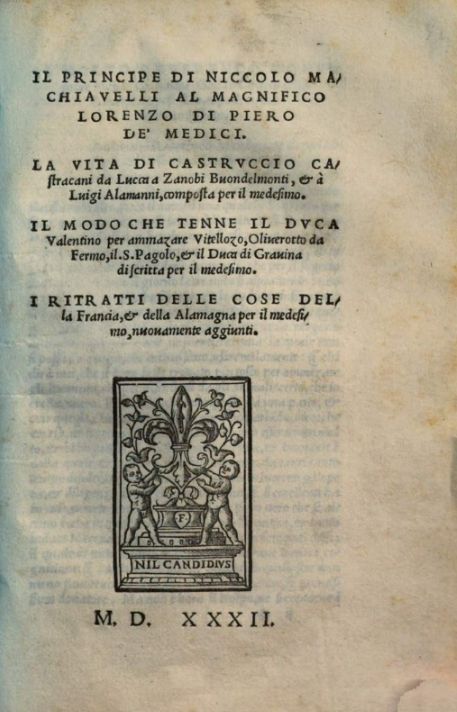
Title page of il principe, the first printed edition of the Prince, published in 1532, five years after Machiavelli's death. Niccolò Machiavelli, Public domain, via Wikimedia Commons
This way of thinking has been applied far beyond Renaissance politics. Modern game theory, organizational strategy, and systems design all owe something to Machiavelli's method: identify the actual incentives, map the real constraints, and design for outcomes rather than ideals. Startups iterate toward product-market fit. Platforms optimize for engagement. Algorithms maximize defined objectives. These are Machiavellian processes. They do what works, not what should work.
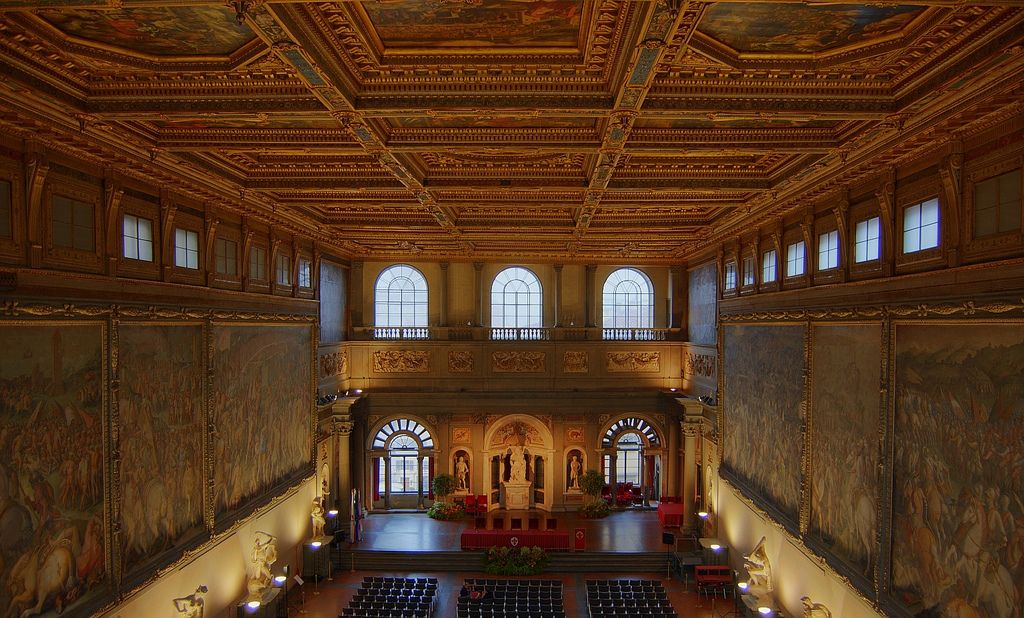
The palazzo vecchio in Florence, where Machiavelli served as a Florentine official from 1498 to 1512. Bradley Grzesiak, CC BY-SA 2.5, via Wikimedia Commons
Machiavelli never held power again after 1512. He spent his final years writing history, plays, and letters, hoping for a political appointment that never came. He died in 1527, still trying to return to the system he understood so well. His legacy is not a philosophy but a method: see things as they are, not as you wish they were. Design accordingly. The world will not adapt to your principles. You must adapt to the world.
studio / on-this-day / May 3