studio / on-this-day / May 29
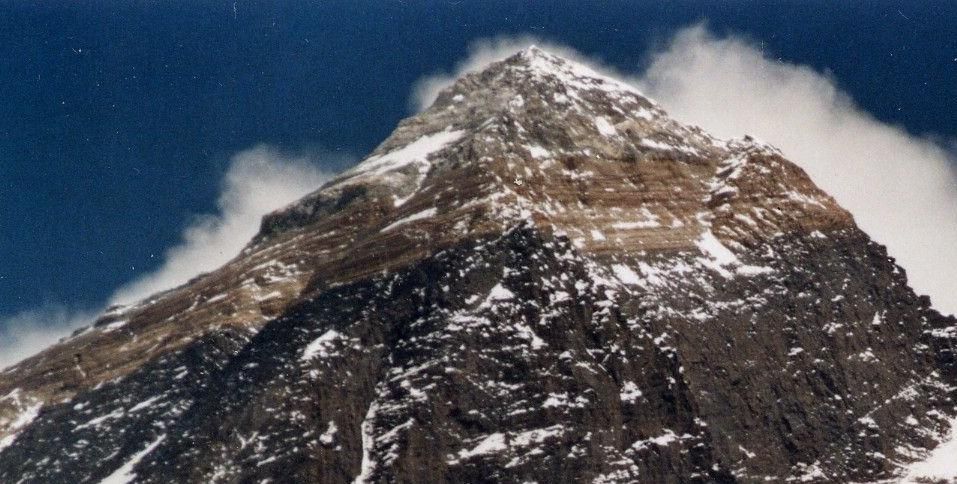
Mount Everest seen from kalar patar — at 29,029 feet, the highest point on Earth, first reached on May 29, 1953. GFDL, via Wikimedia Commons
The Summit
On this day in 1953 — Edmund Hillary and Tenzing Norgay reached the summit of Everest, solving the ultimate problem of elevation and endurance.
3 min read
At 11:30 a.m. on May 29, 1953, Edmund Hillary and Tenzing Norgay stood at 29,029 feet above sea level, on the summit of Mount Everest. Hillary, a New Zealand beekeeper and mountaineer, and Tenzing, a Sherpa from Nepal, were the first humans confirmed to reach the highest point on Earth. They stayed for 15 minutes. Hillary took photographs. Tenzing left an offering of food for the gods. Then they descended, because staying longer would have killed them.
Everest had been attempted for decades. George Mallory and Andrew Irvine disappeared near the summit in 1924, and no one knows if they reached the top before they died. Other expeditions failed due to weather, altitude sickness, avalanches, or simple exhaustion. The 1953 British expedition, led by John Hunt, was a carefully planned assault on the mountain. It involved hundreds of porters, tons of supplies, and a systematic approach to establishing camps at progressively higher elevations. The goal was to put two climbers at the summit before the monsoon season arrived.
Hillary and Tenzing were the second pair sent to the summit. The first pair, Tom Bourdillon and Charles Evans, came within 300 feet but turned back due to equipment failure and exhaustion. Hillary and Tenzing left their high camp at 27,900 feet before dawn, climbing by headlamp. The final obstacle was a 40-foot rock face, now called the Hillary Step, which required technical climbing at an altitude where most people can barely stand. Hillary jammed himself into a crack between the rock and an ice cornice, then inched upward. Tenzing followed.
At the summit, there was no dramatic celebration. Hillary later said his first thought was relief. They had made it, and now they had to get down. Tenzing's reaction was more spiritual. He believed the mountains were sacred, and reaching the summit was an act of communion as much as conquest. The difference in their perspectives mattered less than the fact that they had climbed together, relying on each other in an environment where a single mistake meant death.
The achievement was immediately politicized. News of the summit reached London on June 2, the day of Queen Elizabeth II's coronation. The British press framed it as a triumph of British determination, though Hillary was from New Zealand and Tenzing was Nepalese. Hillary was knighted. Tenzing was not, though he received medals and honors from Nepal and India. For years, reporters asked who stepped on the summit first, as though it mattered. Hillary refused to answer, insisting they reached it together. Tenzing eventually confirmed that Hillary had been first, but both men emphasized that the climb was a partnership.
What made the ascent significant was not just the physical achievement but the logistics. Climbing Everest required oxygen systems, specialized clothing, high-altitude camps, weather forecasting, and a supply chain stretching from Kathmandu to the summit. It was an engineering problem as much as an athletic one. The expedition used closed-circuit oxygen systems, which recycled exhaled air to conserve oxygen. They tested equipment in pressure chambers and cold rooms. They planned routes, established fixed ropes, and cached supplies. The summit was the visible outcome, but the real achievement was the system that made it possible.
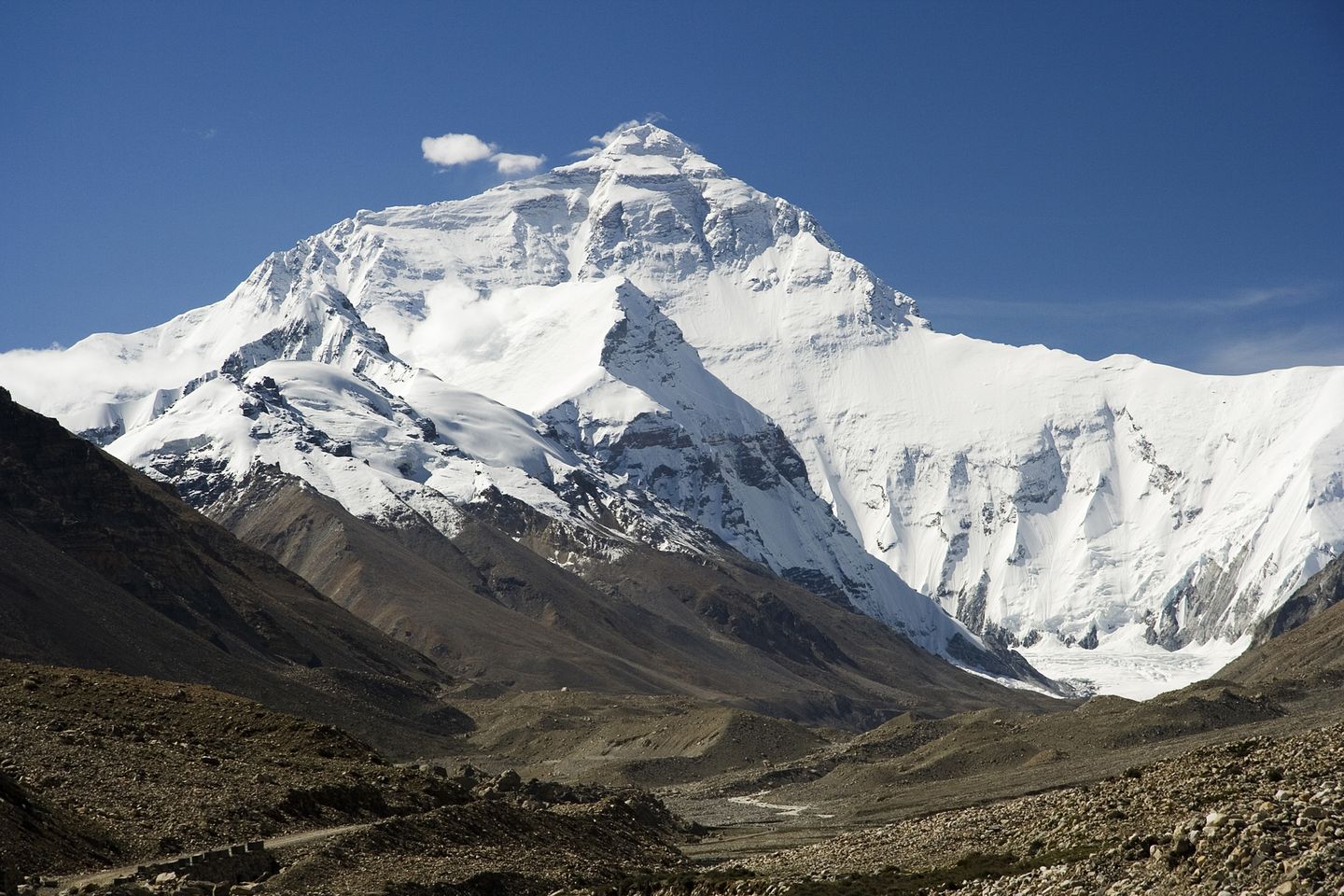
The north face of Mount Everest viewed from the approach toward base camp, tibet, 2006. Luca Galuzzi (Lucag), CC BY-SA 2.5, via Wikimedia Commons
Since 1953, thousands of people have climbed Everest. Commercial expeditions now guide clients to the summit for $50,000 or more. The mountain is crowded, polluted, and lined with the bodies of climbers who didn't make it down. The mystique has faded, replaced by something closer to industrial tourism. But the first ascent remains significant because it proved that humans could survive in an environment that should kill them, if they designed the systems carefully enough.
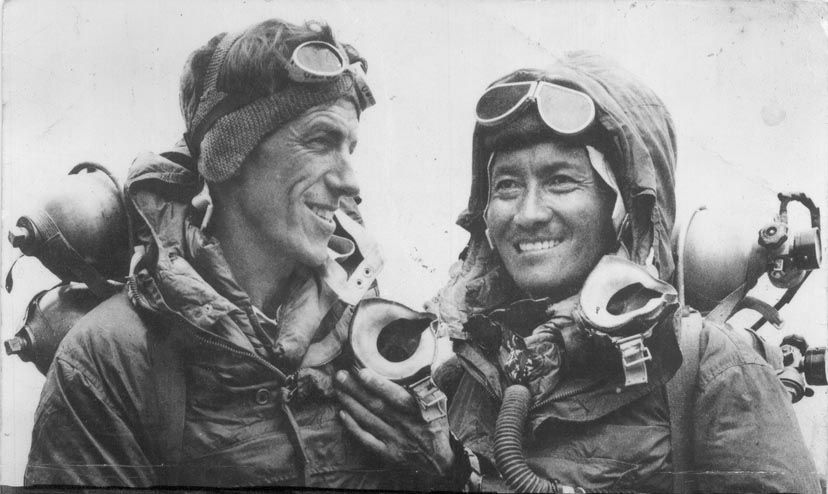
Edmund Hillary and Tenzing Norgay, 1953 — the partnership that reached the summit on May 29. Jamling Tenzing Norgay, CC BY-SA 3.0, via Wikimedia Commons
Hillary spent the rest of his life building schools and hospitals in Nepal, working with the Sherpa communities who had made his climb possible. Tenzing became a symbol of Sherpa achievement, proof that the people who lived closest to the mountains understood them best. Both men understood that reaching the summit was not the end of anything. It was just the highest point before the descent. And the descent, always, is what matters most.
studio / on-this-day / May 29