studio / on-this-day / May 28
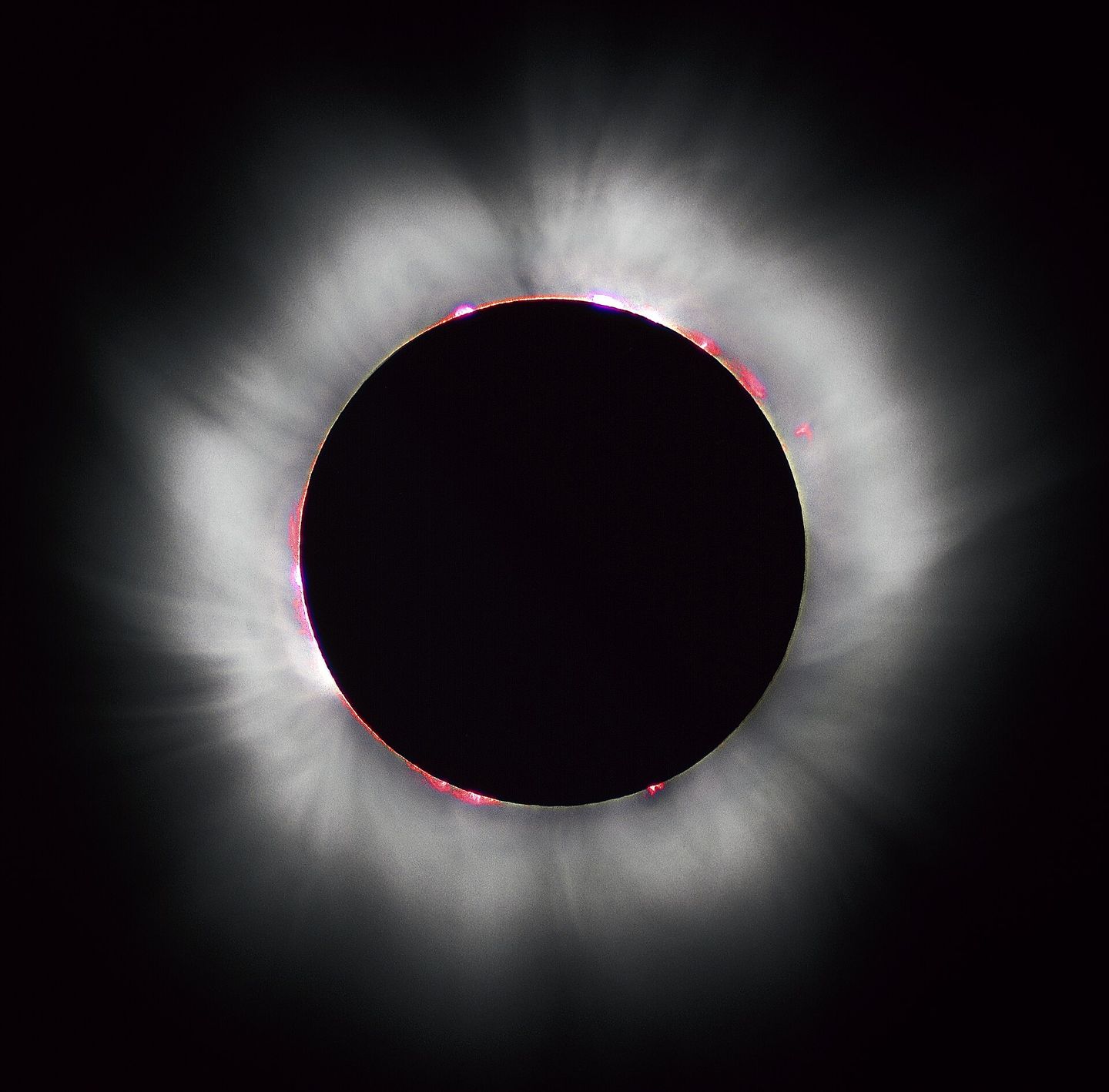
Total solar eclipse of August 11, 1999 — the same celestial phenomenon Thales predicted 2,584 years earlier. Luc Viatour, CC BY-SA 3.0, via Wikimedia Commons
The First Prediction
On this day in 585 BC — Thales of Miletus is said to have predicted a solar eclipse, back when science and philosophy were the same pursuit.
3 min read
On May 28, 585 BC, according to the Greek historian Herodotus, the sun disappeared in the middle of the day. The Lydians and the Medes were in the sixth year of a war when darkness fell across the battlefield. The soldiers, terrified, dropped their weapons and negotiated a peace treaty on the spot. What made the event historically significant was not the eclipse itself but the fact that Thales of Miletus had predicted it. For the first time in recorded history, a human being had used observation and reasoning to forecast a natural phenomenon.
Thales is often called the first philosopher, not because he was the first person to think about the world, but because he was the first to seek explanations that didn't rely on gods or mythology. Before Thales, an eclipse was a divine omen, a disruption of the natural order caused by angry deities. Thales proposed something different. The sun and moon followed patterns. Those patterns could be observed, measured, and used to make predictions. The universe operated according to rules, and humans could figure out what those rules were.
We don't know exactly how Thales predicted the eclipse. He likely used Babylonian astronomical records, which tracked lunar and solar cycles over centuries. The Babylonians had noticed that eclipses occurred in predictable intervals. Thales may have applied those cycles to estimate when the next eclipse would occur. Whether he got lucky or understood the mechanics precisely doesn't matter as much as the principle he established: nature is knowable. Events have causes. The future can be anticipated.
Thales also proposed that water was the fundamental substance from which everything else emerged. It sounds primitive now, but it was a radical departure from mythological explanations. He wasn't saying that Poseidon controlled the sea. He was saying that there was an underlying material reality, a single substance that took different forms. It was a theory, a hypothesis based on observation. Water exists as liquid, solid, and vapor. It nourishes life. It shapes the land. Maybe, Thales thought, everything comes from water.
He was wrong, but he was wrong in a useful way. He was trying to find unifying principles, to reduce complexity to something simpler. That's the scientific method in embryonic form. You observe, you hypothesize, you test. You look for patterns and build models. The model doesn't have to be perfect. It just has to explain more than the previous model. Thales's water theory didn't survive, but the process he started did.
Thales also solved practical problems. He calculated the height of the pyramids in Egypt by measuring their shadows at the moment when his own shadow was the same length as his height. He used geometry to measure distances across water. He supposedly became wealthy by predicting a good olive harvest and cornering the market on olive presses. Whether that story is true or apocryphal, it illustrates the principle: understanding patterns gives you leverage over the future.
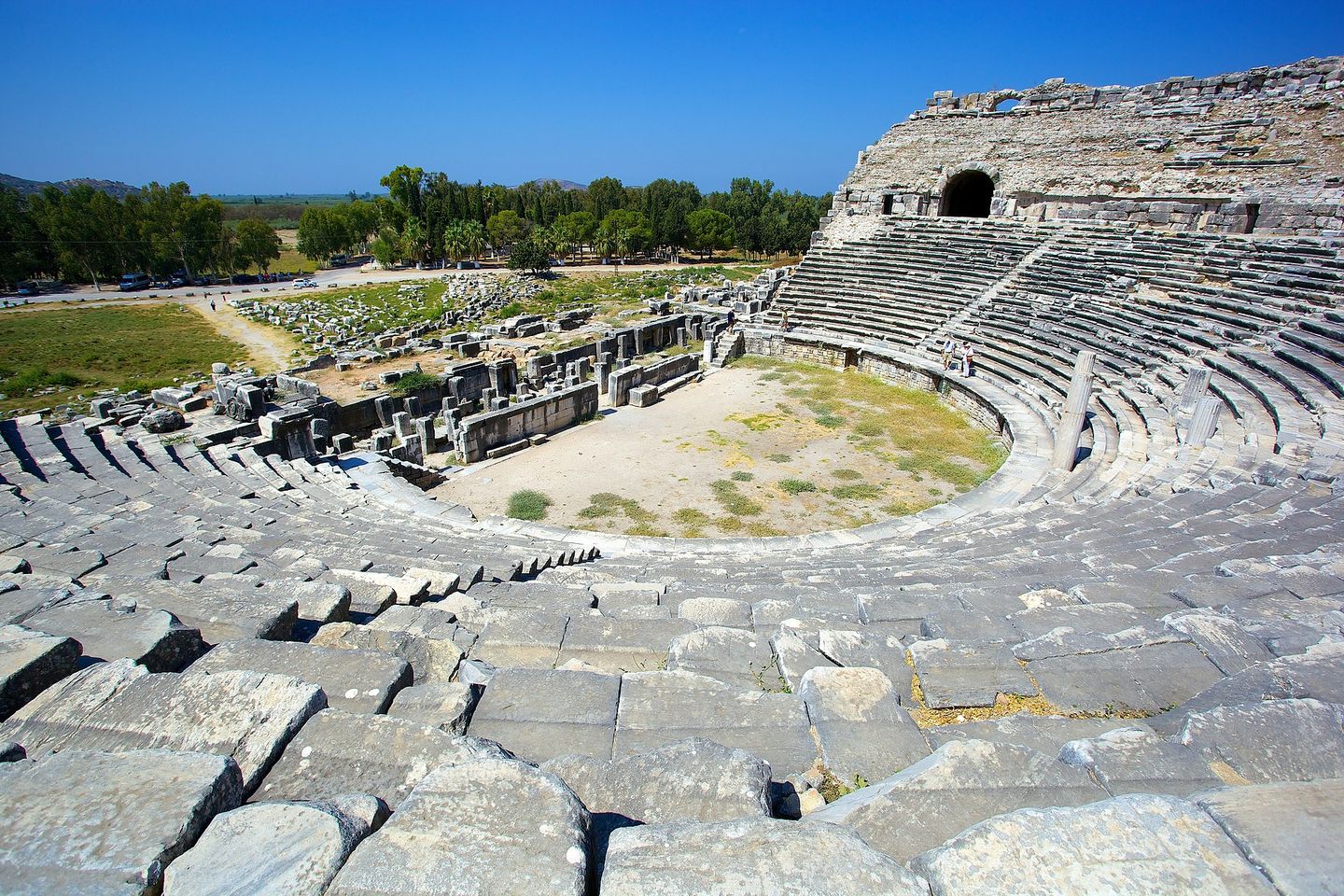
Ruins of the ancient theater of Miletus, turkey — the city where Thales lived and worked in the 6th century BC. https://www.flickr.com/photos/jiuguangw/, CC BY-SA 2.0, via Wikimedia Commons
What makes Thales's eclipse prediction foundational is that it separated knowledge from belief. You didn't need to consult priests or interpret omens. You needed observation, record-keeping, and reasoning. The eclipse wasn't a message from the gods. It was a predictable event caused by the alignment of celestial bodies. Understanding it didn't require divine favor. It required data and logic.
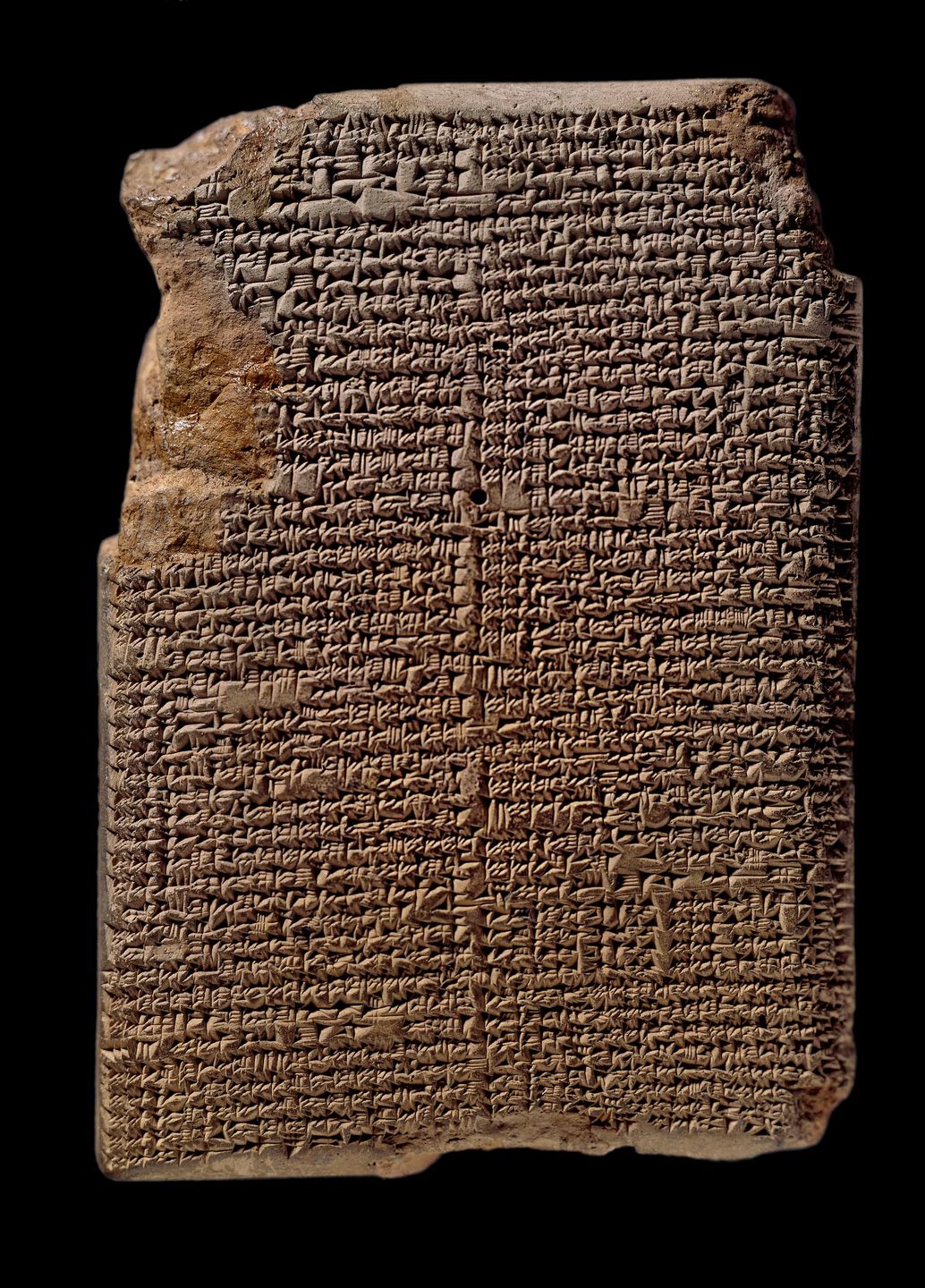
A tablet of mul.apin, the Babylonian compendium of astronomical knowledge — the kind of centuries-long eclipse record Thales likely drew on. British Museum, CC BY-SA 4.0, via Wikimedia Commons
Thales died around 546 BC, but the tradition he started continued. His student Anaximander proposed that the Earth floated in space and wasn't supported by anything. Another student, Anaximenes, suggested that air, not water, was the fundamental element. They were all wrong about the specifics, but they were right about the method. The world was intelligible. Patterns could be found. The future could be anticipated. That's the foundation of science, engineering, and design. Observe, measure, predict, test. Repeat. The eclipse went dark, and then it returned. Thales had said it would. That changed everything.
studio / on-this-day / May 28