studio / on-this-day / May 20
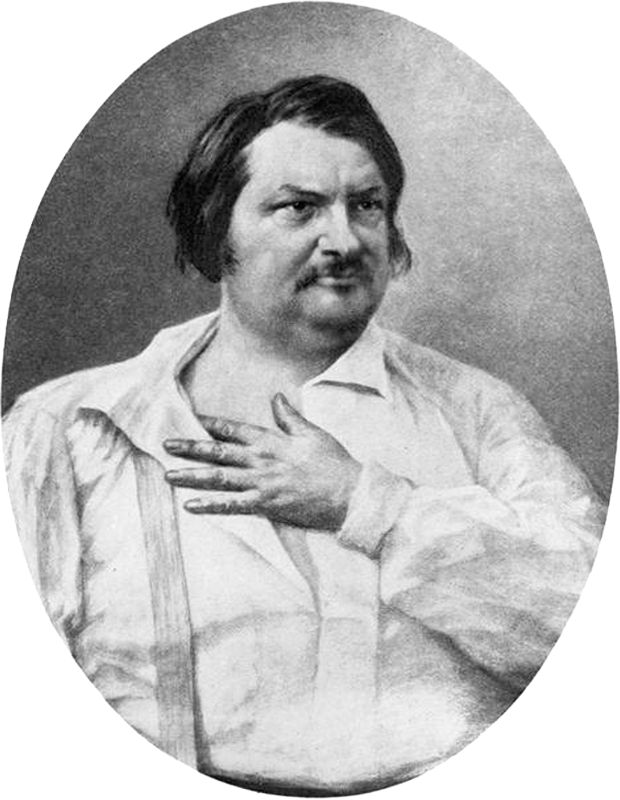
Daguerreotype of honoré de Balzac by louis-auguste bisson, c. 1842, later copied by nadar. Paul Nadar, Public domain, via Wikimedia Commons
The Productivity Engine
On this day in 1799 — Honoré de Balzac was born, and would write dozens of novels on an output regimen of some fifty cups of coffee a day.
3 min read
Honoré de Balzac was born in Tours, France, on May 20, 1799, into a middle-class family that expected him to become a lawyer. He studied law, worked in a notary's office, and hated every minute of it. At 20, he announced he was going to be a writer. His family gave him two years and a garret in Paris to prove himself. He wrote terrible plays and mediocre novels under pseudonyms. The two years passed. He failed. But he didn't stop.
What Balzac understood, possibly better than any writer before him, was that writing could be systematized. He didn't wait for inspiration. He built a factory. He worked from midnight to eight in the morning, drinking coffee constantly, revising manuscripts in a frenzy, churning out novels at a pace that seemed inhuman. By the time he died at 51, he had written 91 novels and novellas, along with plays, short stories, and essays. He called the entire body of work La Comédie Humaine, The Human Comedy, a deliberate echo of Dante's Divine Comedy. Balzac's version was set not in heaven and hell but in Paris drawing rooms, provincial towns, and Parisian streets.
The coffee was not a detail. Balzac consumed an estimated 50 cups a day, often on an empty stomach. He didn't just drink it. He weaponized it. He wrote about coffee the way modern programmers write about productivity hacks, describing its effects in mechanical terms. Coffee, he said, sets the blood in motion and makes ideas march in review like battalions on a battlefield. It was fuel for cognitive output, a chemical accelerant for the creative process.
What made Balzac's output extraordinary was not just its volume but its architecture. La Comédie Humaine was designed as an interconnected system. Characters from one novel reappeared in another. A minor figure in one story became the protagonist of the next. By the end, more than 2,000 characters populated his fictional world, each with a history, a psychology, and a place in the social order. It was worldbuilding at industrial scale, long before the term existed.

Title page of a repertory of the Comédie Humaine, a reference work cataloging Balzac's recurring characters. Public domain, via Wikimedia Commons
Balzac saw society as a machine and his novels as technical schematics for how it worked. He cataloged professions, analyzed class structures, and dissected the mechanisms of ambition, greed, and desire. His characters were not symbols. They were case studies. He wrote about bankers with the precision of an accountant, about lawyers with the insight of someone who had studied law, about provincial life with the specificity of someone who had lived it. His realism was structural. He built his fiction the way an engineer builds a bridge.
He was also perpetually in debt. His spending matched his output. He bought lavish furniture, collected art, invested in failed business ventures, and lived as though he had already earned the fortune his books were supposed to bring. The debt kept him writing. He had contracts, deadlines, creditors. He couldn't afford to stop. The pressure became part of the system. He turned financial desperation into narrative velocity.
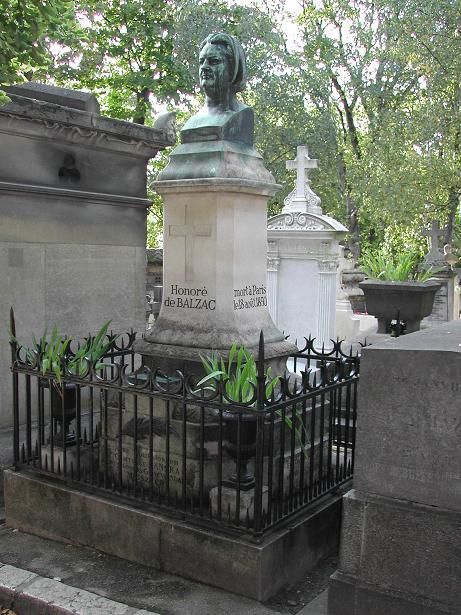
Portrait of honoré de Balzac, French novelist and author of La Comédie Humaine. Aldo Ardetti, Attribution, via Wikimedia Commons
Balzac's work ethic became legendary. Writers still invoke him when they talk about discipline, about showing up every day, about treating writing as labor rather than inspiration. He proved that creativity could be industrialized, that volume didn't have to mean mediocrity. The novels varied in quality, but the best of them are masterpieces. Lost Illusions, Père Goriot, Cousin Bette. They remain sharp, psychological, and unnervingly modern.
He died in 1850, five months after marrying his longtime love, a Polish countess he had pursued for 18 years. He was exhausted, sick, and still working. Victor Hugo delivered the eulogy and said that Balzac's work would outlive him. He was right. What Balzac left behind was not just a body of work but a demonstration that sustained creative output is a design problem. You need systems, constraints, and fuel. Coffee helps. So does urgency. But what matters most is showing up, every day, and building something large enough to contain an entire world.
studio / on-this-day / May 20