studio / on-this-day / May 19
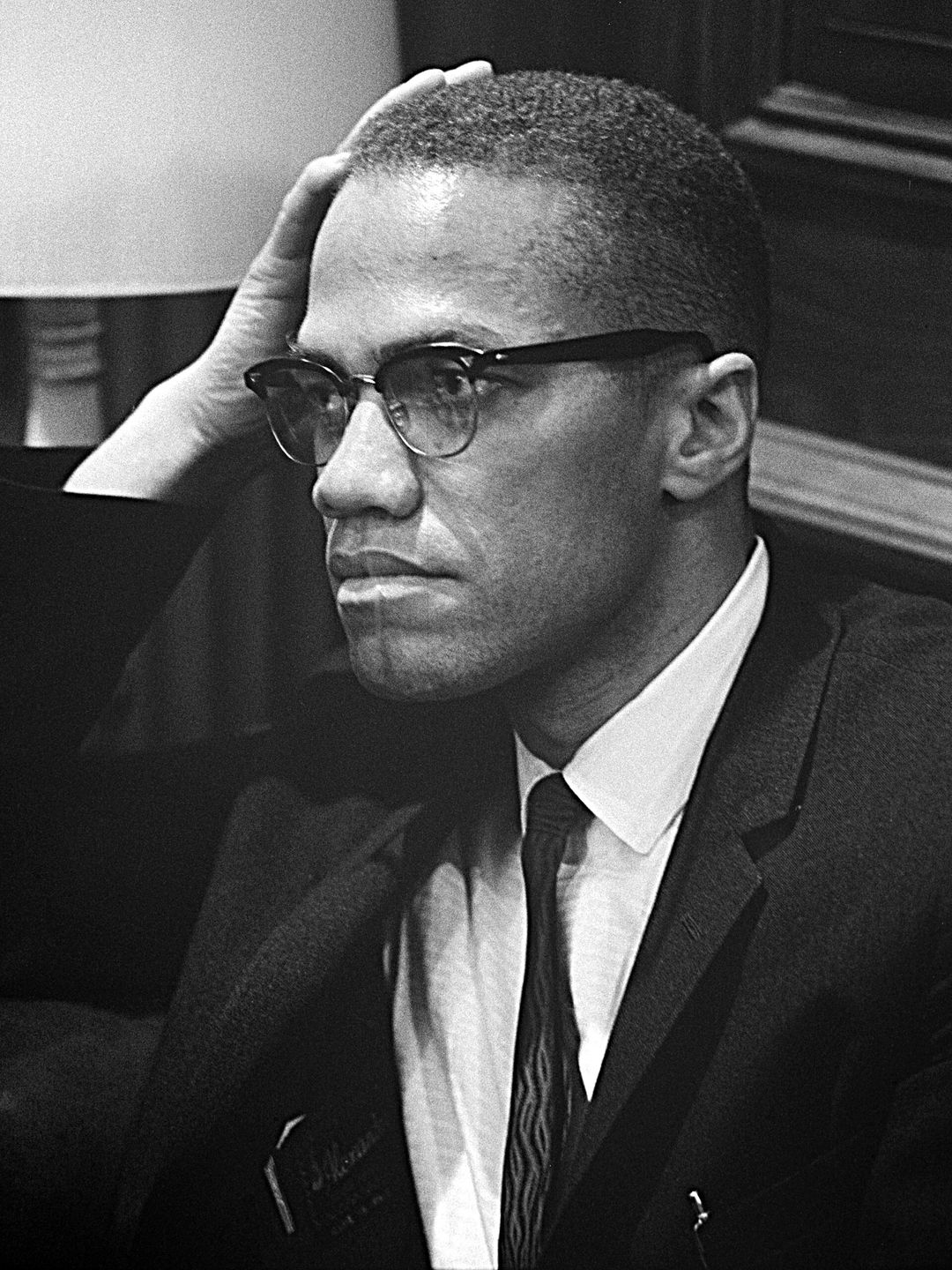
Malcolm x photographed on March 26, 1964, the day he met martin luther king jr. Marion S. Trikosko, Public domain, via Wikimedia Commons
The Architecture of Identity
On this day in 1925 — Malcolm X was born, and would reshape how America argued about identity, power, and what justice was allowed to demand.
3 min read
Malcolm Little was born in Omaha, Nebraska, on May 19, 1925. His father was a Baptist minister and organizer for Marcus Garvey's Universal Negro Improvement Association. His mother was born in Grenada, light-skinned enough that Malcolm later speculated his grandfather had been a white man who raped her mother. The family moved to Lansing, Michigan, where white supremacists burned their house. His father died under suspicious circumstances when Malcolm was six. His mother was institutionalized when he was thirteen. Malcolm was sent to foster care, dropped out of school, and by his early twenties was in prison for burglary.
In prison, he encountered the Nation of Islam, a Black religious movement that taught that white people were devils created by an ancient scientist named Yakub, and that Black people were the original humans. It was mythology as system architecture, a narrative designed to invert the racial hierarchy that had structured American life for centuries. Malcolm joined the movement, replaced his surname with X to symbolize the African name stolen from his ancestors, and became one of the Nation's most charismatic speakers.
What made Malcolm X dangerous to the status quo was his refusal to accept the terms of the debate. While the Civil Rights Movement sought integration and appealed to American values, Malcolm argued that the system itself was irredeemable. He didn't want a seat at the table. He wanted to build a different table. He rejected nonviolence as a strategy, calling it self-defeating in the face of systemic brutality. He spoke about self-defense, self-determination, and the right of oppressed people to resist by any means necessary.
His rhetoric was precise and uncompromising. He didn't soften his arguments for white audiences. He called out hypocrisy wherever he found it, including within Black leadership. He described the difference between the house slave, who loved the master, and the field slave, who wanted to burn the plantation down. It was a framework for understanding power, loyalty, and complicity that resonated with people who felt the Civil Rights Movement wasn't moving fast enough.
In 1964, Malcolm broke with the Nation of Islam after growing disillusioned with its leader, Elijah Muhammad. He converted to Sunni Islam, made the pilgrimage to Mecca, and returned with a more inclusive worldview. He began to see oppression as a global system rather than a purely racial one. He founded the Organization of Afro-American Unity and started building coalitions with other movements for liberation. His thinking was evolving, becoming more sophisticated, more internationalist. He was designing a new politics.
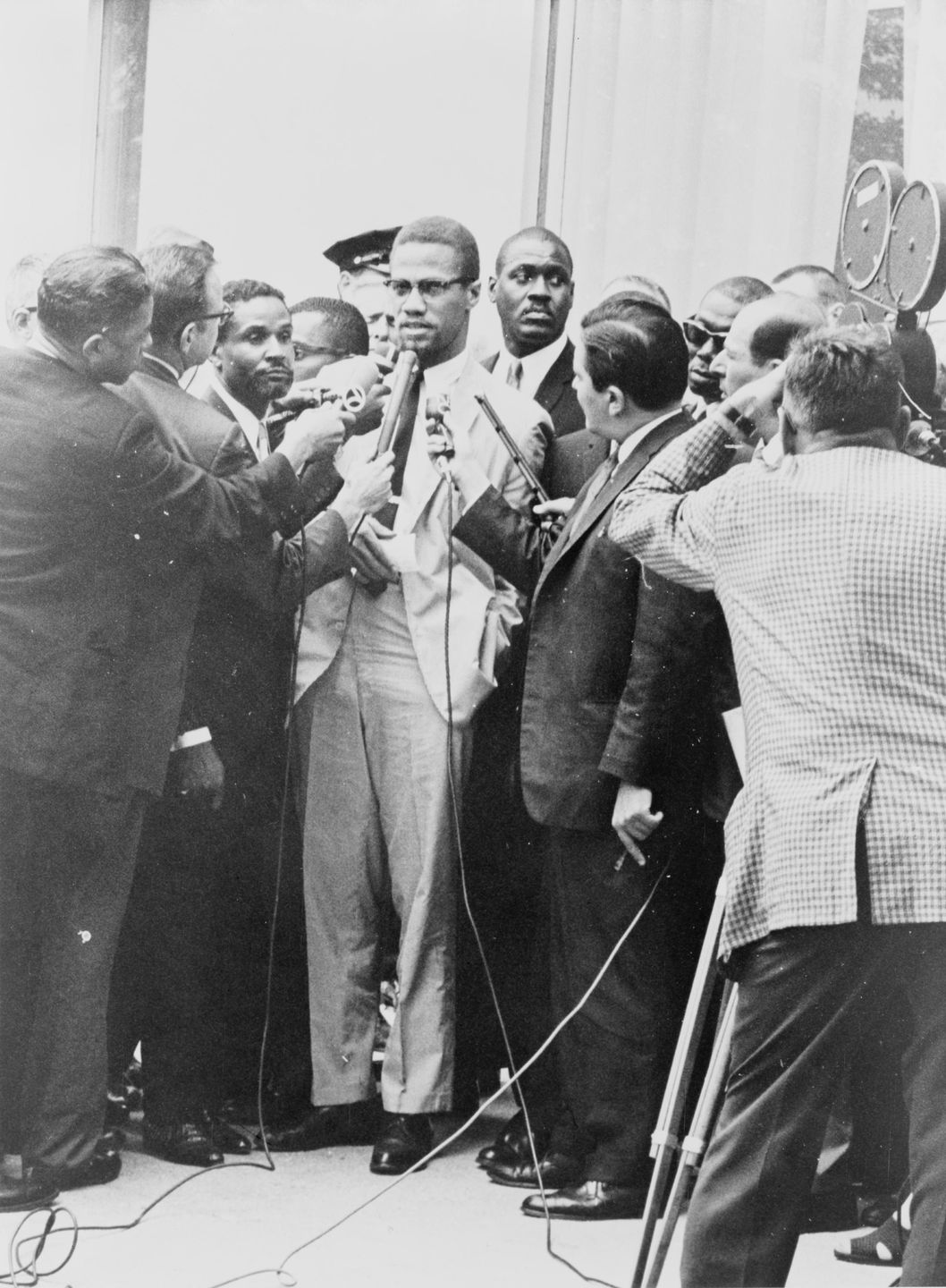
Malcolm x addressing a Civil Rights rally in Harlem, new York, 1964. Herman Hiller, World Telegram staff photographer, Public domain, via Wikimedia Commons
He was assassinated on February 21, 1965, while speaking at the Audubon Ballroom in Harlem. He was 39. Three men were convicted, all connected to the Nation of Islam, though questions about the involvement of law enforcement have persisted for decades. What's undeniable is that Malcolm X had become too influential, too articulate, and too willing to connect struggles across borders. Systems protect themselves, and he was a threat to the system.
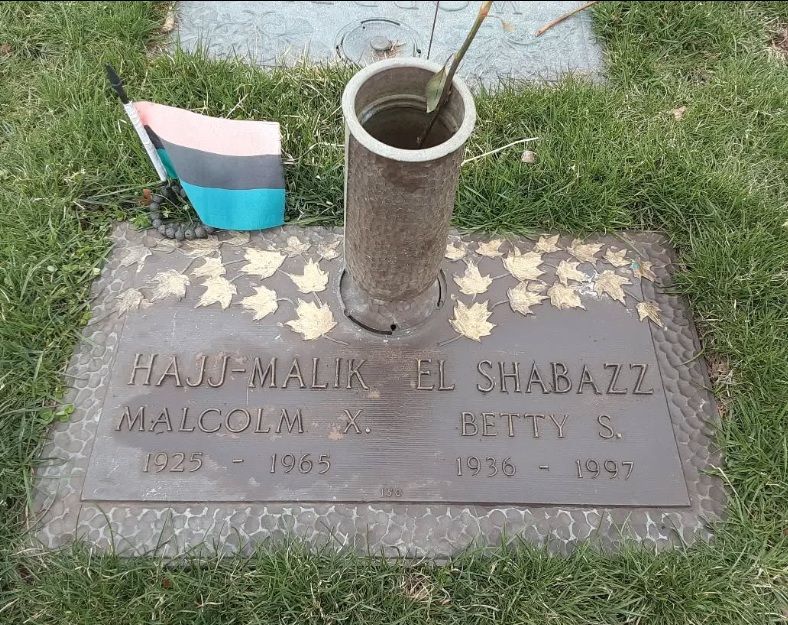
Malcolm x's grave plaque at ferncliff cemetery, inscribed with the name el-hajj malik el-shabazz that he took after his pilgrimage to Mecca. Jjazz76, CC BY-SA 4.0, via Wikimedia Commons
Malcolm's legacy is his insistence on self-definition. He refused to let others name him, describe him, or set the boundaries of what he could demand. That refusal is a design principle. Identity is not given. It is built. Language is not neutral. It structures thought. And power is not something you ask for. It's something you take, organize, and wield with precision. He understood that changing the world required changing the way people thought about themselves and their place in it.
Today, Malcolm X is quoted by activists, artists, and technologists who see parallels between his fight and their own. The tools have changed, but the principle remains: you cannot dismantle a system using only the tools the system provides. You have to build something new, name it yourself, and refuse the terms that were designed to constrain you. That was Malcolm's lesson. That was his architecture.
studio / on-this-day / May 19