studio / on-this-day / May 18
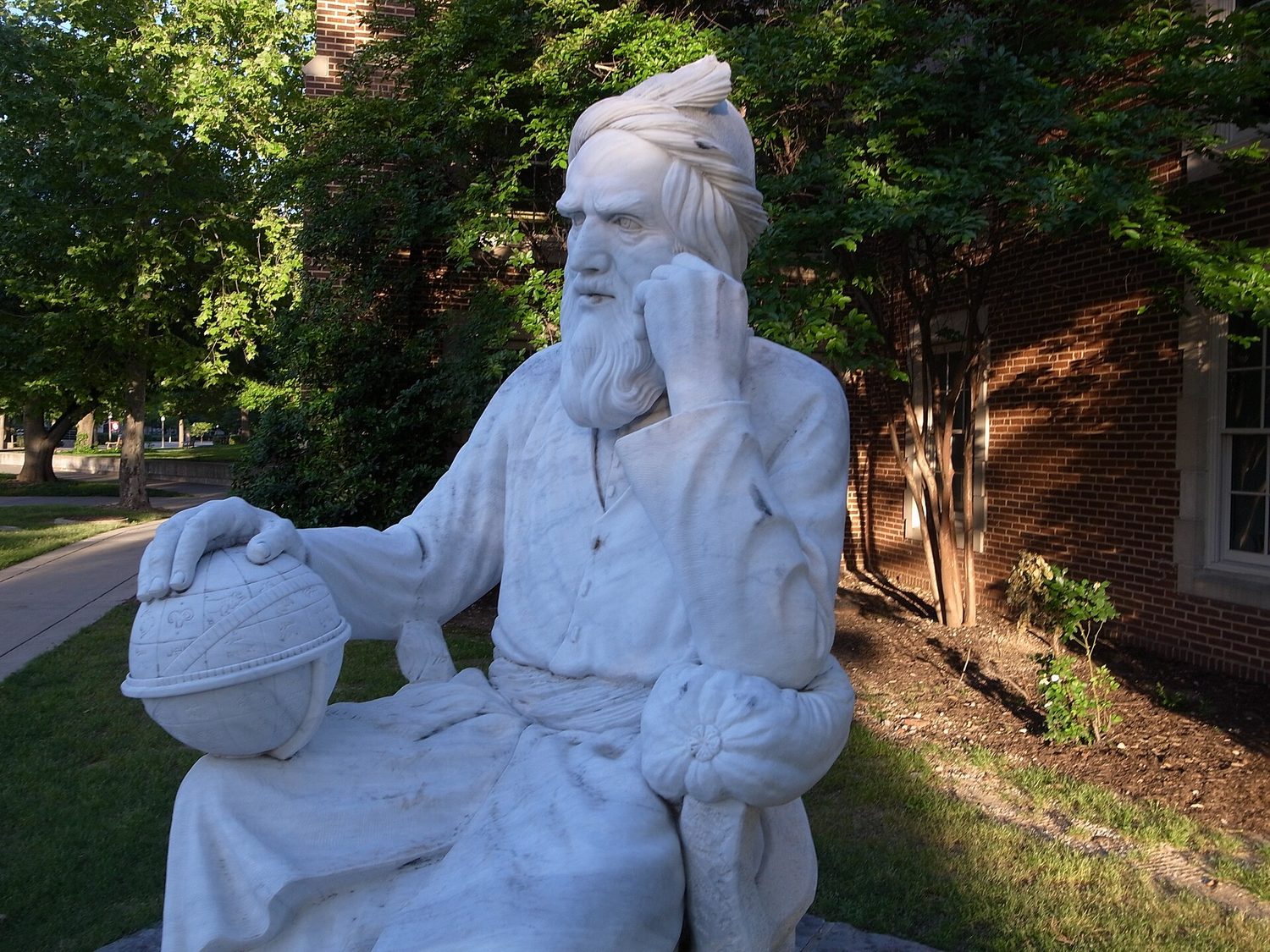
A statue of the poet and astronomer Omar Khayyam, whose calendar outperformed the Gregorian one. Public domain, via Wikimedia Commons
The Astronomer Poet
On this day in 1048 — Omar Khayyám was born, a poet and astronomer whose calendar kept better time than the one most of the world uses now.
3 min read
Omar Khayyám was born in Nishapur, in what is now Iran, on May 18, 1048. In the West, he is remembered as the author of the Rubaiyat, a collection of quatrains translated into English by Edward FitzGerald in 1859. The poems meditate on wine, mortality, and the fleeting nature of existence. But in the Islamic world during Khayyám's lifetime, he was known for something else entirely: he was one of the most brilliant mathematicians and astronomers of the medieval period, a scholar who reformed the calendar and solved cubic equations centuries before European mathematicians did the same.
Khayyám's greatest technical achievement was the Jalali calendar, commissioned by Sultan Malik-Shah in 1074. The Sultan wanted a calendar that accurately reflected the solar year, and Khayyám assembled a team of astronomers to measure the length of the year with unprecedented precision. They calculated it at 365.24219858156 days. The actual length, as measured by modern instruments, is 365.242190 days. Khayyám's figure was accurate to six decimal places. The Gregorian calendar, which the Western world adopted five centuries later, is slightly less accurate.
To build such a calendar required more than astronomy. It required advanced mathematics, observational instruments, and a conceptual framework that treated time as a measurable, designable system. Khayyám and his colleagues built observatories, tracked planetary motions, and used geometry to model celestial mechanics. They understood that calendars are not natural objects. They are engineered systems, designed to synchronize human activity with the rhythms of the cosmos.
Khayyám also made foundational contributions to algebra. His Treatise on Demonstration of Problems of Algebra presented geometric solutions to cubic equations, problems that European mathematicians wouldn't solve algebraically until the 16th century. He classified cubic equations into types and showed how to solve them using conic sections. It was mathematics as architecture, building frameworks of logic to solve problems that had no obvious solution.
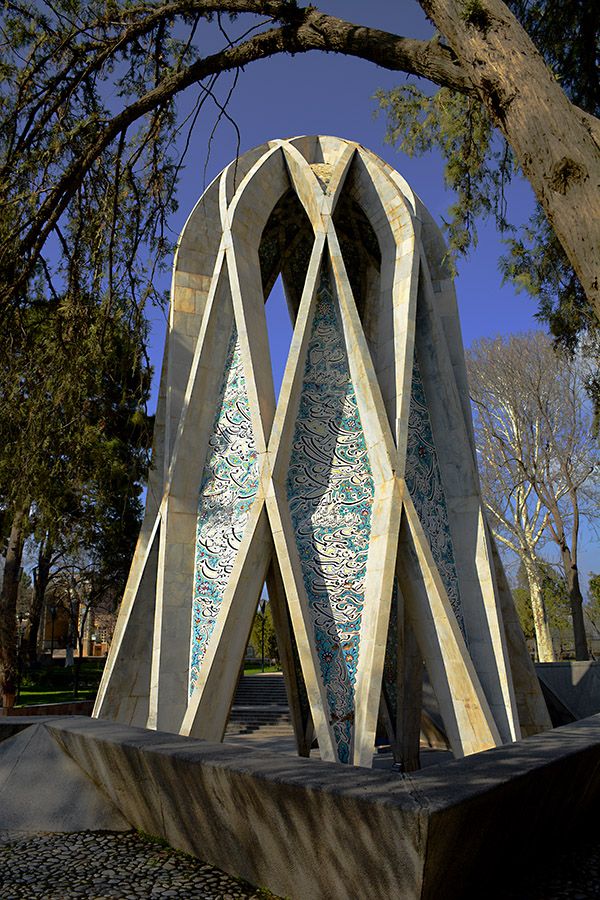
Mausoleum of omar khayyam in Nishapur, Iran, where he was born and died. Jb-mhr, CC BY-SA 4.0, via Wikimedia Commons
Yet for all his scientific work, Khayyám is remembered in the West for poetry. FitzGerald's translation of the Rubaiyat became a sensation in Victorian England, where readers found its skepticism and fatalism refreshingly subversive. But FitzGerald took considerable liberties. He reordered verses, combined fragments, and added his own interpretations. Scholars still debate how much of the published Rubaiyat reflects Khayyám's actual voice and how much reflects FitzGerald's romantic imagination.
What is clear is that Khayyám inhabited both worlds. He could calculate the solar year to within seconds and also write verses that questioned the certainty of all knowledge. In one quatrain, he wrote that the moving finger writes, and having writ, moves on, a meditation on the irreversibility of time that feels both poetic and mathematical. Time moves in one direction. The equations that describe it are deterministic. The calendar marks its passage, but offers no escape.
There's a tradition in Persian scholarship of polymaths who refused to separate poetry from mathematics, philosophy from astronomy. Khayyám belonged to that tradition. He saw patterns in numbers and patterns in language, and understood both as ways of making sense of a universe that didn't offer easy answers. His calendar was a tool for synchronizing human life with the cosmos. His poetry was a tool for reckoning with the fact that all such synchronization is temporary.
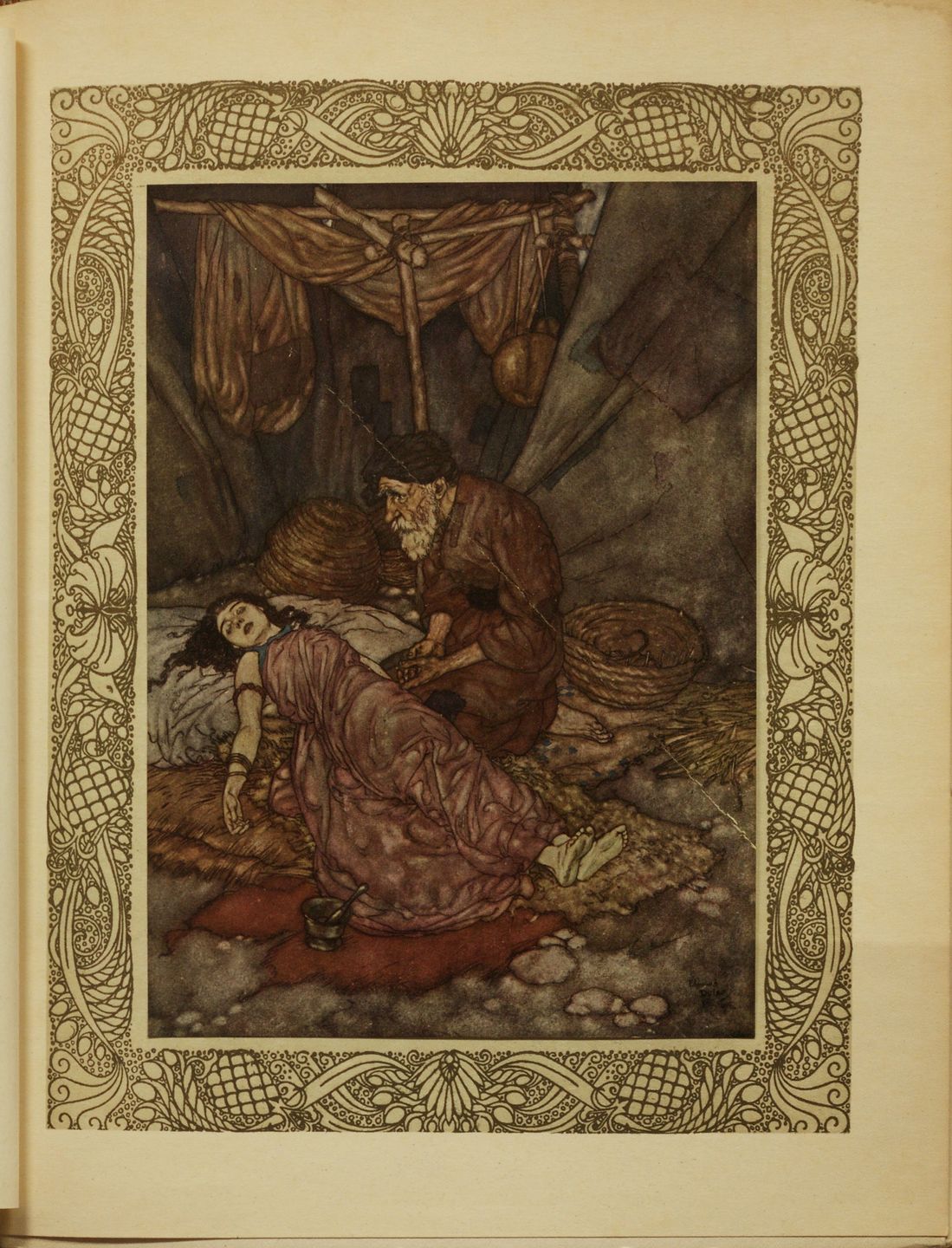
An Edmund Dulac color plate from an illustrated edition of FitzGerald's Rubaiyat of omar khayyam. Omar Khayyám / Edward FitzGerald / Edmund Dulac, Public domain, via Wikimedia Commons
Khayyám died in 1131, in the same city where he was born. His tomb became a place of pilgrimage, not for his mathematics or his calendar, but for his poetry. Centuries later, when FitzGerald's translation introduced him to the English-speaking world, a different audience discovered a voice that seemed to speak across time. The astronomer who measured the year to six decimal places also measured mortality in verses, and both calculations turned out to be precise.
studio / on-this-day / May 18