studio / on-this-day / May 17
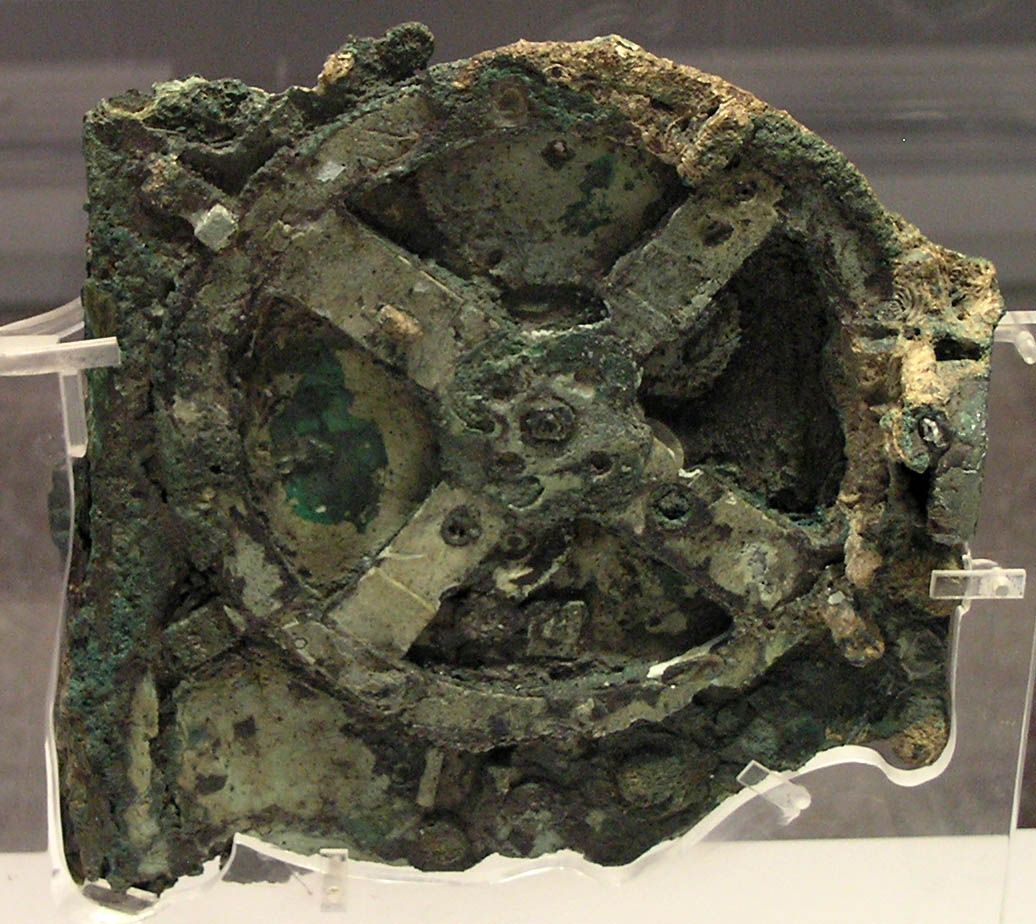
The Antikythera Mechanism, National Archaeological Museum, Athens. CC BY 2.5, via Wikimedia Commons
The Machine from Before Machines
On this day in 1902 — a corroded lump from a shipwreck turned out to be the Antikythera mechanism, a Greek analog computer two thousand years old.
3 min read
In the spring of 1902, a group of sponge divers working off the Greek island of Antikythera found something impossible at the bottom of the sea. Among the marble statues and bronze artifacts from a Roman shipwreck lay a corroded lump of bronze gears, about the size of a shoebox. It looked like scrap metal. But when archaeologists in Athens carefully cleaned the fragments, they discovered something that should not have existed: a machine with dozens of interlocking gears, built around 100 BCE, designed to calculate the movements of the sun, moon, and planets with startling accuracy.
The Antikythera Mechanism is the oldest known analog computer. It's older than any comparable device by more than a thousand years. Nothing like it appears in historical records until medieval Islamic astronomers built similar instruments, and even those were simpler. The mechanism used a differential gear, the same technology that wouldn't appear again until the 16th century. It tracked the Metonic cycle, the Callippic cycle, the Saros eclipse cycle. It predicted eclipses decades in advance. It was, by every measure, a technological anomaly.
The device consists of at least 30 bronze gears housed in a wooden frame, with dials on the front and back. You turned a crank on the side, and the gears calculated celestial positions based on the date. The front dial showed the positions of the sun and moon against the zodiac. The back dials tracked eclipse predictions and the timing of the Olympic Games. It was not a toy. It was a precision instrument, built by someone who understood gear ratios, epicyclic motion, and the mathematics of celestial mechanics.
For decades, no one knew what to make of it. The historian Derek de Solla Price spent years studying the fragments and concluded in the 1970s that it was a planetary calculator, possibly built by someone in the tradition of Archimedes. But the full complexity of the mechanism only became clear in the 21st century, when researchers used CT scans and 3D imaging to peer inside the corroded bronze. They found inscriptions, gear teeth, and mechanical details that had been invisible for 2,000 years.
What makes the Antikythera Mechanism astonishing is not just its sophistication but its loneliness in history. There are references in ancient texts to similar devices. Cicero mentions a sphere built by Archimedes that showed the motions of the heavens. But the Antikythera Mechanism is the only one that survived. Everything else was lost, destroyed, or melted down for scrap. For centuries, scholars believed that ancient technology was primitive, that gears and precision mechanics didn't exist until the Renaissance. This single artifact proved that assumption wrong.
The mechanism raises uncomfortable questions about what else was lost. If the Greeks could build analog computers, what else did they make that we have no record of? How much knowledge disappeared when the Library of Alexandria burned, when Rome fell, when centuries of manuscripts were left to decay? The device is a reminder that technological progress is not linear. Civilizations can build extraordinary things and then forget how they were made.
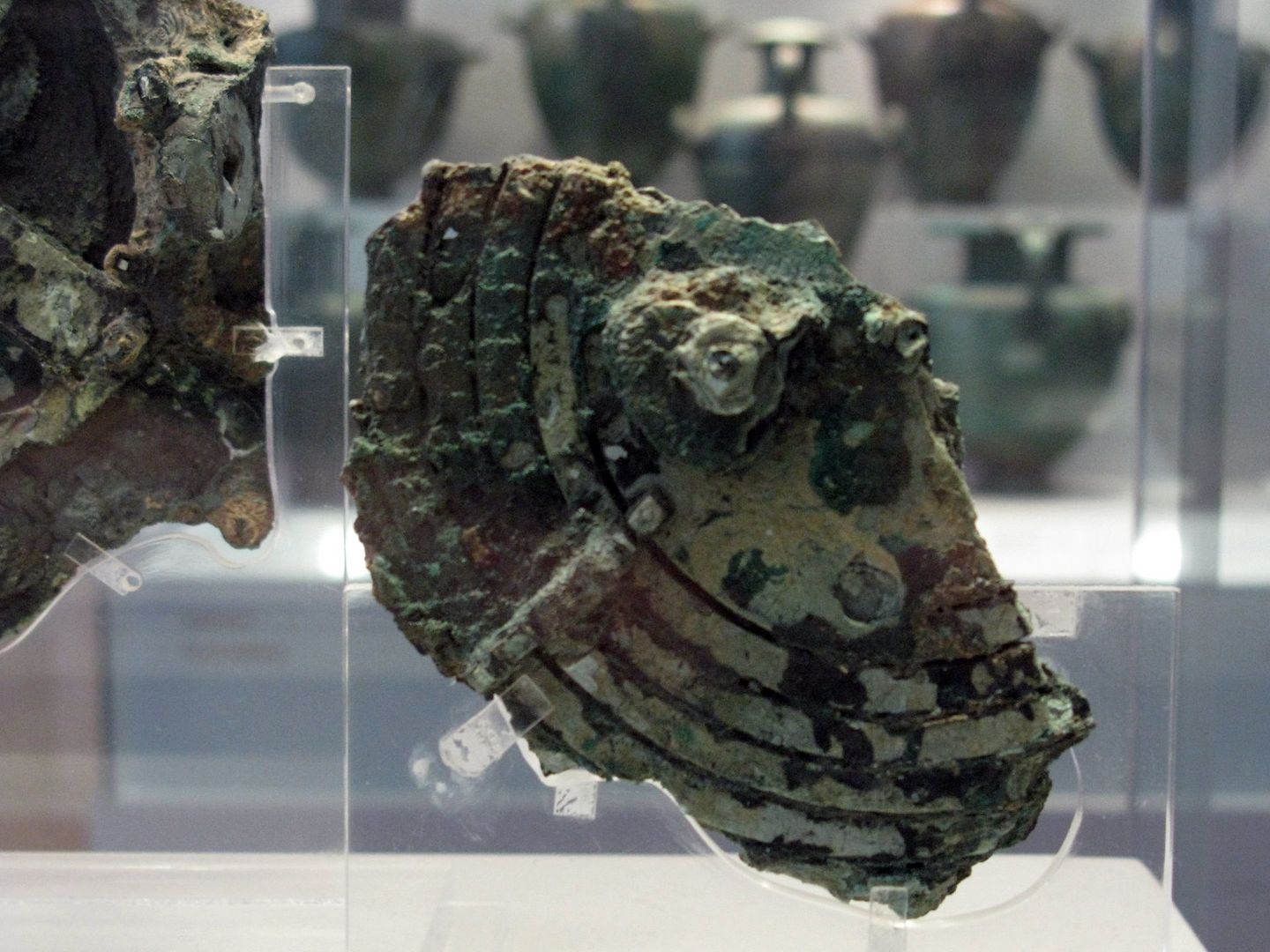
The Antikythera Mechanism on display at the National Archaeological Museum, Athens. Tilemahos Efthimiadis from Athens, Greece, CC BY 2.0, via Wikimedia Commons
Modern reconstructions of the mechanism show that it worked beautifully. Turn the crank, and the gears calculate planetary positions with precision that rivals modern software. It's a device that bridges the gap between astronomy and engineering, between abstract mathematics and physical craft. In that sense, it's a predecessor to every computational device we build today, from Theodore Maiman's laser to the smartphone in your pocket. All of them encode knowledge in physical form, all of them calculate answers from mechanical principles.
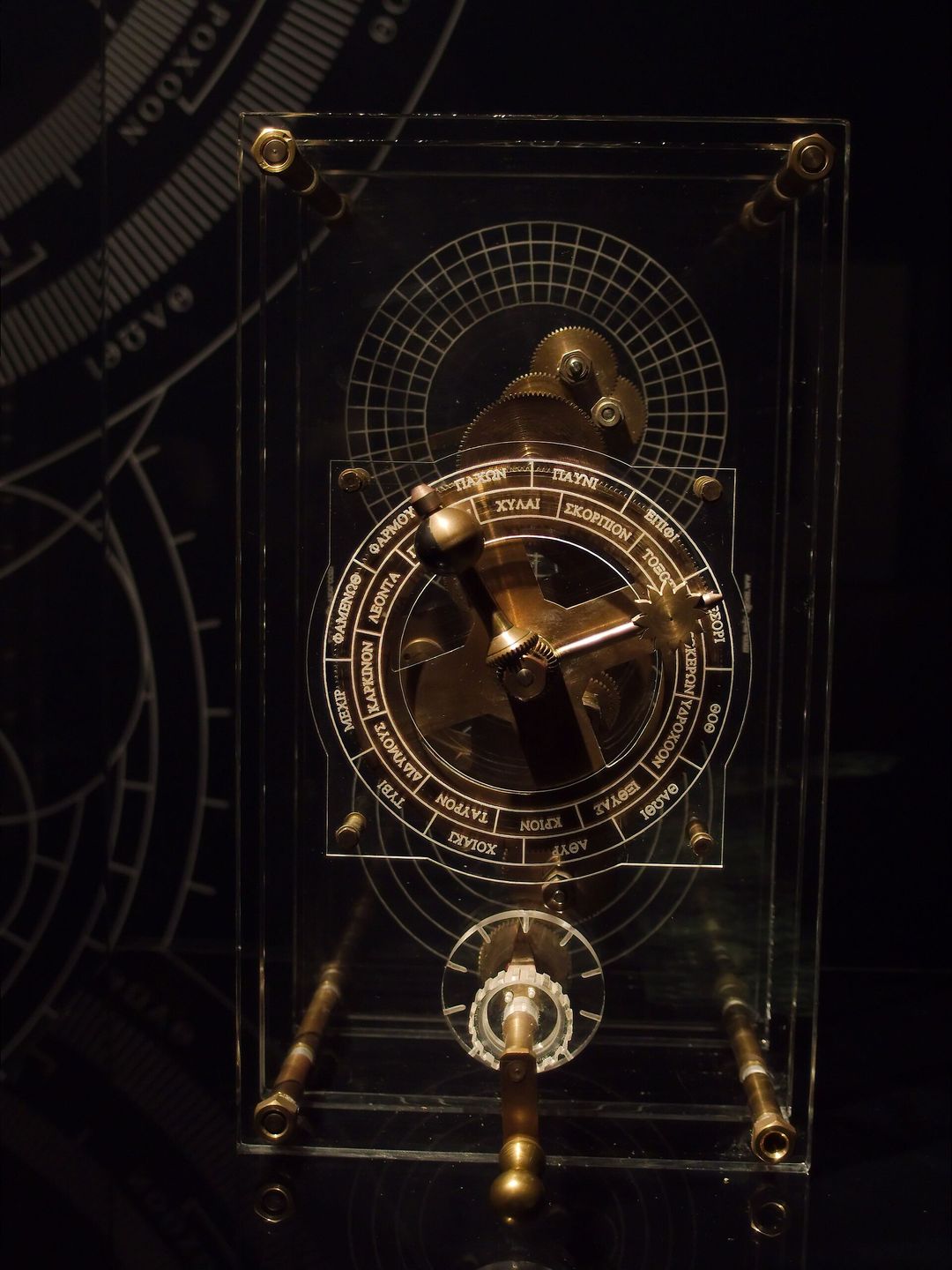
A Modern reconstruction of the Mechanism, showing the interlocking bronze gear trains. Marsupium photography, CC BY-SA 2.0, via Wikimedia Commons
The Antikythera Mechanism now sits in the National Archaeological Museum in Athens, a corroded relic of a lost tradition. But its real significance lies in what it suggests: that 2,000 years ago, someone looked at the heavens and decided to build a machine that could predict their motions. They succeeded. Then the knowledge vanished, and it took two millennia for the rest of us to catch up.
studio / on-this-day / May 17