studio / on-this-day / May 15
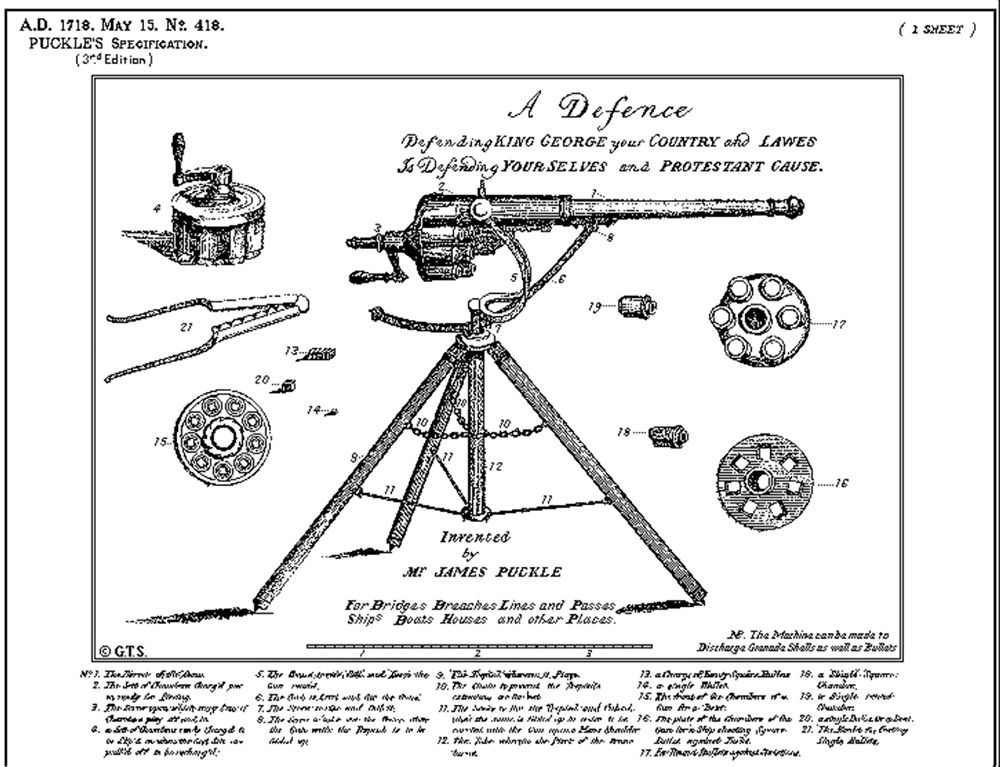
James Puckle's original 1718 advertisement for the Defence Gun, showing the revolving cylinder design. Artist not identified, Public domain, via Wikimedia Commons
Mechanical Repetition
On this day in 1718 — James Puckle patented an early rapid-fire gun, an experiment in applying mechanical repetition to killing.
2 min read
On May 15, 1718, James Puckle, a London lawyer and inventor, received a patent for what he called the Defence Gun, a tripod-mounted, single-barreled weapon with a revolving cylinder. It could fire nine shots per minute, far faster than the muskets of the time, which managed two or three. The gun was designed for ship defense, to repel boarders during naval combat. It was also one of the first weapons to mechanize the process of killing, replacing human reloading with a rotating chamber that allowed near-continuous fire.
The Puckle Gun, as it became known, was never widely adopted. It was expensive, difficult to manufacture, and no more effective than a well-trained crew with muskets. Only a few prototypes were built. Puckle demonstrated it to potential investors, but the gun failed to attract enough funding to enter production. It was a commercial failure, but it was also a conceptual breakthrough. It proved that firearms could be designed for volume rather than precision, that lethality could be scaled through mechanical advantage.
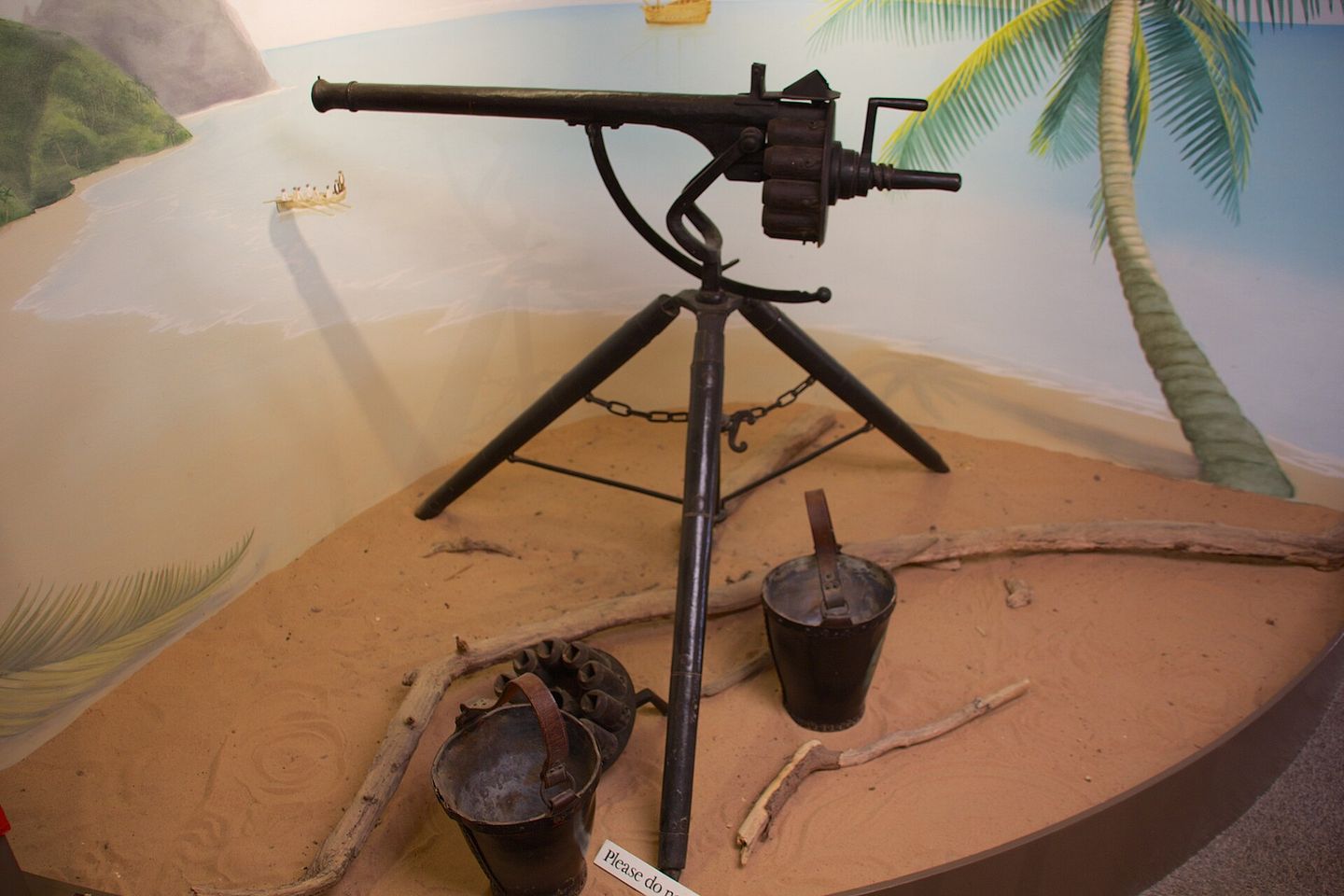
A surviving Puckle Gun at buckler's hard maritime museum, showing the tripod, single barrel, and revolving cylinder. Photograph by Mike Peel (www.mikepeel.net)., CC BY-SA 4.0, via Wikimedia Commons
What made the Puckle Gun historically significant was not its battlefield impact, which was zero, but its approach. Earlier firearms required a shooter to load, aim, and fire each shot individually. The Puckle Gun separated those steps. The operator cranked a handle to rotate the cylinder, which aligned a new chamber with the barrel. Firing became a repetitive motion, like turning a wheel. The design prefigured the Gatling gun, the Maxim gun, and every automatic weapon that followed. It was a template for industrialized violence.
Puckle's patent included a strange detail: the gun had two types of ammunition. Round bullets were for firing at Christians. Square bullets, which would cause more severe wounds, were for use against Turks. This was not just cruelty. It was marketing. Puckle was pitching the gun during a period of heightened conflict with the Ottoman Empire. The square bullet feature was meant to appeal to investors who saw the weapon as a tool for religious war. It did not work. The gun was too complex, and the square bullets were impractical. But the logic was clear: design could be tailored to specific enemies, and lethality could be a selling point.
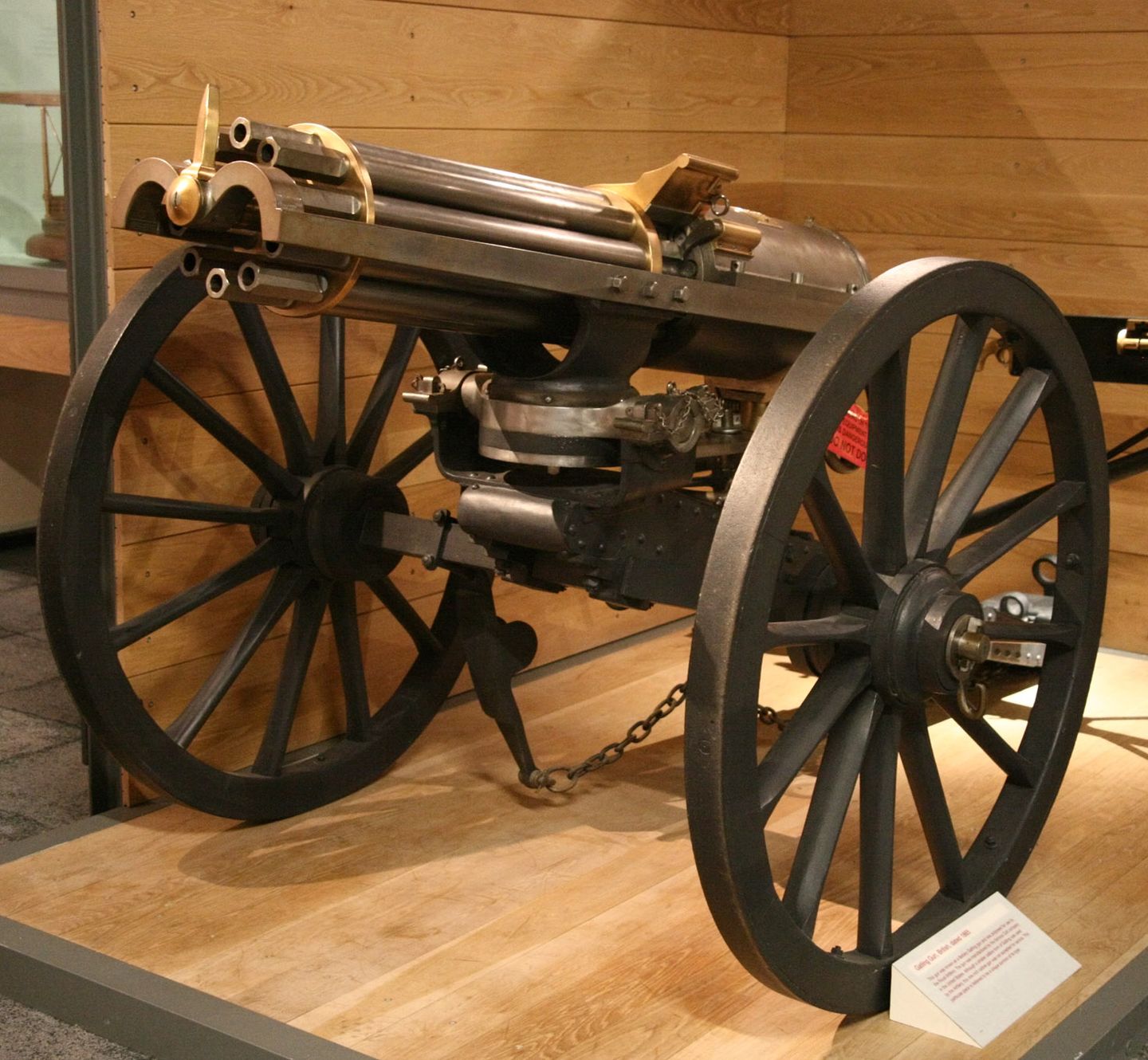
A Gatling Gun, 1865 — the weapon that realized Puckle's concept of mechanized rapid fire a century later. Max Smith (Megapixie), Public domain, via Wikimedia Commons
The failure of the Puckle Gun delayed the development of automatic weapons by more than a century. It was not until the Gatling gun in the 1860s that mechanized rapid fire became militarily viable. By then, manufacturing techniques had improved, and the demand for such weapons had grown. The American Civil War, the colonial wars in Africa, and World War I all drove the refinement of machine gun design. What Puckle imagined in 1718 became standard by 1914.
The pattern is familiar: an idea emerges too early, fails, and is forgotten until the conditions are right for its return. The Puckle Gun was not a turning point. It was a sketch of a future that would take generations to materialize. But the principle was established. Repetition could be mechanized. Violence could be automated. The question was never whether it could be done, only when someone would find a way to make it profitable.
studio / on-this-day / May 15