studio / on-this-day / May 12
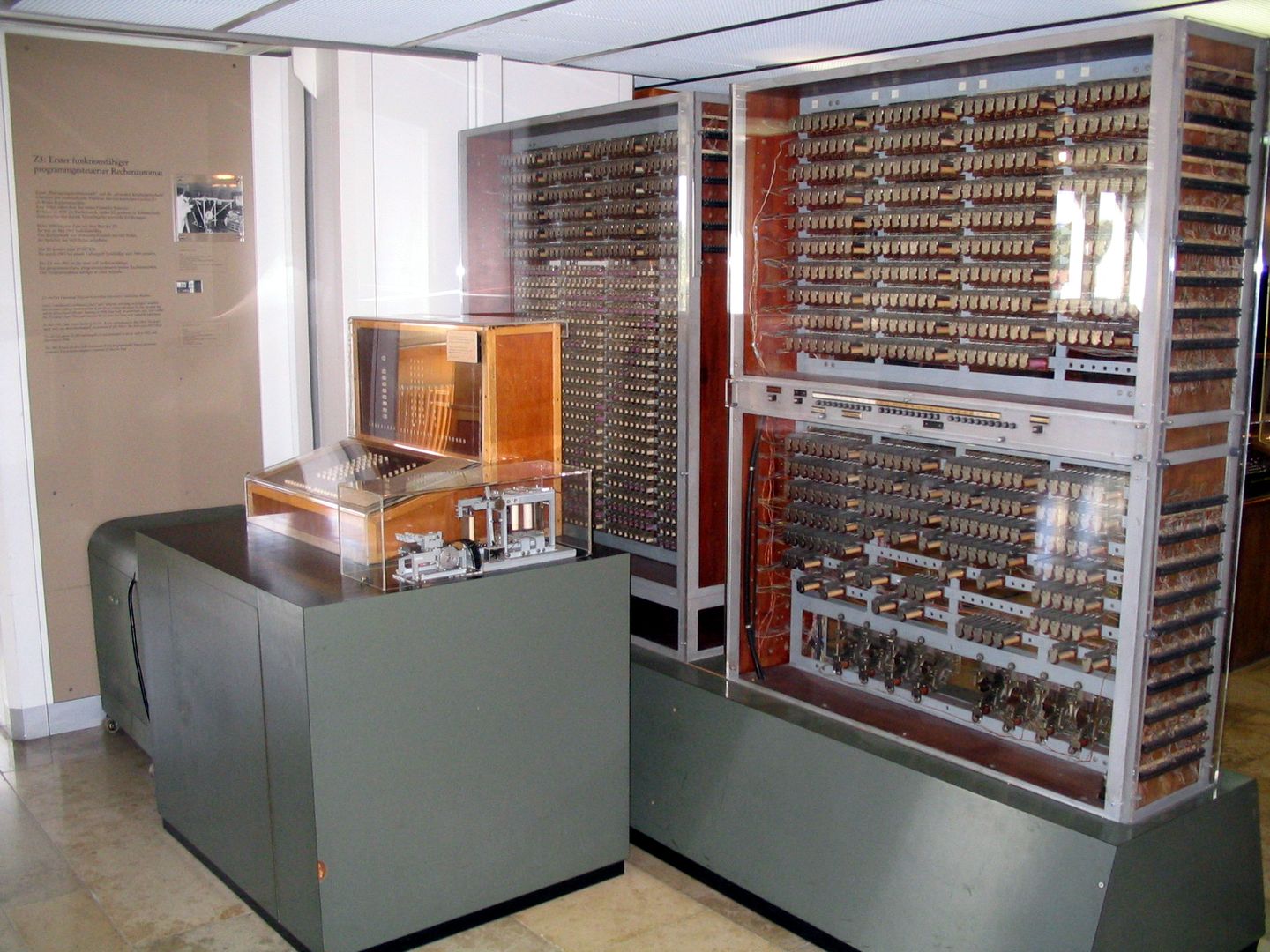
Replica of Konrad Zuse's z3 computer, 1941, on display at the Deutsches Museum, Munich. Venusianer at German Wikipedia, CC BY-SA 3.0, via Wikimedia Commons
The First Program
On this day in 1941 — Konrad Zuse switched on the Z3, the first programmable computer, storing its instructions on strips of recycled film.
3 min read
On May 12, 1941, in Berlin, Konrad Zuse demonstrated the Z3, a machine that could execute programs stored on punched film. It was the first fully functional, programmable, general-purpose digital computer. It used binary floating-point arithmetic, had 64 words of memory, and could perform about one operation every few seconds. The machine was built in Zuse's parents' apartment using recycled materials, including film stock scavenged from movie theaters. World War II was underway, and resources were scarce. Zuse improvised.
The Z3 was electromechanical, built with 2,600 telephone relays that clicked and whirred as they processed instructions. It was not electronic like the later ENIAC, but it was programmable. Programs were punched onto discarded 35mm film, which the machine read sequentially. This meant the Z3 could be reprogrammed without rewiring, a conceptual leap from earlier calculating machines that performed fixed operations. The machine was general-purpose. It could solve any problem that could be expressed in terms of arithmetic operations, given enough time and memory.
Zuse had been working on computing machines since the mid-1930s, motivated by the tedious calculations required in his engineering work. He built the Z1 in his parents' living room in 1938, a mechanical computer made entirely of metal plates and pins he cut and assembled by hand. It barely worked. The Z2 improved on the design but was still unreliable. The Z3 was the first that actually functioned consistently. Zuse filed a patent application in 1941, but it was rejected on the grounds that the machine was not considered inventive enough.
The Z3 was destroyed in an Allied bombing raid in 1943, along with most of Zuse's early work. He rebuilt it from memory in the 1960s, and a working replica is now in the Deutsches Museum in Munich. The original machine, however, had little impact during the war. Zuse tried to interest the German military in using it for calculations, but they dismissed it as unnecessary. The war, they believed, would be over before computers could make a difference. They were wrong, but the Z3 never got the chance to prove itself.
Zuse's work was largely unknown outside Germany until after the war. By then, other teams had independently built programmable computers: the Colossus in Britain, the ENIAC in the United States. Zuse did not collaborate with these efforts. He worked in isolation, driven by personal curiosity rather than military necessity. After the war, he founded a company to build commercial computers and developed one of the first high-level programming languages, Plankalkül, in the 1940s. It was decades ahead of its time and went mostly unnoticed.
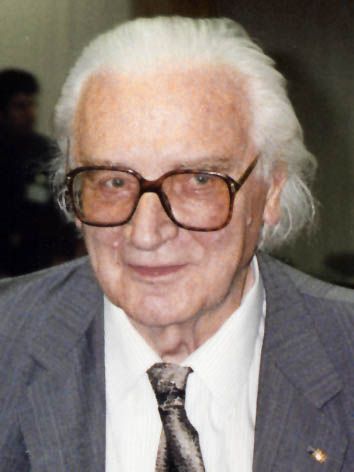
Konrad Zuse, inventor of the z3, photographed in 1992. Wolfgang Hunscher, Dortmund, CC BY-SA 3.0, via Wikimedia Commons
What makes the Z3 significant is not just that it was first, but that it demonstrated the core principles of modern computing: binary arithmetic, programmability, and general-purpose operation. These ideas were not obvious. Other inventors built machines that could calculate, but Zuse built a machine that could be told what to calculate. The difference between a calculator and a computer is the ability to store and execute a sequence of instructions. The Z3 had that ability.
Zuse worked with scavenged materials because that was what was available. The film stock came from discarded movies. The relays came from telephone systems. The housing was built from whatever metal he could find. Scarcity forced creativity. The Z3 was not elegant, but it worked. It proved that computation was not about precision-engineered components. It was about logical structure. The hardware mattered less than the architecture.
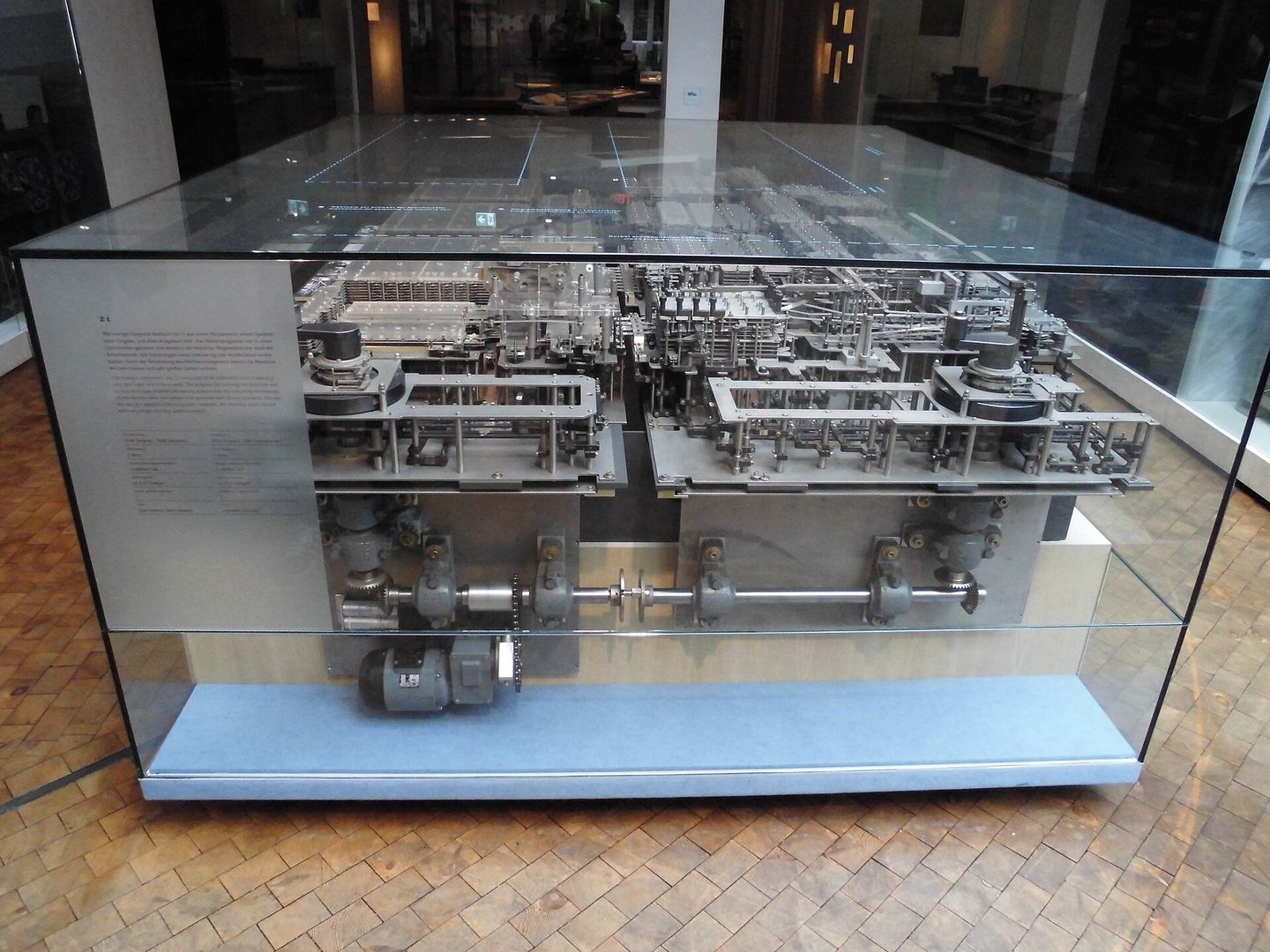
Reconstruction of Zuse's z1, the hand-built predecessor to the z3, at the Deutsches technikmuseum, Berlin. Morn, CC BY-SA 3.0, via Wikimedia Commons
The Z3 was a machine built in a living room during a war, using garbage. It ran programs and solved problems. It was the first computer, and almost no one noticed. History moved on, and other machines got the credit. But Zuse's work stands as proof that the future can be built from scraps, if the design is sound.
studio / on-this-day / May 12