studio / on-this-day / Apr 30
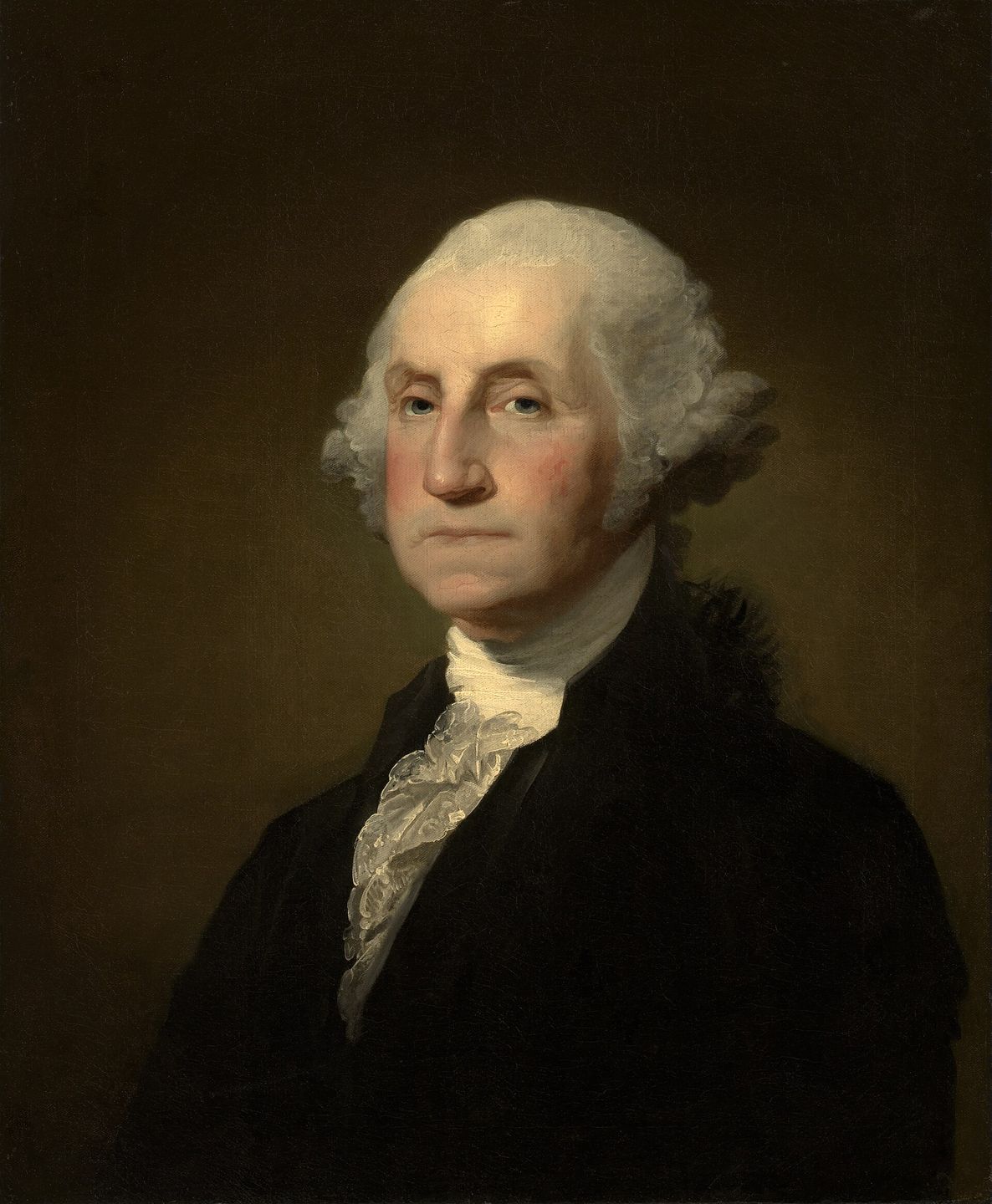
The williamstown portrait of George Washington by gilbert stuart, 1796. Washington set the template for the American presidency through his decisions about protocol, conduct, and the voluntary surrender of power — none of which was mandated by the Constitution. Gilbert Stuart, Public domain, via Wikimedia Commons
Designed and Shipped
On this day in 1789 — George Washington was inaugurated, and a government that had existed only on paper was finally shipped and running.
3 min read
On April 30, 1789, George Washington took the oath of office as the first president of the United States. The ceremony took place on the balcony of Federal Hall in New York City, before a crowd of thousands. Washington placed his hand on a Bible, recited the 35-word oath prescribed by the Constitution, and became the executive of a government that had been operational for less than two months. The Constitution had been ratified the previous year. The electoral college had met in February. Congress convened in March. Now the system was live, and no one was entirely sure it would work.
The Constitution was a design document. It outlined the structure of the federal government, the powers of each branch, the relationship between states and the central authority, and the rights of citizens. It was written in 1787 by 55 men locked in a room in Philadelphia for four months. They argued about representation, slavery, taxation, and executive power. They compromised, revised, and rewrote. The final document was four pages long, about 4,500 words. It was not a manifesto. It was a specification.
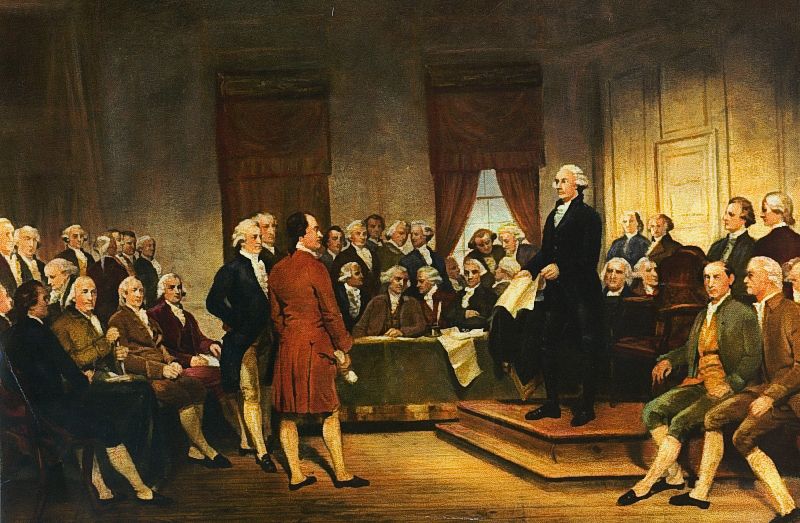
George Washington presiding at the constitutional convention of 1787, painted by junius Brutus Stearns in 1856. the convention lasted four months and produced the four-page specification for American government that Washington would be the first to execute. Junius Brutus Stearns, Public domain, via Wikimedia Commons
What the framers designed was a system of checks and balances. The legislative branch writes laws. The executive enforces them. The judiciary interprets them. No branch has absolute power. Each can limit the others. The president can veto legislation. Congress can override the veto. The Supreme Court can declare laws unconstitutional. Congress can impeach the president and judges. The system is adversarial by design. It assumes that ambition will counteract ambition, that factions will prevent tyranny, and that conflict, properly structured, produces stability. This is engineering, not idealism.
The framers also built in a mechanism for updates. Amendments require broad consensus, two-thirds of Congress and three-fourths of the states, which makes the Constitution difficult to change but not impossible. Since 1789, it has been amended 27 times. The first ten amendments, the Bill of Rights, were added in 1791 to address concerns about individual liberties. Later amendments abolished slavery, extended voting rights, and adjusted the mechanics of elections. The system was not perfect. It was versioned.
Washington's role was to instantiate the design. He had to figure out what a president actually does. The Constitution provided the framework, but the details were undefined. Should the president hold open audiences like a monarch, or keep distance like a magistrate? How should the executive branch communicate with Congress? What tone should the office take? Washington chose restraint. He avoided pomp, rejected titles like "Your Excellency," and set a precedent of two terms in office. None of this was mandated. It was implementation.
The first administration was small. The executive branch consisted of a handful of departments: State, Treasury, War, and the Office of the Attorney General. There was no federal bureaucracy as we know it today. No agencies, no regulatory framework, no infrastructure for enforcing policy at scale. Washington and his cabinet, including Alexander Hamilton and Thomas Jefferson, had to build the operating procedures from scratch. They set precedents for cabinet meetings, diplomatic protocol, and financial policy. Every decision became a template for future administrations. The system was defined by use.
What makes the U.S. Constitution unusual is its longevity. Most constitutions do not last. France has had 16 since 1789. Latin American countries rewrite theirs every few decades. The U.S. Constitution has survived for over 230 years, not because it is perfect, but because it is modular. The amendment process allows adaptation without replacement. The separation of powers prevents any single faction from rewriting the rules. The system is resilient because it was designed to tolerate conflict and absorb change without collapsing. That is what good architecture does. It accommodates the future without predicting it.
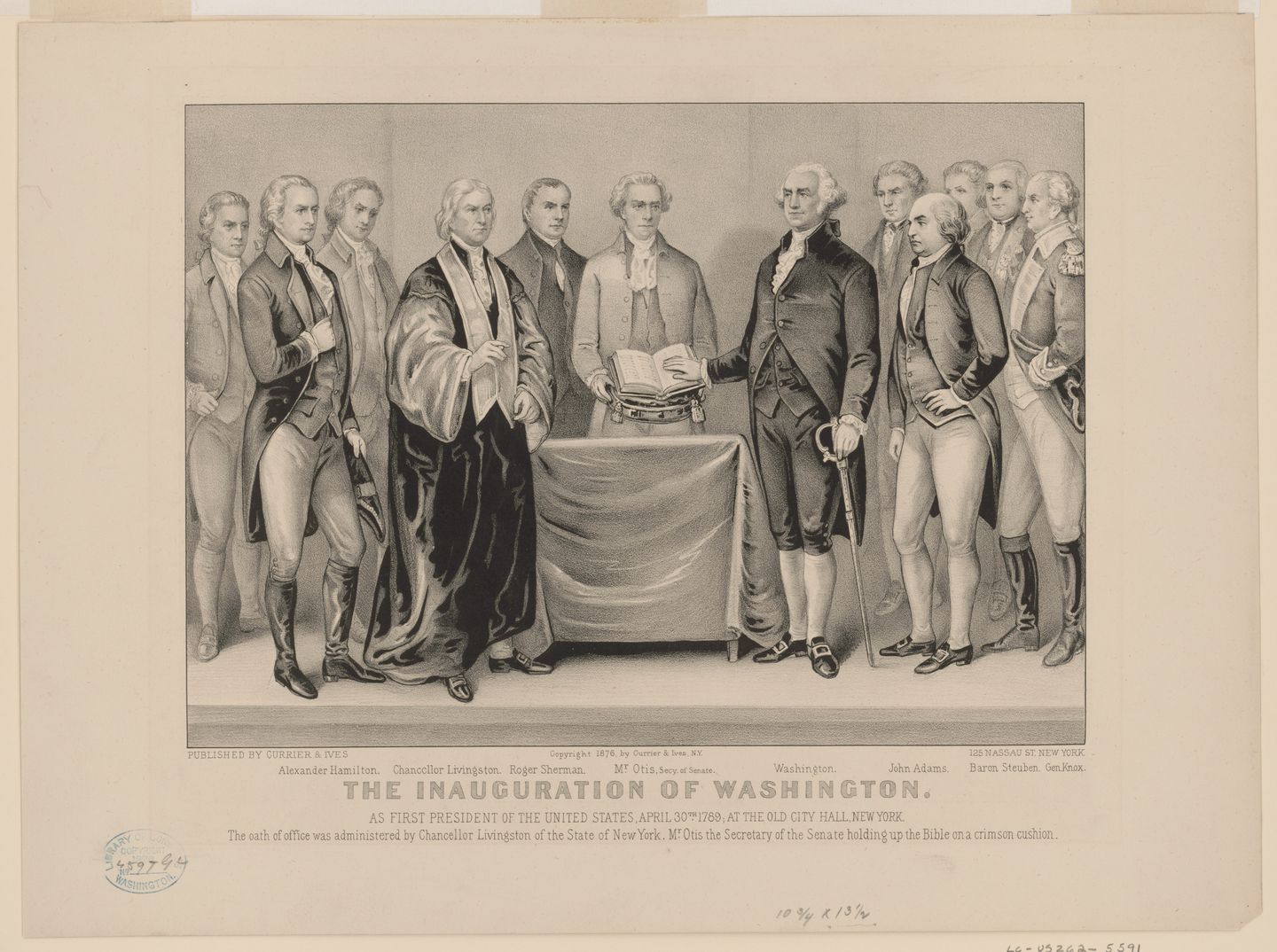
Washington taking the oath of Office at Federal Hall in New York on April 30, 1789, in a later popular print of the scene. The building had been remodeled by pierre l'enfant to house the New Congress, and the inauguration was staged on its balcony before a crowd in the streets below. Popular Graphic Arts, Public domain, via Wikimedia Commons
Washington's inauguration was not the birth of a nation. It was the deployment of a system. The design had been written, debated, and ratified. Now it had to run. The first bugs would appear immediately. Conflicts over states' rights, economic policy, and the scope of federal power emerged within months. Some were resolved through legislation. Some through court rulings. Some through war. The system bent, adapted, and persisted. It is still running, patched and amended, carrying the weight of centuries of edge cases and unintended consequences. On April 30, 1789, the system went live. It has been in production ever since.
studio / on-this-day / Apr 30