studio / on-this-day / Apr 8
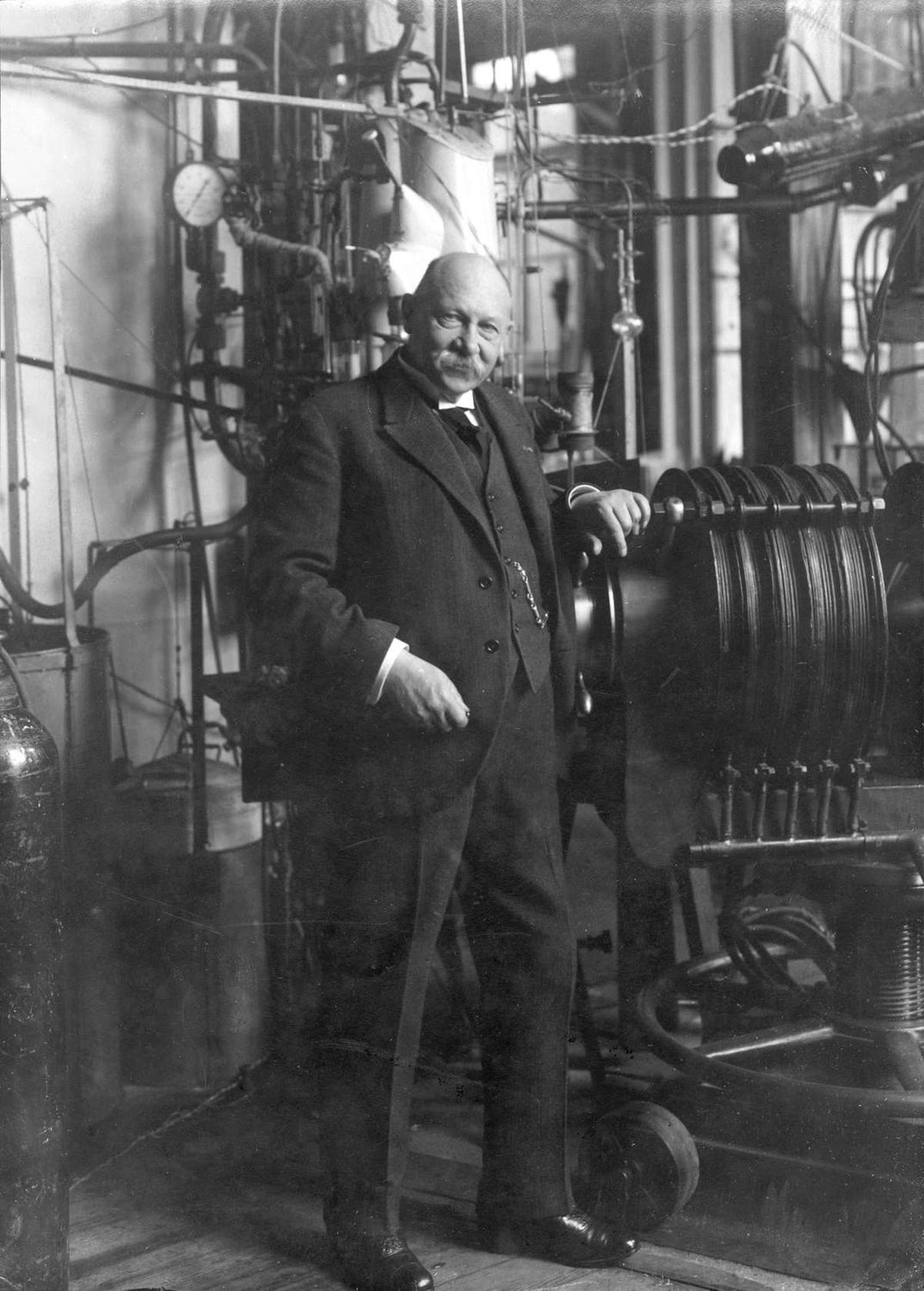
Heike Kamerlingh Onnes, who discovered superconductivity in 1911, photographed in 1926. Public domain, via Wikimedia Commons
Zero Resistance
On this day in 1911 — Heike Kamerlingh Onnes found that near absolute zero some metals carry electricity with no resistance whatsoever.
3 min read
On April 8, 1911, Dutch physicist Heike Kamerlingh Onnes was measuring the electrical resistance of mercury cooled to near absolute zero when his instruments showed something impossible. At 4.2 Kelvin, about minus 269 degrees Celsius, the resistance didn't just decrease. It vanished completely. Current flowed through the mercury with zero opposition. He checked his equipment, repeated the experiment, and confirmed the result. He had discovered superconductivity, a state of matter where electricity moves without loss.
The implications were staggering. Every electrical system experiences resistance. Wires heat up. Energy dissipates. Power plants lose a significant percentage of electricity just transmitting it through cables. Resistance is friction for electrons, an unavoidable tax on every circuit. Onnes had found a way to eliminate it entirely, but only at temperatures so cold that helium itself becomes liquid.
Onnes had spent years building the infrastructure to reach these temperatures. In 1908, he became the first person to liquefy helium, achieving 4.2 Kelvin in his lab at Leiden University. It required custom-built cryogenic equipment, precise engineering, and a deep understanding of thermodynamics. The helium liquefaction wasn't the goal. It was a tool. Onnes wanted to study how materials behave at the edge of absolute zero, where thermal motion nearly stops and quantum effects dominate.
Superconductivity broke the rules of classical physics. According to the theories of the time, resistance should decrease gradually as temperature drops, approaching but never reaching zero. Instead, Onnes observed a sudden phase transition. Below a critical temperature, mercury became a perfect conductor. The current he started in a superconducting loop continued circulating for as long as he could measure, days and weeks, without decaying. It was as if friction had been deleted from the universe.
Onnes won the Nobel Prize in 1913, not for superconductivity but for his work on low-temperature physics and liquefying helium. The discovery of superconductivity was mentioned almost as a footnote. At the time, nobody knew what to do with it. Keeping materials at 4 Kelvin required enormous effort and expense. The phenomenon was fascinating but impractical. It would take decades before anyone found a use for it.
The explanation for superconductivity didn't come until 1957, when John Bardeen, Leon Cooper, and Robert Schrieffer published a theory showing that at low temperatures, electrons in certain materials form pairs and move through the atomic lattice without scattering. This pairing creates a quantum state that behaves more like a superfluid than a normal conductor. The BCS theory, as it's called, earned them a Nobel Prize and gave physicists a framework for understanding and predicting superconductors.
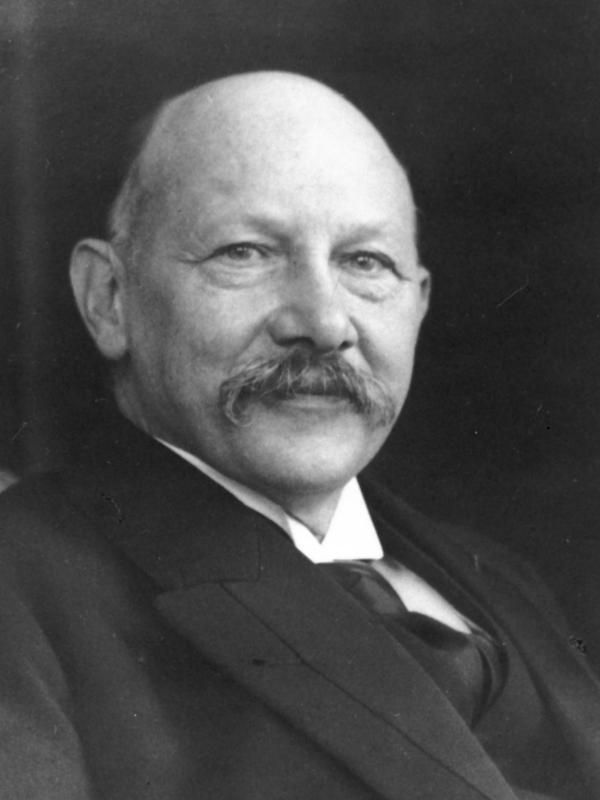
Kamerlingh Onnes in his low-temperature laboratory at Leiden University, where he built the equipment to liquefy helium and study matter near absolute zero. Copyrighted free use, via Wikimedia Commons
Today, superconductors are everywhere in advanced technology. MRI machines use superconducting magnets to generate powerful magnetic fields. Particle accelerators like the Large Hadron Collider rely on superconducting coils to steer particles at near light speed. Quantum computers use superconducting circuits to create qubits. The challenge remains the same as it was in 1911: keeping things cold enough. Most superconductors still require liquid helium, which is expensive and difficult to maintain.
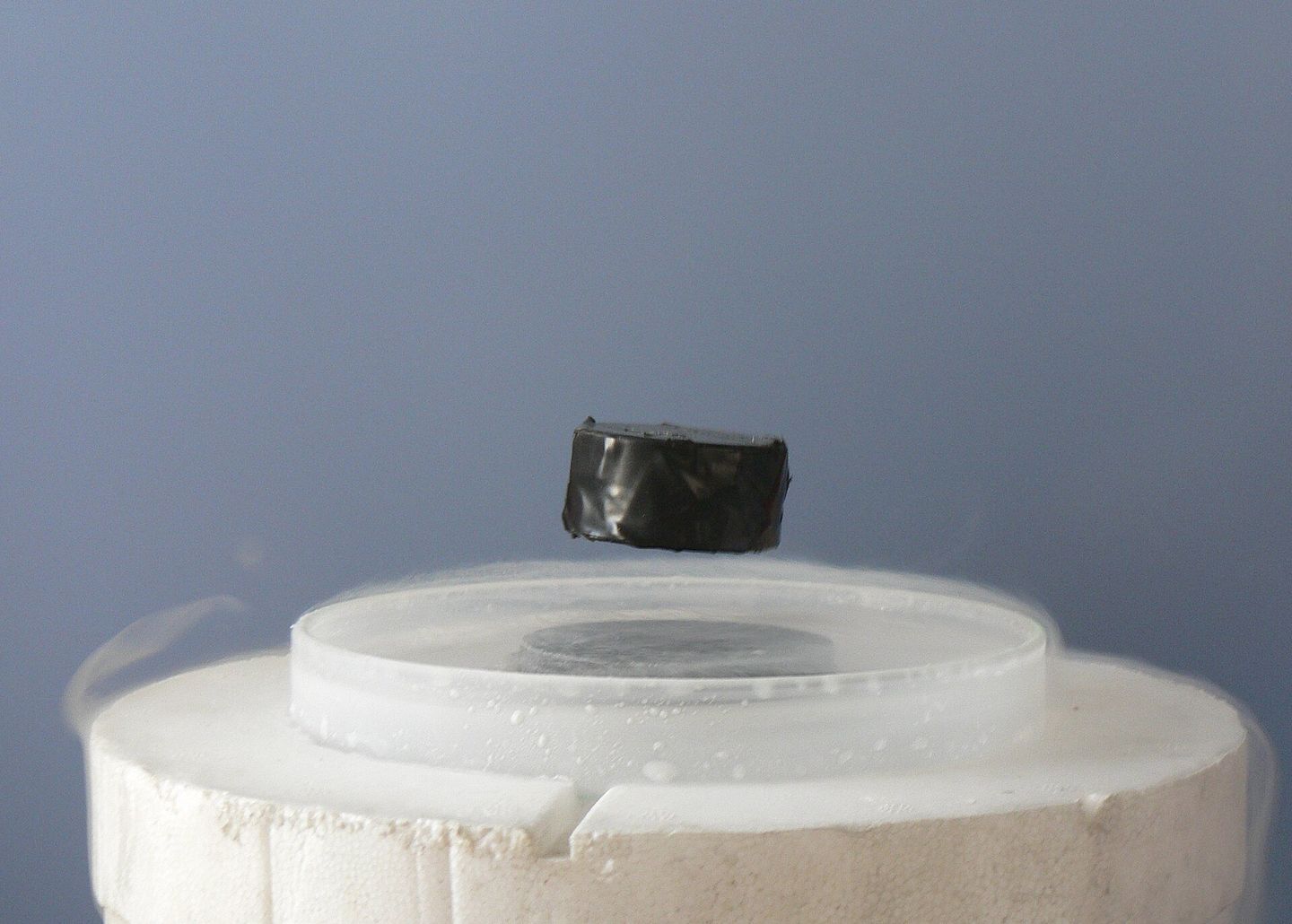
A small magnet floats above a superconductor through the meissner effect, the magnetic signature of the zero-resistance state Onnes first glimpsed in 1911. Mai-Linh Doan, CC BY-SA 3.0, via Wikimedia Commons
The search for room-temperature superconductors has been one of the most pursued goals in materials science. A material that superconducts at normal temperatures would revolutionize energy transmission, computing, and transportation. Maglev trains that float on magnetic fields, lossless power grids, computers that run without heat dissipation. Every few years, a lab announces a breakthrough, only to have it questioned or retracted. The dream remains tantalizing but elusive.
What Onnes discovered on April 8, 1911, was more than a physical phenomenon. It was proof that nature has hidden states, behaviors that only emerge under extreme conditions. Superconductivity doesn't exist in the everyday world, but it's always there, waiting to appear when the temperature drops. It's a reminder that the rules we think are universal are often just approximations. Push a system far enough, and entirely new physics emerge. Zero resistance isn't a dream. It's a real state of matter, just one that requires designing conditions most of nature never encounters.
studio / on-this-day / Apr 8