studio / on-this-day / Apr 7
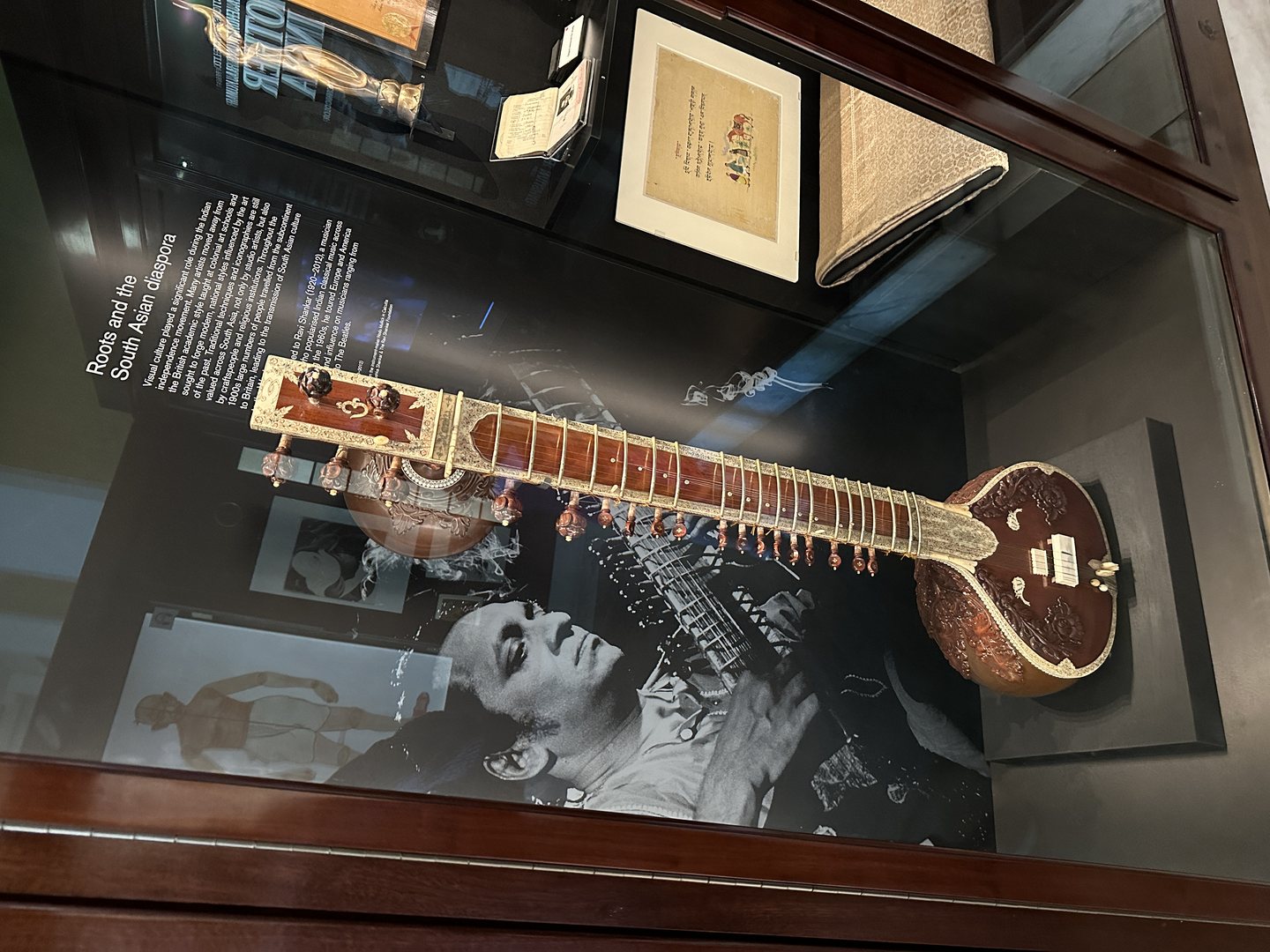
One of Ravi Shankar's sitars, on display at the British Museum. Matt Brown, CC BY 2.0, via Wikimedia Commons
Teaching the West to Listen
On this day in 1920 — Ravi Shankar was born in Benares. The sitar virtuoso became the bridge that carried a centuries-old musical tradition to the West without watering it down.
3 min read
Ravi Shankar was born on April 7, 1920, in Benares — now Varanasi — one of the oldest inhabited cities on earth. He began not as a musician but as a dancer, touring Europe as a boy in the troupe of his brother Uday. Then, around eighteen, he gave it up. He returned to India to submit himself to years of grueling apprenticeship under the master Allauddin Khan, learning the sitar the traditional way: total devotion, endless repetition, the slow internalizing of a system as deep and demanding as any in the world.
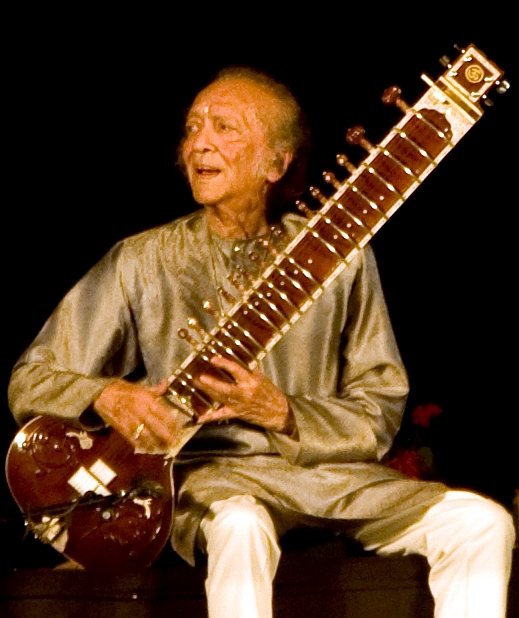
Ravi Shankar playing in Delhi, 2009. Alexandra Ignatenko, CC BY-SA 4.0, via Wikimedia Commons
Indian classical music is built on ragas and talas — melodic and rhythmic frameworks within which the musician improvises, following strict rules toward something that sounds like freedom. It is not simpler than Western classical music; it is differently, and enormously, complex. Shankar became its greatest ambassador. He recorded with the violinist Yehudi Menuhin, and in 1966 he took on an unlikely student: George Harrison of the Beatles. The sitar that turned up on Beatles records sent millions of young Westerners looking, for the first time, toward India.
He played the rock festivals — Monterey in 1967, Woodstock in 1969 — but on his own terms. He was wary of being adopted as psychedelic wallpaper, and he asked his new audiences to actually listen rather than to trip. He wanted respect for the tradition, not exoticism. In 1971 he and Harrison organized the Concert for Bangladesh, the first great benefit concert, the template for every Live Aid that followed.
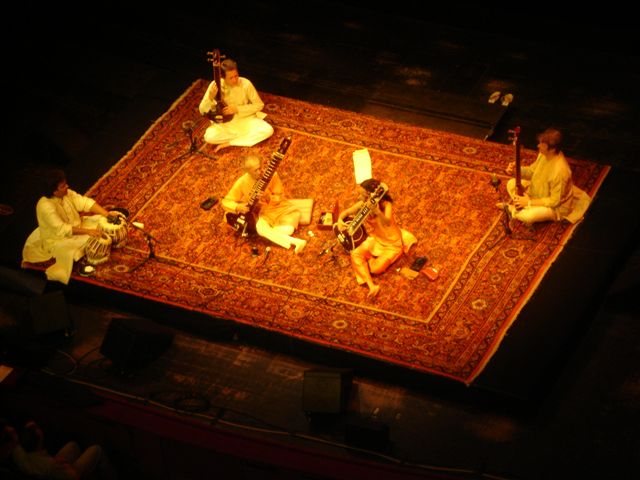
Shankar performing with his daughter Anoushka, Vienna, 2005. Patrick van IJzendoorn, CC BY 2.0, via Wikimedia Commons
He composed film scores — including for Satyajit Ray’s Pather Panchali — wrote concertos for sitar and orchestra, won a shelf of Grammys, and taught the next generation, including his daughters Norah Jones and Anoushka Shankar, the latter now a master of the instrument herself. He died on December 11, 2012, at ninety-two.
Shankar’s real work was translation without dilution. He carried an ancient, rule-bound tradition across an enormous cultural distance and made the West want to understand it on its own terms — not a softened, easy version, but the genuine article, patiently taught. It is a lesson every bridge-builder should keep: the best connections don’t flatten the two sides they join. They let each remain fully itself, and simply make the crossing possible.
studio / on-this-day / Apr 7