studio / on-this-day / Apr 6
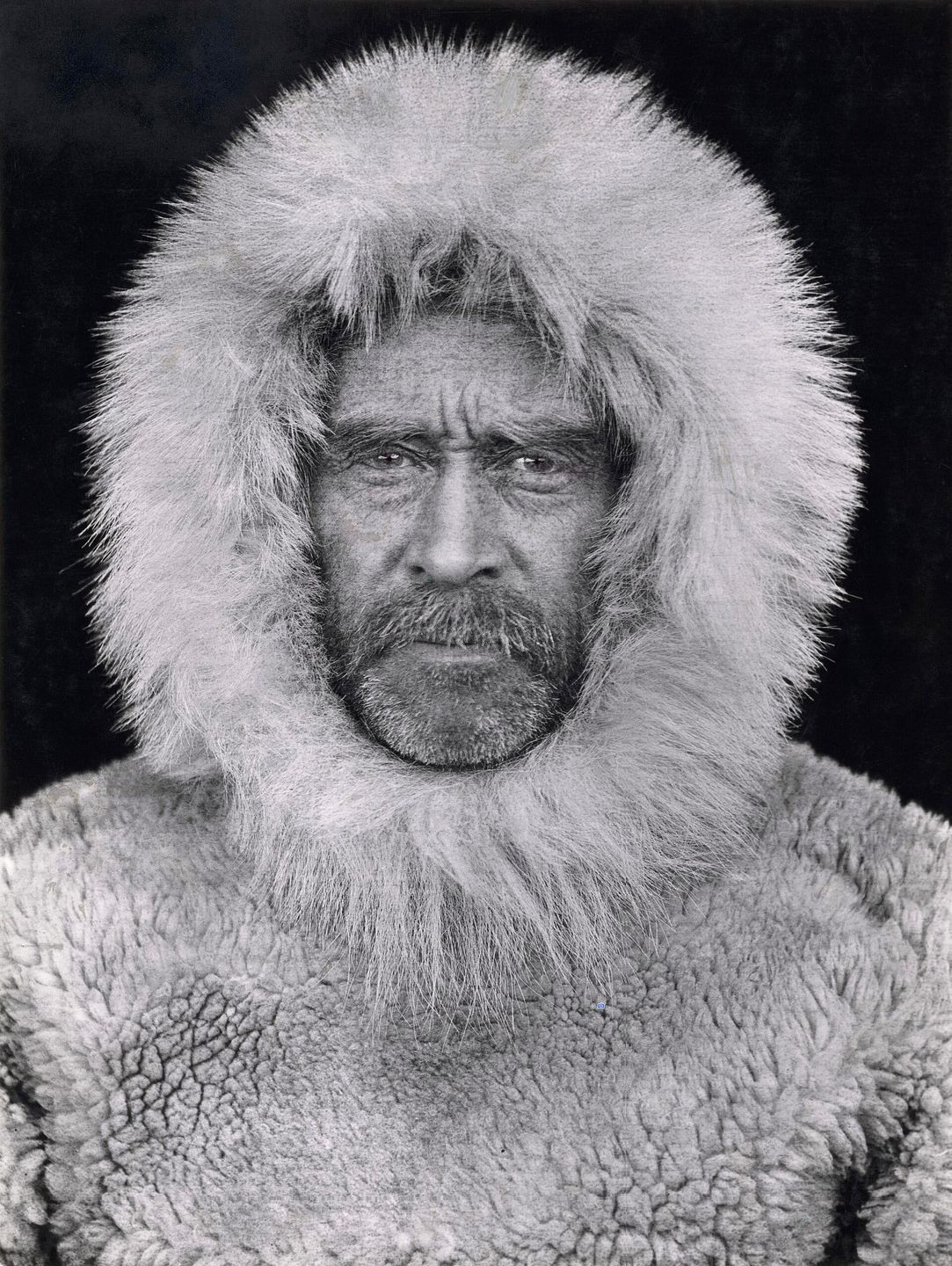
Robert Peary's self-portrait photograph taken at the North Pole, April 1909. Robert Peary, Public domain, via Wikimedia Commons
Navigation as Extreme Design Problem
On this day in 1909 — Robert Peary and Matthew Henson claimed the North Pole, near the end of an era that treated navigation as extreme endurance.
3 min read
On April 6, 1909, Robert Peary and Matthew Henson stood at what they believed was the North Pole, a point on the Arctic ice where every direction is south. They had traveled over 400 miles from land, dragging sleds across frozen ocean, navigating by sextant and dead reckoning in temperatures that could freeze exposed skin in minutes. With them were four Inuit men: Ootah, Egingwah, Seegloo, and Ooqueah. Together, they had solved one of the most brutal navigation problems in history.
The North Pole has no landmarks, no fixed points, no way to verify arrival except through celestial navigation and mathematics. The ice beneath them was constantly moving, drifting with currents. A camp set up at night could be miles away by morning. Compasses become unreliable near the magnetic pole. The sun circles the horizon rather than rising and setting. Navigation required precision instruments, flawless math, and luck.
Peary had been trying to reach the pole for nearly 20 years. He had lost eight toes to frostbite on an earlier expedition. He had mapped hundreds of miles of Greenland's coastline. He had learned Inuit survival techniques, adopted their clothing, and hired their best hunters and dog handlers. His approach was methodical: establish supply depots, send teams ahead to break trail, conserve energy, move fast when conditions allowed.
Matthew Henson was Peary's most trusted partner, though history tried to erase him. Henson was Black, which meant that for decades, his role was minimized or ignored. But he was indispensable. He spoke Inuktitut fluently, could repair sleds and build igloos faster than anyone, and had the stamina to match Peary's relentless pace. The Inuit called him "Mahri-Pahluk," Matthew the Kind One. He was the first to reach the pole, stepping onto the ice ahead of Peary.
Whether they actually reached 90 degrees north latitude is still debated. Peary's navigation records are incomplete. His claimed speed over the final stretch seems improbably fast. Some historians believe they fell short by several miles. Others argue that given the ice drift and the limitations of sextant navigation, being within a few miles was as close as anyone could reasonably get in 1909. The achievement wasn't the exact coordinate. It was proving that humans could survive and navigate in one of the most hostile environments on Earth.
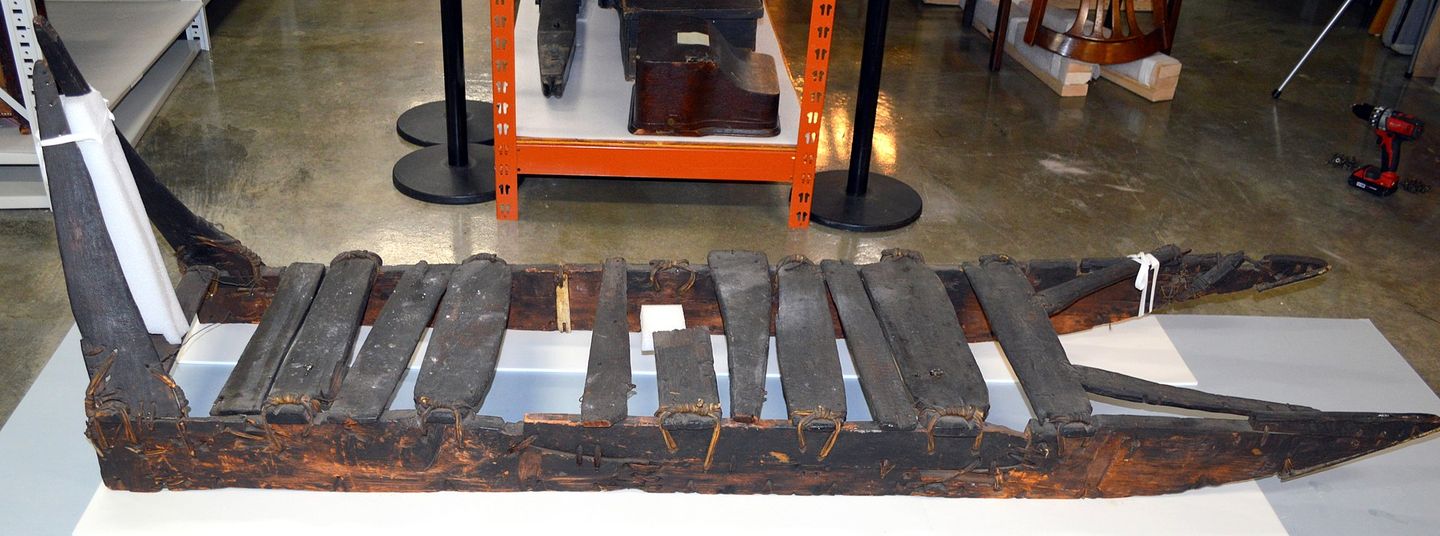
A Greenland Inuit sledge carried back from Peary's final polar expedition. Peary's method depended on adapting Inuit technology and tools to the ice. Public domain, via Wikimedia Commons
The design challenge was immense: how do you reach a point defined only by latitude and longitude, on a surface that moves, in conditions that kill unprepared travelers within hours? Peary's solution was systematic. He studied Inuit technology and adapted it. He used lightweight sleds, layered fur clothing, and teams of dogs bred for endurance. He pre-positioned supplies and rotated support teams to keep the final push light and fast. He treated the expedition as an engineering problem, not an adventure.
The Inuit had been living in the Arctic for thousands of years. They knew how to read ice, predict weather, build shelters from snow. Peary's success depended entirely on their knowledge and labor. Yet when he returned to claim credit, the Inuit were rarely mentioned. Henson's contribution was downplayed for decades. It wasn't until 2000 that the National Geographic Society formally recognized Henson as co-discoverer of the North Pole.
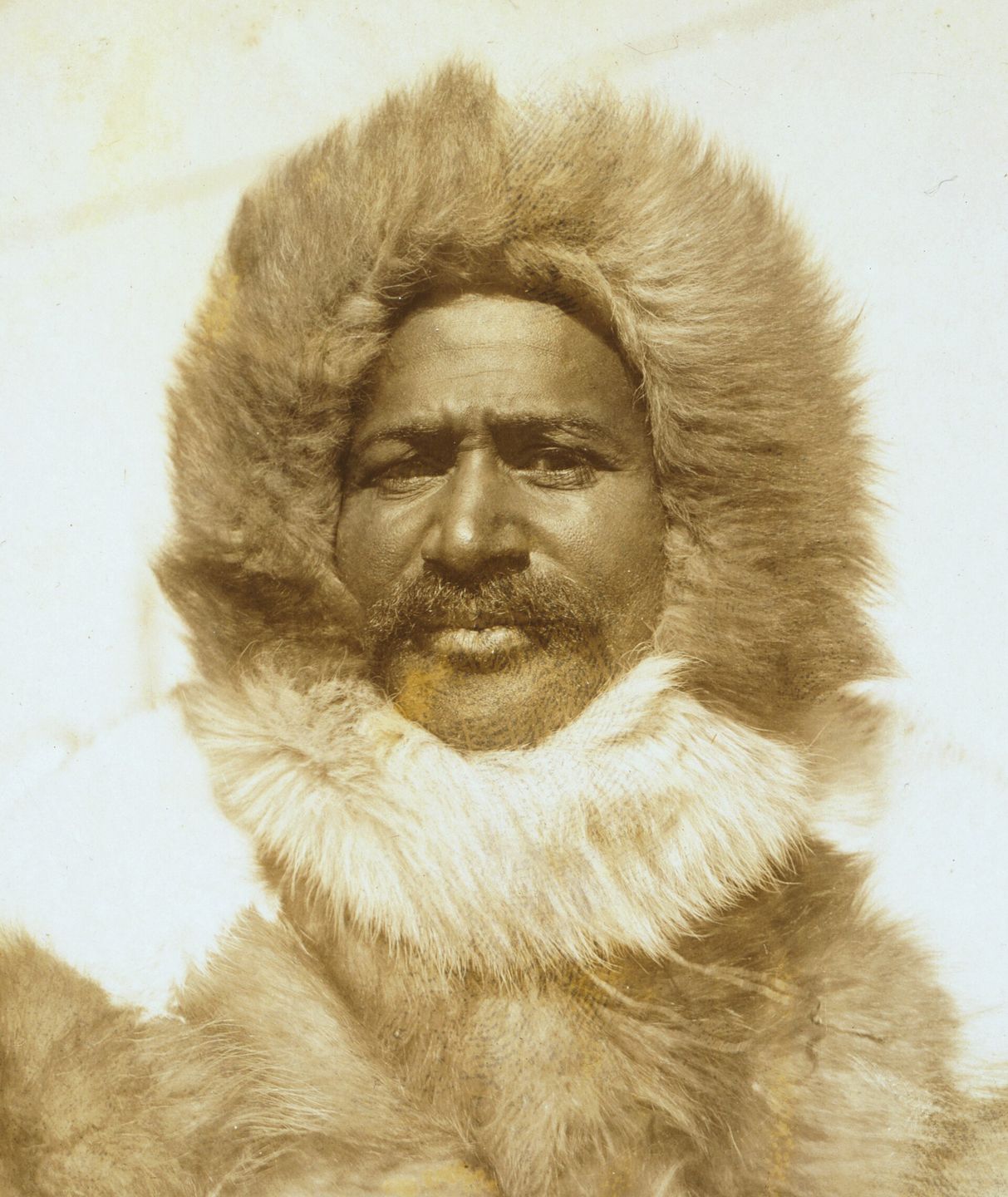
Matthew Henson, co-discoverer of the North Pole, photographed in 1910. Henson was the first to step onto the ice at what the expedition believed was 90 degrees North. Public domain, via Wikimedia Commons
The pole itself is nothing. No flag stays planted. The ice drifts, cracks, and refreezes. Any marker left behind disappears within days. What remains is the proof that navigation, when treated as a design discipline, can solve problems that seem impossible. Peary and Henson didn't conquer the Arctic. They learned its rules and worked within them. They borrowed knowledge, adapted tools, and moved with precision through a landscape designed to kill them. That's not conquest. That's design.
studio / on-this-day / Apr 6