studio / on-this-day / Apr 3
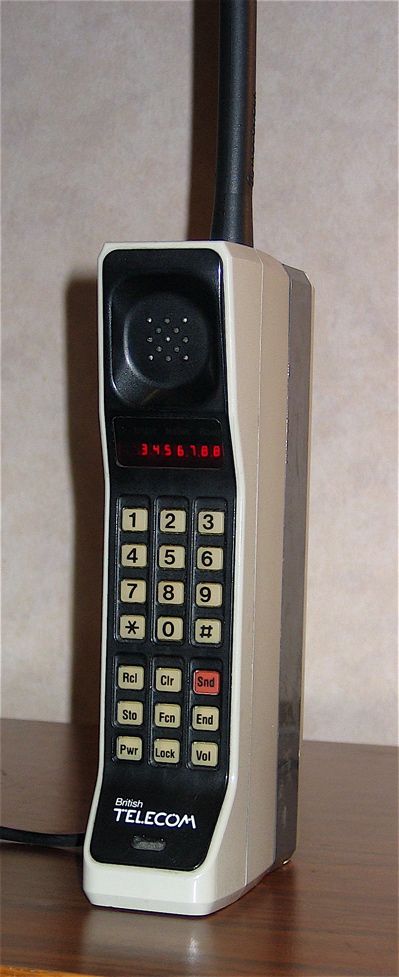
Motorola DynaTAC 8000x, the first commercial handheld mobile phone, 1983. Redrum0486, CC BY-SA 3.0, via Wikimedia Commons
Hello, I'm Calling From a Brick
On this day in 1973 — Motorola's Martin Cooper made the first handheld cell call from a sidewalk, phoning his rival just to gloat.
3 min read
On April 3, 1973, Martin Cooper stood on a New York City sidewalk holding a device that weighed 2.5 pounds, measured 10 inches long, and looked like a brick with an antenna. He dialed a number and made history. The person he called was Joel Engel, head of research at Bell Labs, Motorola's primary competitor in the race to build a mobile telephone. Cooper's message was brief and pointed: "Joel, I'm calling you from a real cellular phone. A handheld portable one."
The call itself was a stunt, a public demonstration designed to prove Motorola had beaten AT&T to a working prototype. But it represented something more fundamental: the idea that a phone could be personal, portable, and untethered from wires. For decades, telephony had meant landlines, switchboards, and fixed infrastructure. Cooper believed phones should follow people, not the other way around.
The device he used that day was called the DynaTAC, short for Dynamic Adaptive Total Area Coverage. It had a battery life of about 20 minutes and took 10 hours to recharge. It could store 30 phone numbers. The circuitry inside was hand-assembled, a prototype cobbled together by a team of engineers who believed the future of communication wasn't in car phones, which already existed, but in something you could carry in your hand.
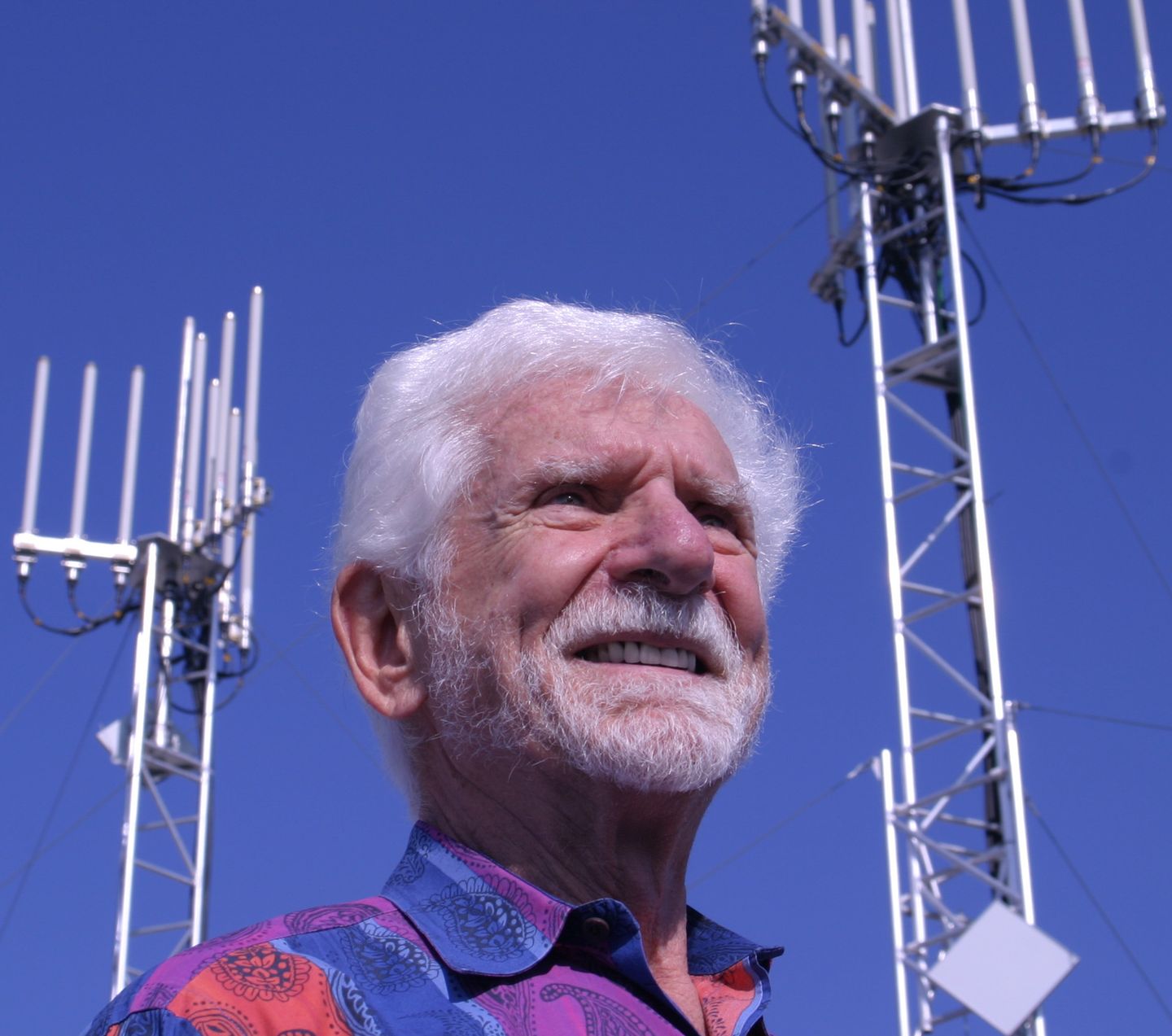
Martin Cooper, inventor of the handheld mobile phone, October 2010. GS200, CC BY-SA 3.0, via Wikimedia Commons
Cooper had been inspired by Star Trek. Watching Captain Kirk flip open a communicator and talk to the Enterprise made him think: why not build that? The technology existed. Radio communication was decades old. Miniaturization was advancing. The missing piece was infrastructure. A mobile phone needed a network of base stations to hand off calls as the user moved. Bell Labs had been working on cellular technology since the 1940s, but they envisioned it for cars, not pockets.
Motorola took a different approach. Cooper's team believed mobility meant true portability. A phone that lived in a car was just a landline with a longer cord. A phone you could carry anywhere was liberation. They designed the DynaTAC to be handheld, even if that meant compromising on battery life and weight. The goal was to prove it could be done. Optimization would come later.
It took another decade for the DynaTAC to reach consumers. The commercial version launched in 1983, cost $3,995, and was marketed to executives who needed to be reachable at all times. It was still a brick. It still had terrible battery life. But it worked, and it sold. Within a few years, mobile phones became smaller, lighter, and more affordable. By the 1990s, they were everywhere. By the 2000s, they had cameras, internet, and apps. The brick became a slab of glass that could do everything except make a decent phone call.
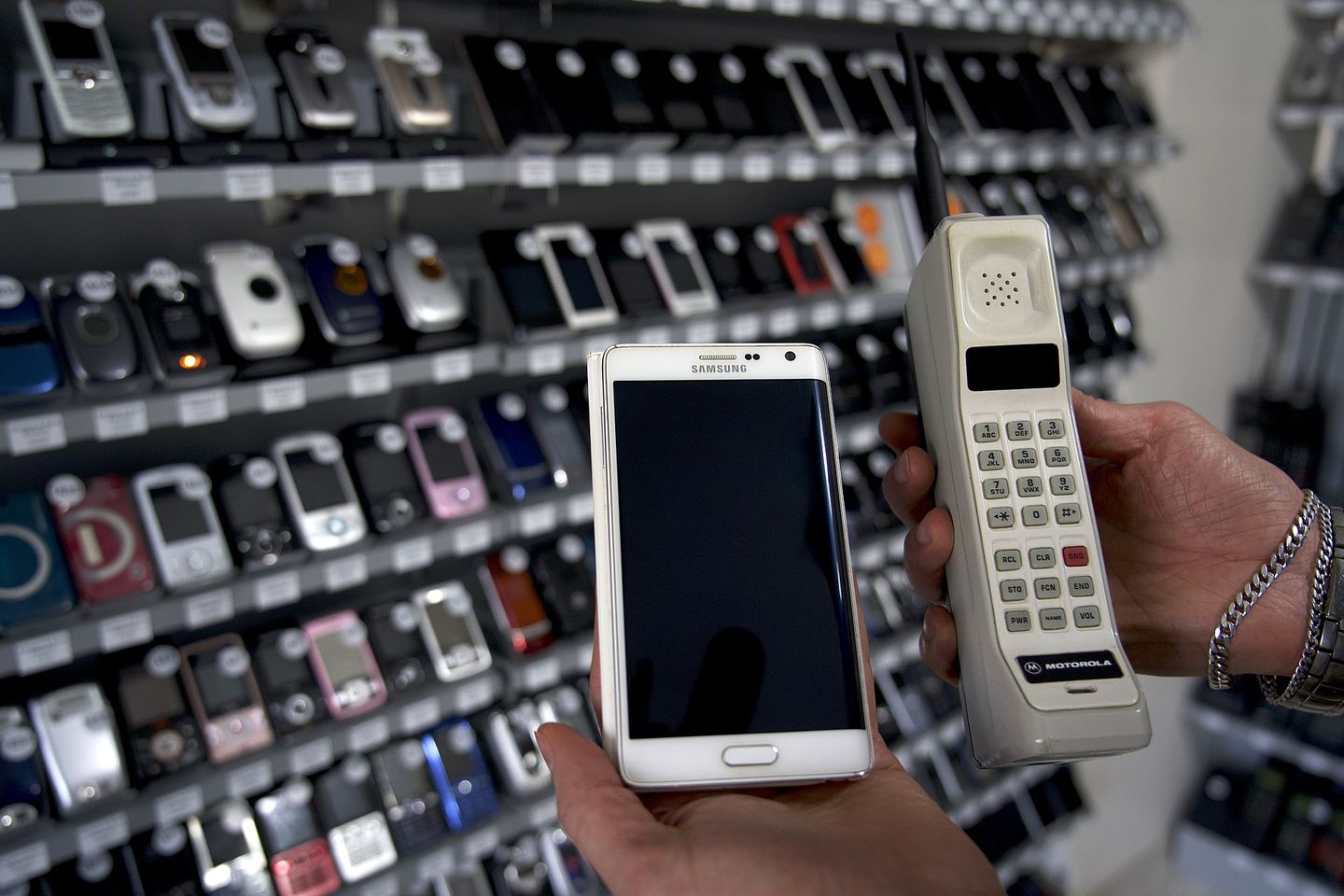
The DynaTAC next to a modern smartphone, its distant descendant. Umut Çolak, Public domain, via Wikimedia Commons
Cooper's original prototype is now in a museum. The technology inside it is obsolete. But the idea behind it, that communication should be mobile and personal, is so embedded in daily life that it's hard to imagine a world before it. We carry devices that are thousands of times more powerful than the DynaTAC, and we use them for everything except what they were originally designed to do. Phone calls are almost quaint now, a legacy feature buried under messaging apps and social media feeds.
What Cooper understood in 1973 was that technology isn't just about solving problems. It's about changing behavior. A mobile phone doesn't just let you make calls from anywhere. It changes what it means to be reachable, to be present, to be alone. It collapses distance and fragments attention. It makes everyone accessible and no one fully there. Cooper's stunt wasn't just about proving Motorola had built a working prototype. It was about showing that the future of communication was individual, untethered, and always on. He was right. The phone in your pocket is a direct descendant of that 2.5-pound brick. And just like Cooper's first call, it still connects you to people who might not want to hear from you.
studio / on-this-day / Apr 3