studio / on-this-day / Jun 27
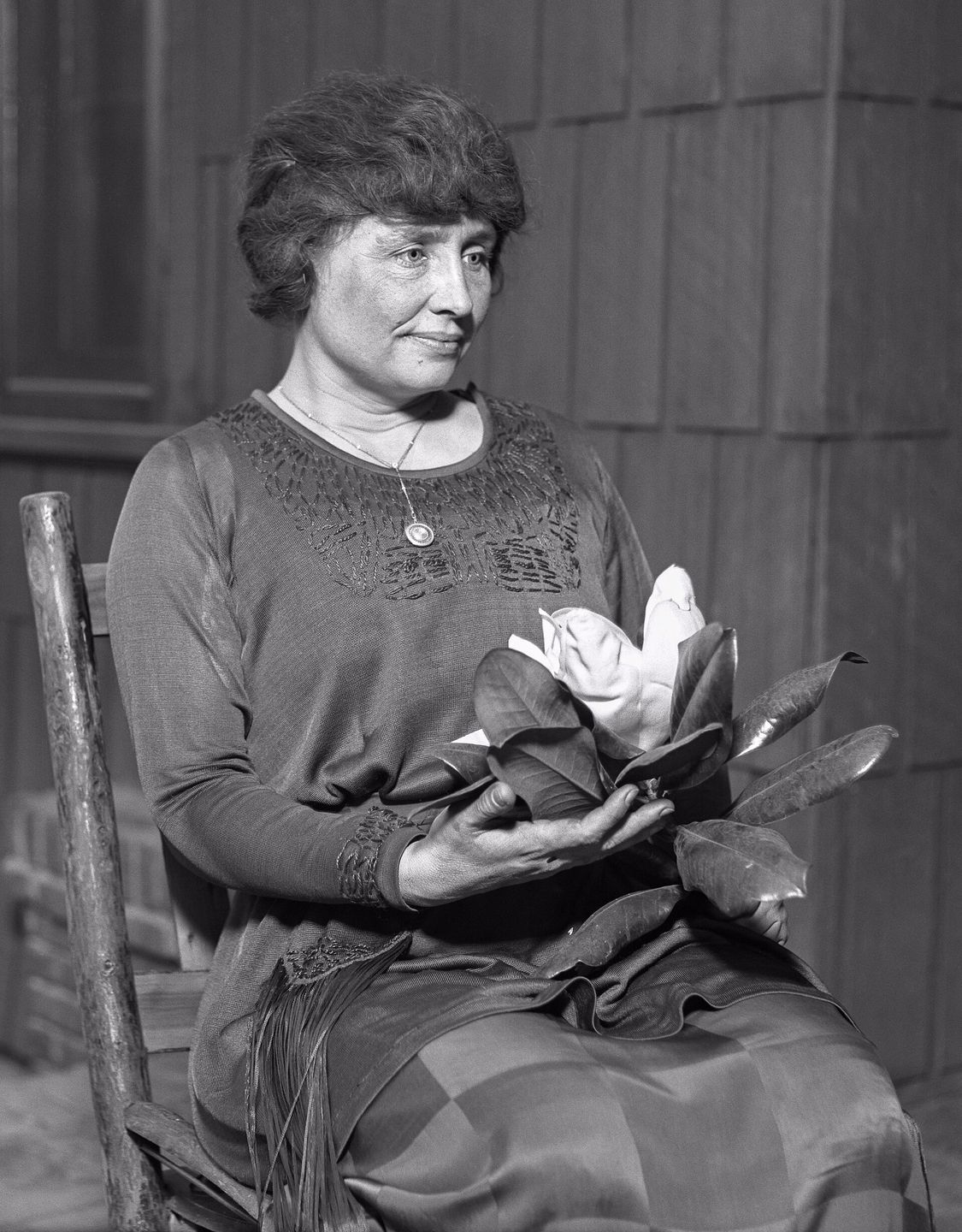
Helen Keller, author, activist, and lecturer, who became the first deaf-Blind person to earn a bachelor of arts degree, photographed c. 1920. Los Angeles Times; restored by User:Rhododendrites, Public domain, via Wikimedia Commons
Communication Without Borders
On this day in 1880 — Helen Keller was born, and would prove that language needs neither sound nor sight, only a way in.
3 min read
Helen Adams Keller was born on June 27, 1880, in Tuscumbia, Alabama, a healthy child with no indication of what was coming. At 19 months old, she contracted an illness, likely scarlet fever or meningitis, that left her deaf and blind. She lost access to the two primary channels through which humans learn language. For the next five years, she lived in a world of tactile sensation and frustration, unable to communicate beyond basic gestures and tantrums. Her family did not know what to do with her. Many people in that era would have institutionalized a child with her disabilities. Her mother refused.
In 1887, when Helen was six, her parents hired Anne Sullivan, a 20-year-old teacher who had herself been partially blind and had attended the Perkins School for the Blind. Sullivan's approach was direct and uncompromising. She believed Helen was capable of understanding language if it could be delivered through a channel she could access. That channel was touch. Sullivan began spelling words into Helen's hand using a manual alphabet, fingerspelling each letter while associating the word with an object. For weeks, Helen mimicked the gestures without understanding their meaning. They were just patterns.
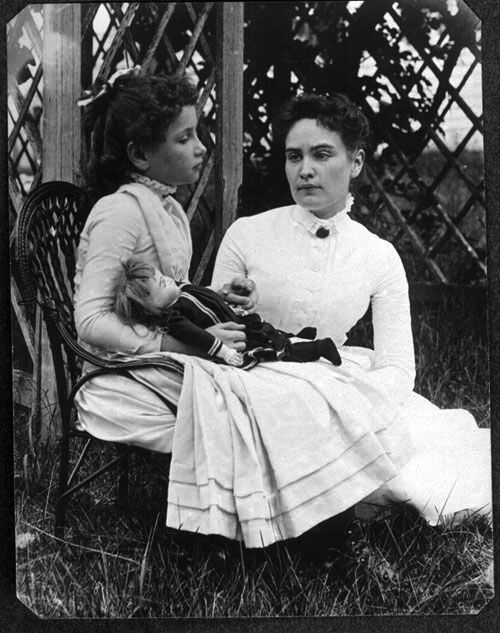
Helen Keller with her teacher Anne Sullivan, July 1888 — Sullivan's method of spelling words into Keller's hand unlocked language for her and transformed her life. Public domain, via Wikimedia Commons
The breakthrough came on April 5, 1887, at a water pump. Sullivan held Helen's hand under the running water and spelled "W-A-T-E-R" into her palm. Suddenly, Helen understood. The pattern of touches was not arbitrary. It was a code. It represented something real. The connection between the sign and the thing exploded into consciousness. Helen later described the moment as awakening. Within hours, she learned 30 words. Within months, she was constructing sentences. Language, once inaccessible, became the structure through which she understood the world.
Helen's education continued at an extraordinary pace. She learned Braille, a tactile writing system using raised dots, and mastered it in both English and French. She learned to type. She learned to read lips by placing her fingers on a speaker's mouth and throat to feel the vibrations and shapes of speech. She learned to speak, though her voice remained difficult for most people to understand. She attended Radcliffe College, becoming the first deafblind person to earn a bachelor's degree. Anne Sullivan sat beside her in every class, fingerspelling lectures into her hand.
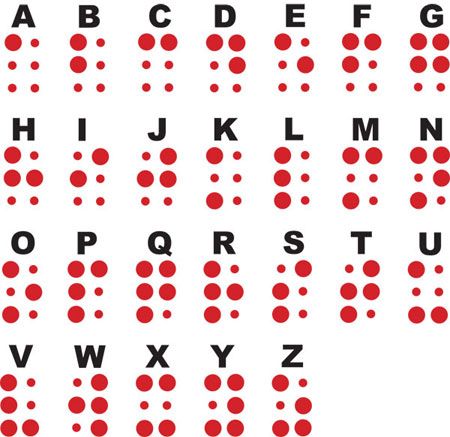
The Braille alphabet — each letter encoded as a pattern of raised dots, a standardized tactile interface Keller mastered in English and French. DIPF, CC BY-SA 3.0, via Wikimedia Commons
Keller became a writer, activist, and lecturer. She published 12 books and hundreds of essays. She advocated for people with disabilities, for women's suffrage, for labor rights, and for pacifism. She was a socialist, a position that alienated some of her supporters but which she defended on the grounds that economic injustice and disability were intertwined. She traveled to 39 countries, met every U.S. president from Grover Cleveland to Lyndon B. Johnson, and became one of the most famous women in the world. Her life was held up as proof that disability could be overcome through willpower and education.
That narrative, while inspirational, oversimplifies. Helen Keller's achievements were not just the result of individual effort. They were the product of a designed system. Anne Sullivan's teaching method was not improvisation. It was based on techniques developed by educators like Samuel Gridley Howe and Laura Bridgman. The manual alphabet was a technology, a protocol for encoding language into touch. Braille was a standardized interface. The typewriter gave Helen a tool to produce written text that sighted people could read. Each of these was a deliberate design solution to a problem of access. Keller succeeded not by overcoming her disabilities but by leveraging tools that redesigned communication to work within her constraints.
Helen Keller died in 1968 at the age of 87. Her legacy is complex. She demonstrated that language is not tied to a specific sensory modality but is a system that can be adapted to any channel capable of carrying patterns. Touch, sight, sound, even vibration, all can transmit meaning if the system is designed correctly. The lesson is not that disability is an individual problem to be solved through personal triumph. The lesson is that access is a design problem, and solutions exist if we build them. The water pump was not a miracle. It was a moment when the right interface met the right mind. Everything after that was just careful engineering.
studio / on-this-day / Jun 27