studio / on-this-day / Mar 24
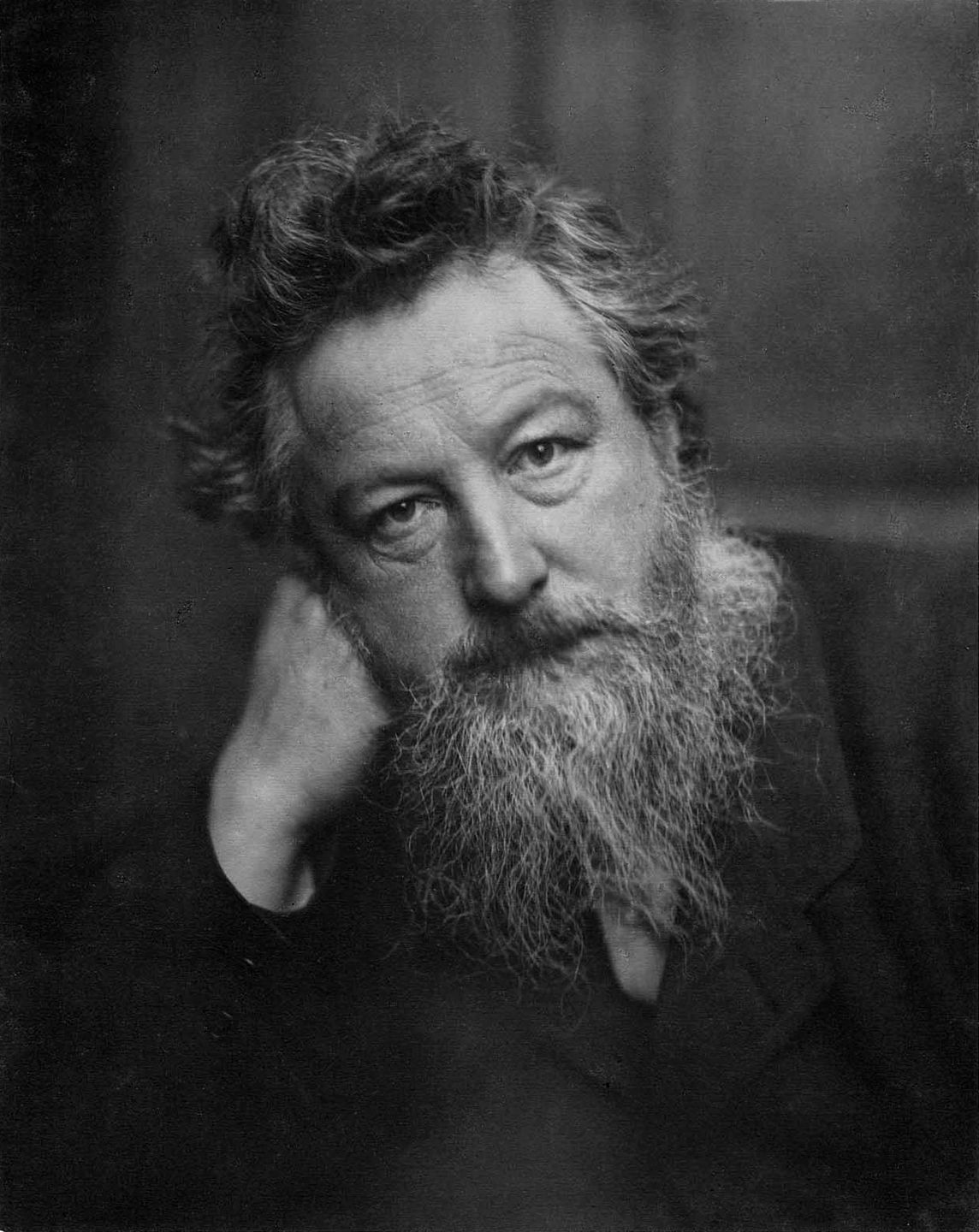
William Morris at age 53, designer and founder of the Arts and Crafts movement. Frederick Hollyer, Public domain, via Wikimedia Commons
Beauty for Everyone
On this day in 1834 — William Morris was born, and would insist that well-made, beautiful things should belong to everyone, not only the rich.
3 min read
William Morris was born on March 24, 1834, in Walthamstow, Essex, into a prosperous family. His father was a successful financier. Morris attended Oxford, where he studied theology and befriended artists and poets. He hated the Industrial Revolution. Not the machines themselves, but what they did to the objects they produced. Mass manufacturing had made goods cheaper and more accessible, but it had also made them uglier. Furniture, textiles, wallpaper, books: everything looked the same, stamped out without care or craft. Morris believed that beauty mattered, not just as decoration, but as a human need. He spent his life trying to prove it.
In 1861, Morris founded Morris, Marshall, Faulkner & Co., a decorative arts firm that produced furniture, stained glass, textiles, wallpaper, and books. The company's guiding principle was simple: good design should be handmade, rooted in traditional craft techniques, and available to ordinary people. This was easier said than done. Handmade goods cost more to produce than factory-made ones. Morris's wallpapers and fabrics, though beautiful, were expensive. The wealthy bought them. Working-class families could not afford them. Morris was caught in a paradox: his vision was democratic, but his business model was not.
What Morris understood, and what many of his critics missed, was that the problem was systemic. Industrialization had separated design from production. Designers drew patterns. Factories printed them. Workers operated machines without understanding what they were making or why. This division of labor was efficient, but it drained meaning from the work. Morris argued that craft was not just about making objects. It was about the relationship between the maker and the made, the satisfaction of seeing an idea become material through skill and care. Machines could not replicate that.
Morris's designs drew heavily from medieval and natural forms. His wallpapers featured intricate patterns of leaves, flowers, and birds, often inspired by English gardens. His typefaces, designed for his Kelmscott Press, revived Gothic letterforms with hand-cut woodblocks and handmade paper. He believed that design should connect people to history and nature, not isolate them in a world of generic, machine-stamped products. This philosophy became known as the Arts and Crafts movement, which spread across Britain, Europe, and the United States.
The Arts and Crafts movement influenced modernism, though not in the way Morris intended. Designers like Walter Gropius and the Bauhaus absorbed Morris's insistence that design should serve everyone, but they embraced industrial production rather than rejecting it. The Bauhaus argument was that machines could produce beautiful, functional objects if designers controlled the process. Morris's handmade chairs were beautiful but expensive. A well-designed mass-produced chair could be beautiful and affordable. The tension between these two visions defines much of 20th-century design.
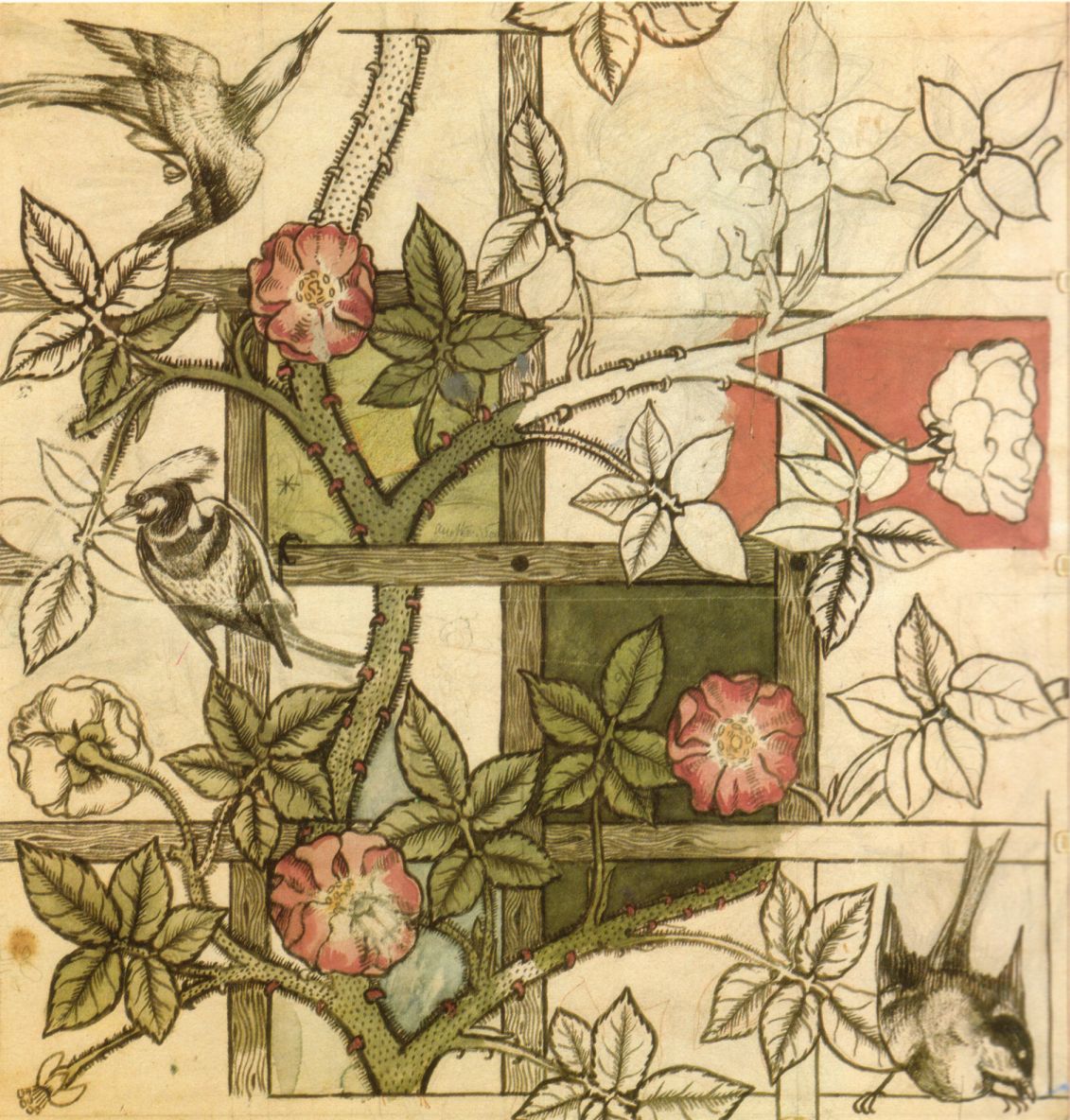
William Morris's trellis wallpaper design, 1862 — his first wallpaper design, featuring climbing roses and birds by philip webb. William Morris, Public domain, via Wikimedia Commons
Morris was also a socialist, a poet, and a utopian thinker. He wrote novels set in imagined futures where capitalism had collapsed and people lived in small, egalitarian communities centered around craft and agriculture. His most famous book, "News from Nowhere," describes a post-industrial England where work is voluntary, goods are made by hand, and no one owns property. It is a fantasy, but it is also a design critique. Morris believed that the way we make things shapes the way we live. If production is dehumanizing, life will be dehumanizing. If it is beautiful and meaningful, life can be the same.
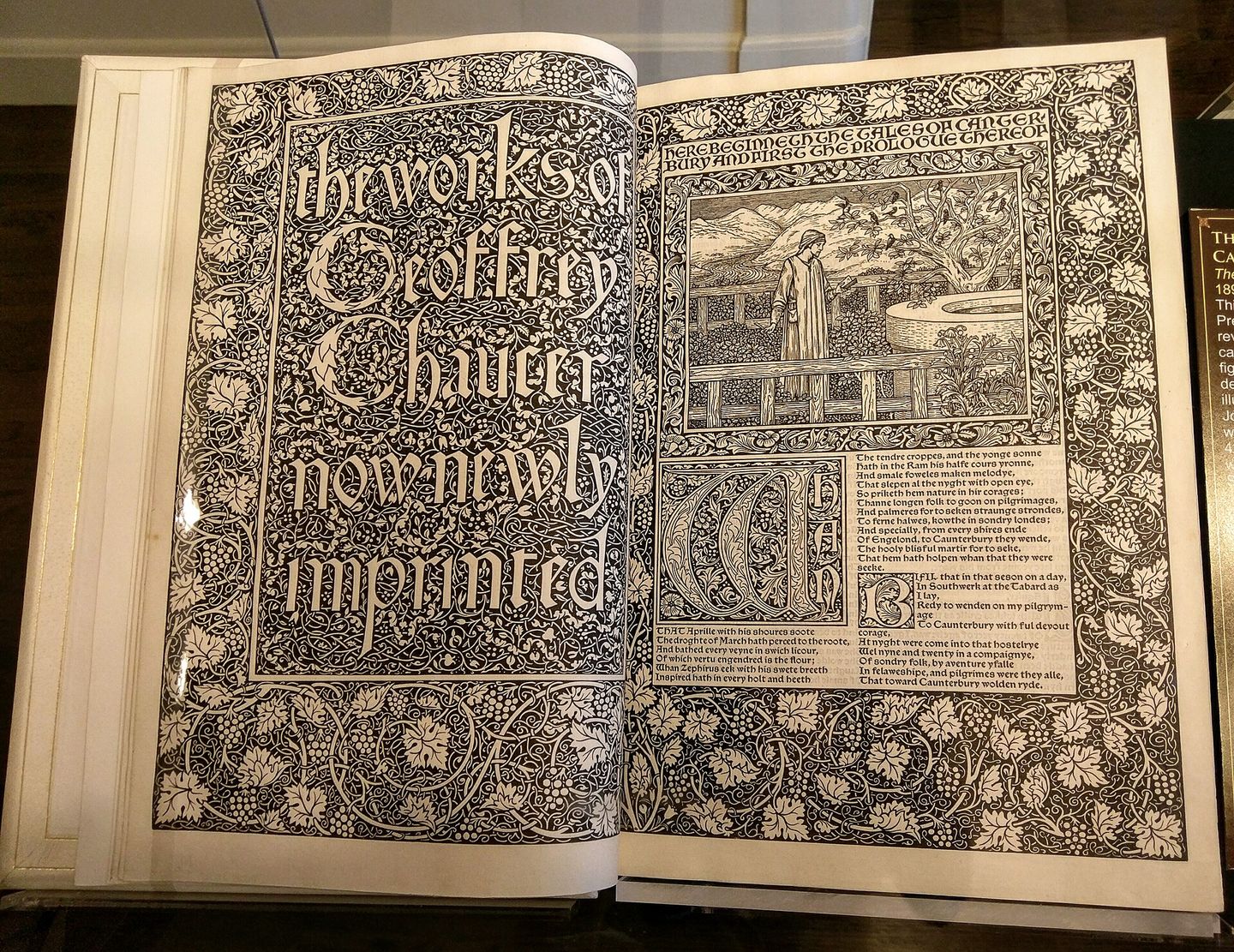
The Kelmscott chaucer, 1896 — Morris's masterwork of book design, with hand-cut Gothic type, decorative borders, and illustrations by edward burne-jones. Cullen328, CC BY-SA 3.0, via Wikimedia Commons
Morris's legacy is complicated. His furniture and textiles remain iconic, but they did not achieve his goal of making beauty accessible to everyone. The Arts and Crafts movement inspired later design philosophies, but it could not reverse industrialization. What persists is the question Morris asked: should design serve profit or people? Should it optimize for efficiency or meaning? These are not abstract questions. They shape the objects we use, the spaces we inhabit, and the systems we build. Morris answered them with flowers, vines, and hand-pressed books. We are still working out our own response.
studio / on-this-day / Mar 24