studio / on-this-day / Feb 5
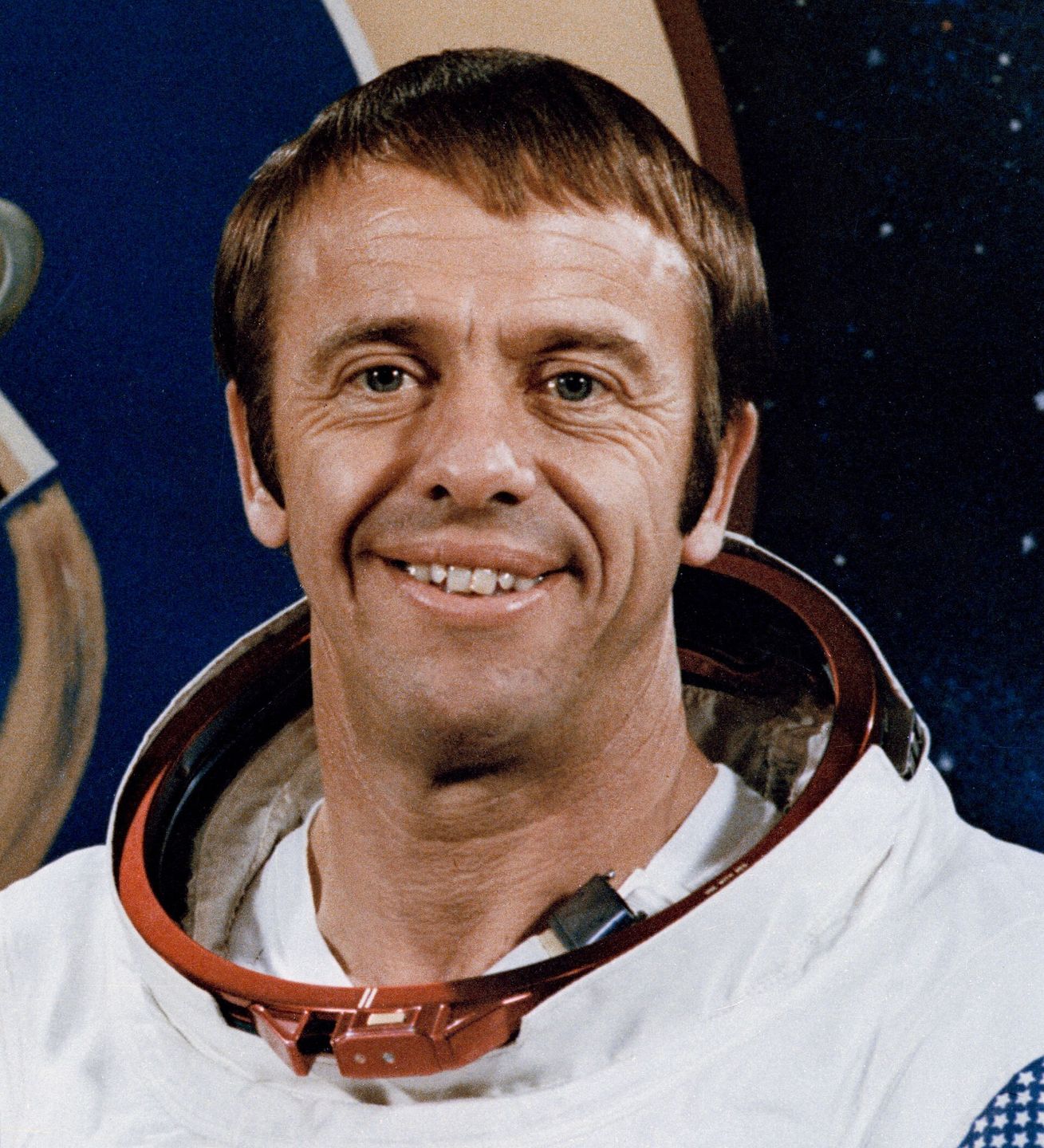
Astronaut Alan Shepard on the Lunar surface during the Apollo 14 extravehicular activity, February 1971. NASA, Public domain, via Wikimedia Commons
Six Iron on the Moon
On this day in 1971 — Apollo 14 reached the Moon, where Alan Shepard pulled out a smuggled club head and knocked a golf ball across the dust.
3 min read
Alan Shepard was 47 years old, the oldest astronaut to walk on the Moon, and the only one of the original Mercury Seven to make it there. He had been grounded for years due to an inner ear disorder that caused vertigo and nausea. Surgery in 1968 corrected it. By 1971, he commanded Apollo 14, leading a mission to the Fra Mauro highlands, the same site Apollo 13 was supposed to reach before an oxygen tank exploded and turned their lunar landing into a survival exercise.
The mission was flawless by Apollo standards. Shepard and Edgar Mitchell spent 33 hours on the surface, conducted two moonwalks, and collected 94 pounds of lunar samples. Then, at the end of the second EVA, Shepard did something no one had ever done. He pulled out a makeshift six-iron, a club head attached to a sample collection tool, dropped two golf balls onto the regolith, and took a swing.
The first shot shanked left. The spacesuit restricted his movement, forcing him to swing one-handed. The second shot dribbled a few yards. The third went farther, and Shepard joked that it went "miles and miles and miles," though later analysis suggests it traveled about 200 yards. It was a publicity stunt, and Shepard knew it. He had received informal permission from NASA leadership, but it wasn't part of the flight plan. He smuggled the club head aboard in a sock.
The act was irreverent, unscientific, and perfectly human. Every Apollo mission carried the weight of Cold War competition, national prestige, and the deaths of the Apollo 1 crew. Astronauts were test pilots, engineers, and symbols. They operated under strict protocols designed to minimize risk and maximize data collection. Shepard swinging a golf club was a small act of defiance, a reminder that even in the most controlled environment humans have ever created, people will find ways to play.
Critics called it frivolous. Supporters called it charming. Both were right. The Moon landing program was designed to demonstrate technological superiority, but it was also a human endeavor. The same species that built rockets capable of escaping Earth's gravity also brought a golf club to the Moon because someone thought it would be funny. The juxtaposition is absurd, which is precisely the point. Absurdity is part of the design.
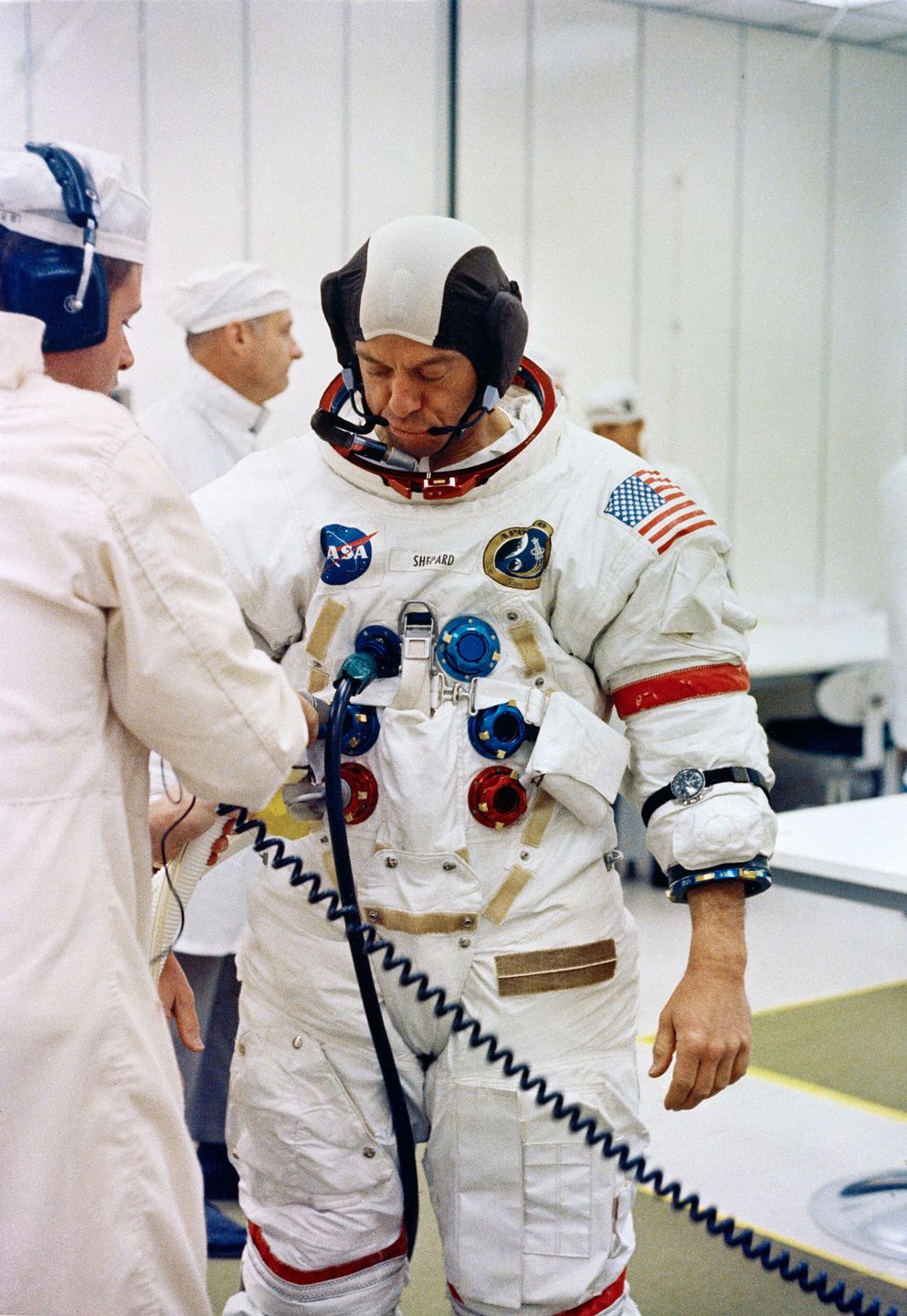
Astronaut Alan b. Shepard Jr., commander of Apollo 14, undergoing suit-up procedures before the mission launch in February 1971. NASA, Public domain, via Wikimedia Commons
Apollo 14 was the last mission where everything went according to plan without major drama. Apollo 15, 16, and 17 followed, each more scientifically ambitious. The Lunar Roving Vehicle extended range. Experiments became more sophisticated. Moonwalks lasted longer. But Apollo 14 remains the one people remember for the golf shot, which tells you something about what sticks in collective memory. Neil Armstrong's first step was historic. Shepard's golf swing was relatable.
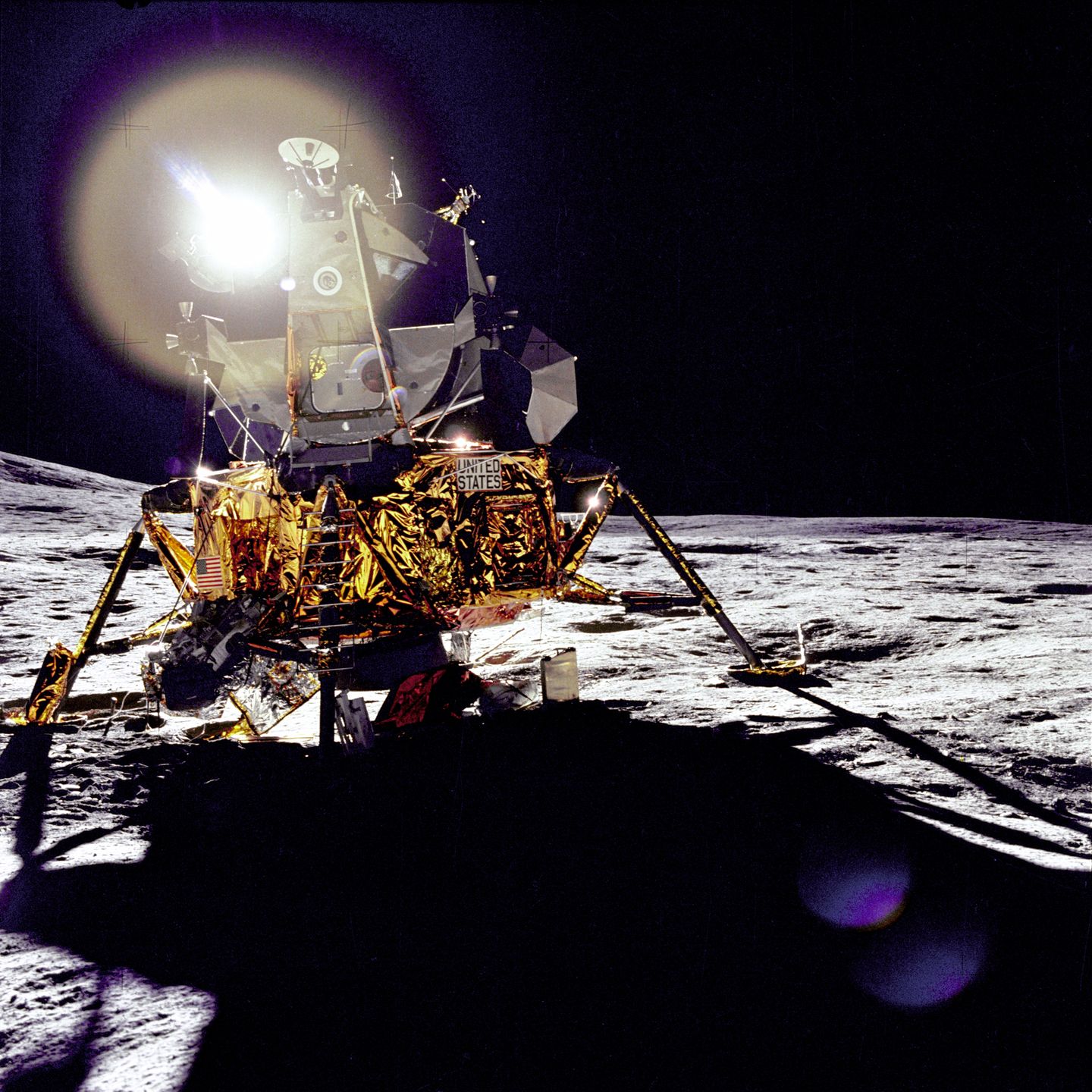
The Lunar module Antares on the Fra Mauro highlands, where Shepard and Mitchell landed Apollo 14 in February 1971. NASA, Public domain, via Wikimedia Commons
The club head is still on the Moon, along with two golf balls, a javelin made from a sample tool, and all the equipment deemed too heavy to bring back. In the vacuum, with no atmosphere to corrode metal and no weather to erode surfaces, those objects will remain essentially unchanged for millions of years unless disturbed by a micrometeorite or a future visitor. They're artifacts of a moment when nine human beings walked on another world, conducted science, planted flags, and occasionally did something ridiculous just because they could.
Shepard's swing wasn't scripted, but it was perfect. It acknowledged that exploration is serious work and also play. It said that even 240,000 miles from home, wearing a spacesuit that cost as much as a fighter jet, standing on a world where nothing has ever lived, a human being might still want to hit a golf ball and see how far it goes in one-sixth gravity. That impulse, that curiosity mixed with absurdity, is why we went in the first place.
studio / on-this-day / Feb 5