studio / on-this-day / Feb 29
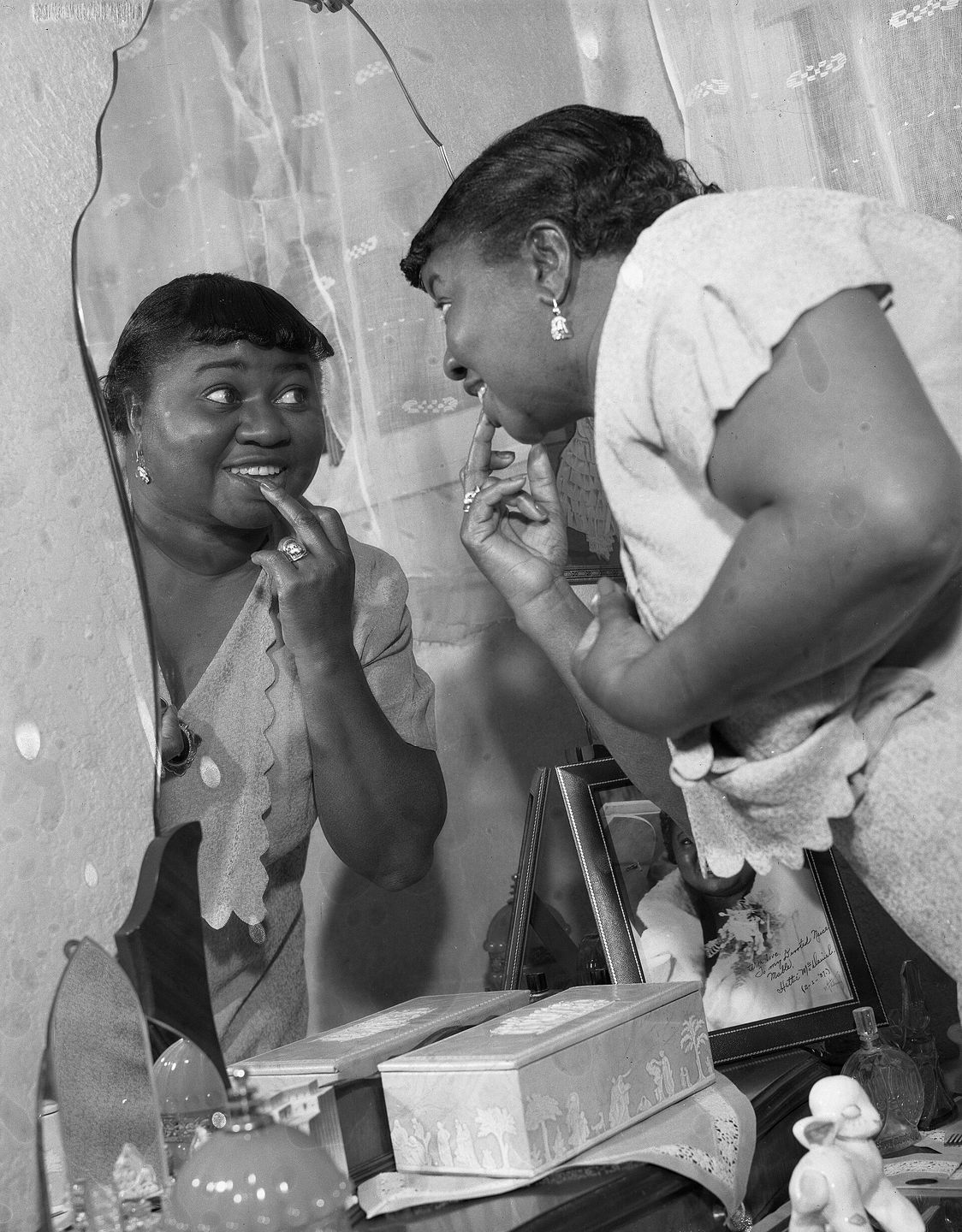
Hattie McDaniel in 1940, the year she became the first African American to win an Oscar. Los Angeles Times, CC BY-SA 4.0, via Wikimedia Commons
Breaking the Barrier on a Day That Barely Exists
On this day in 1940 — Hattie McDaniel became the first African American to win an Academy Award, seated that night at a segregated table.
3 min read
On February 29, 1940, a date that only appears once every four years, Hattie McDaniel became the first African American to win an Academy Award. She received the Oscar for Best Supporting Actress for her role as Mammy in "Gone with the Wind." The ceremony took place at the Coconut Grove nightclub in the Ambassador Hotel in Los Angeles. McDaniel was not allowed to sit with her white castmates. She and her escort were seated at a segregated table at the back of the room.
McDaniel was 44 years old. She had been performing since childhood, working as a singer, songwriter, and actress in vaudeville, radio, and film. By the time she was cast in "Gone with the Wind," she had appeared in over 80 films, almost always in roles as a maid or a servant. Hollywood in the 1930s offered Black actors very few opportunities, and those that existed were built on stereotypes. McDaniel took the roles available to her and brought dignity and craft to performances that the scripts did not always deserve.
Her role in "Gone with the Wind" was controversial from the start. The film, based on Margaret Mitchell's novel, romanticized the antebellum South and portrayed slavery through the lens of white nostalgia. McDaniel's character, Mammy, was a loyal servant to Scarlett O'Hara, the film's protagonist. The role was written as a stereotype, but McDaniel's performance complicated it. She was commanding, intelligent, and often the most pragmatic character on screen. She stole scenes from actors who had far more screen time.
When McDaniel won the Oscar, reactions were mixed. Some celebrated the achievement as a breakthrough. Others, including members of the NAACP, criticized her for accepting roles that reinforced negative stereotypes. McDaniel responded with a statement that has been quoted ever since, though its exact wording varies depending on the source: she said she would rather play a maid than be one. It was a pragmatic defense, an acknowledgment of the limited choices available to her, and a refusal to apologize for working within a system that excluded her.
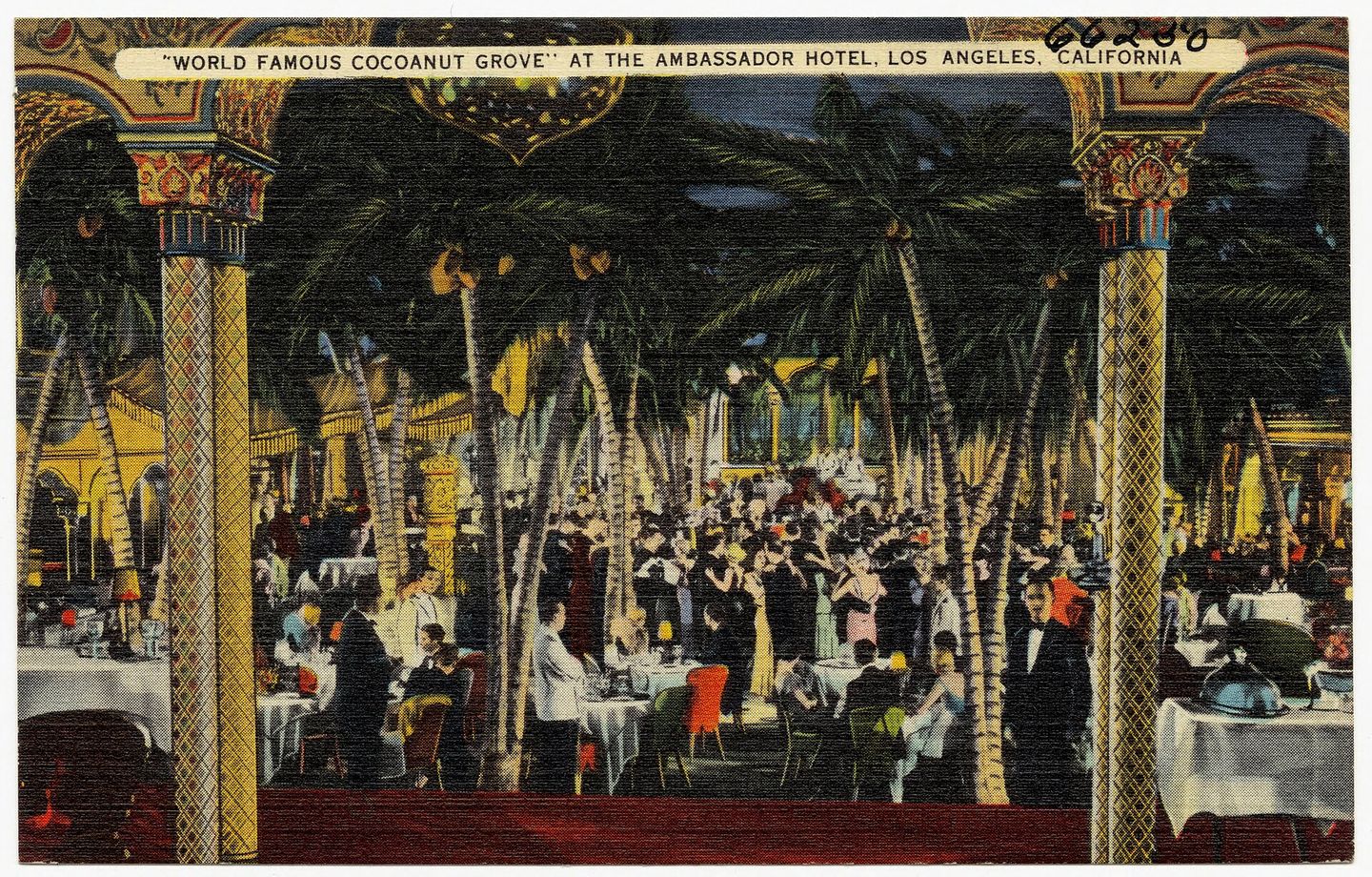
The Cocoanut Grove at the Ambassador Hotel, where the ceremony was held and McDaniel was seated at a segregated table. Tichnor Brothers, Publisher, Public domain, via Wikimedia Commons
The Oscar itself was a contradiction. It recognized talent while reinforcing the very structures that limited that talent. McDaniel was honored by an industry that would not let her sit with her peers, that cast her only in subservient roles, and that denied her the full scope of her abilities. She was the first, but she was also isolated. It would be 24 years before another Black actor won an Oscar, when Sidney Poitier won Best Actor in 1964.
After winning the Oscar, McDaniel continued to work in film and radio. She became the first Black woman to star in a radio show, "Beulah," in which she again played a maid. The role brought her financial success and national recognition, but it also attracted criticism. Civil rights activists argued that such portrayals perpetuated harmful stereotypes. McDaniel defended her work, but the tension between artistic opportunity and political responsibility followed her for the rest of her career.
She died of breast cancer in 1952 at the age of 57. Her will requested that she be buried in Hollywood Cemetery, but the cemetery did not allow Black burials. She was instead buried in Rosedale Cemetery. In 1999, nearly five decades after her death, Hollywood Cemetery offered an honorary cenotaph, a symbolic grave marker, acknowledging the exclusion.
The Oscar McDaniel won went missing for decades. It was believed to have been donated to Howard University after her death but was never found. In 2007, the Academy of Motion Picture Arts and Sciences issued a replacement Oscar to Howard University in her honor. The original remains lost, a fitting metaphor for a legacy that has been alternately celebrated, contested, and erased.
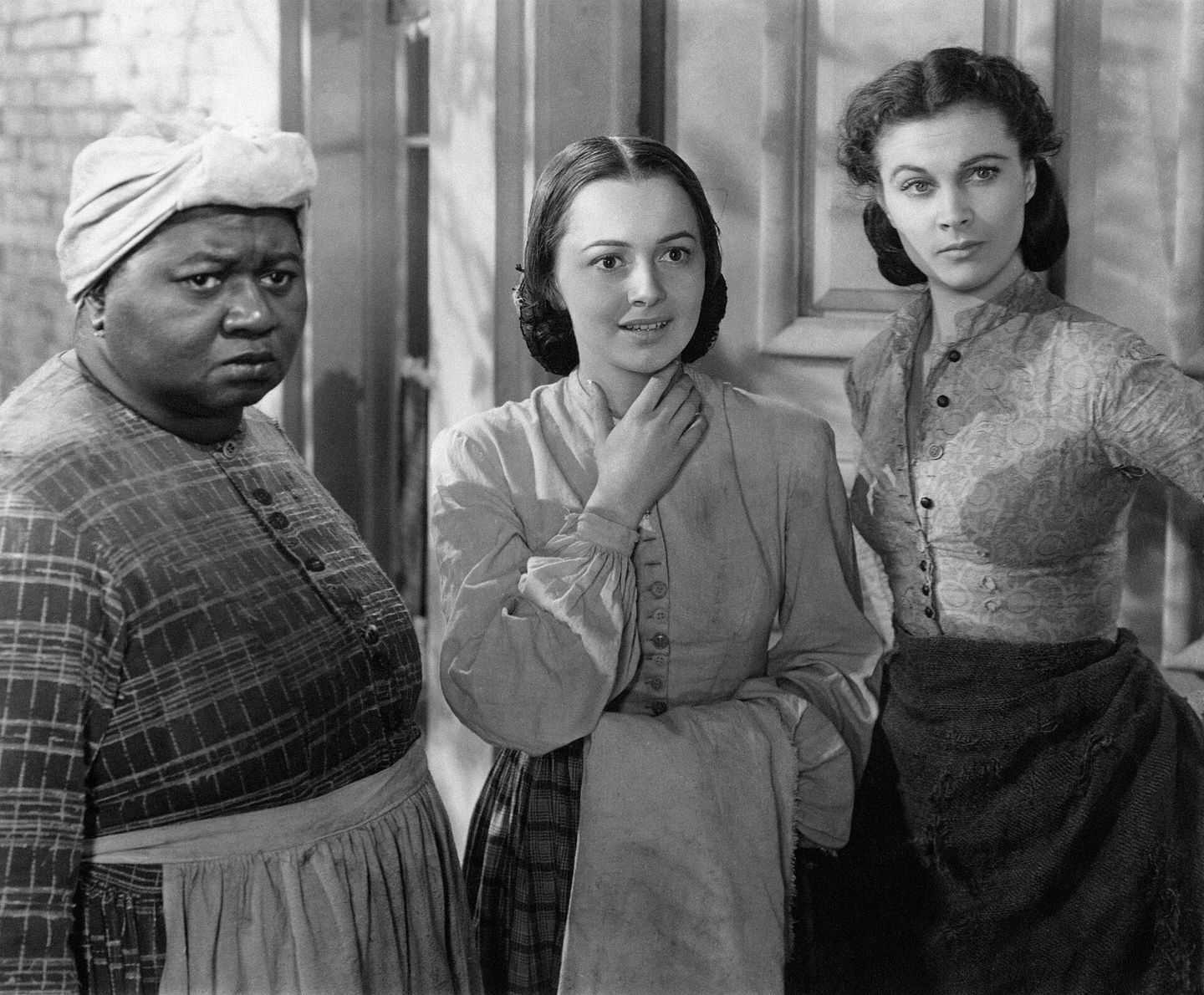
Hattie McDaniel in Gone with the Wind, 1939, the film for which she won her historic Oscar. Public domain, via Wikimedia Commons
Hattie McDaniel's achievement on February 29, 1940, was both a breakthrough and a reminder of how far there was to go. She broke a barrier on a day that barely exists, in an industry that barely acknowledged her. She took the opportunities given to her and made them mean something. She did not get to choose the system she worked within, but she chose to work, to perform, and to win. The fact that she had to fight for recognition, that she was segregated even in triumph, does not diminish the achievement. It contextualizes it. Progress is never clean, and firsts are rarely comfortable. They are simply first.
studio / on-this-day / Feb 29