studio / on-this-day / Feb 26
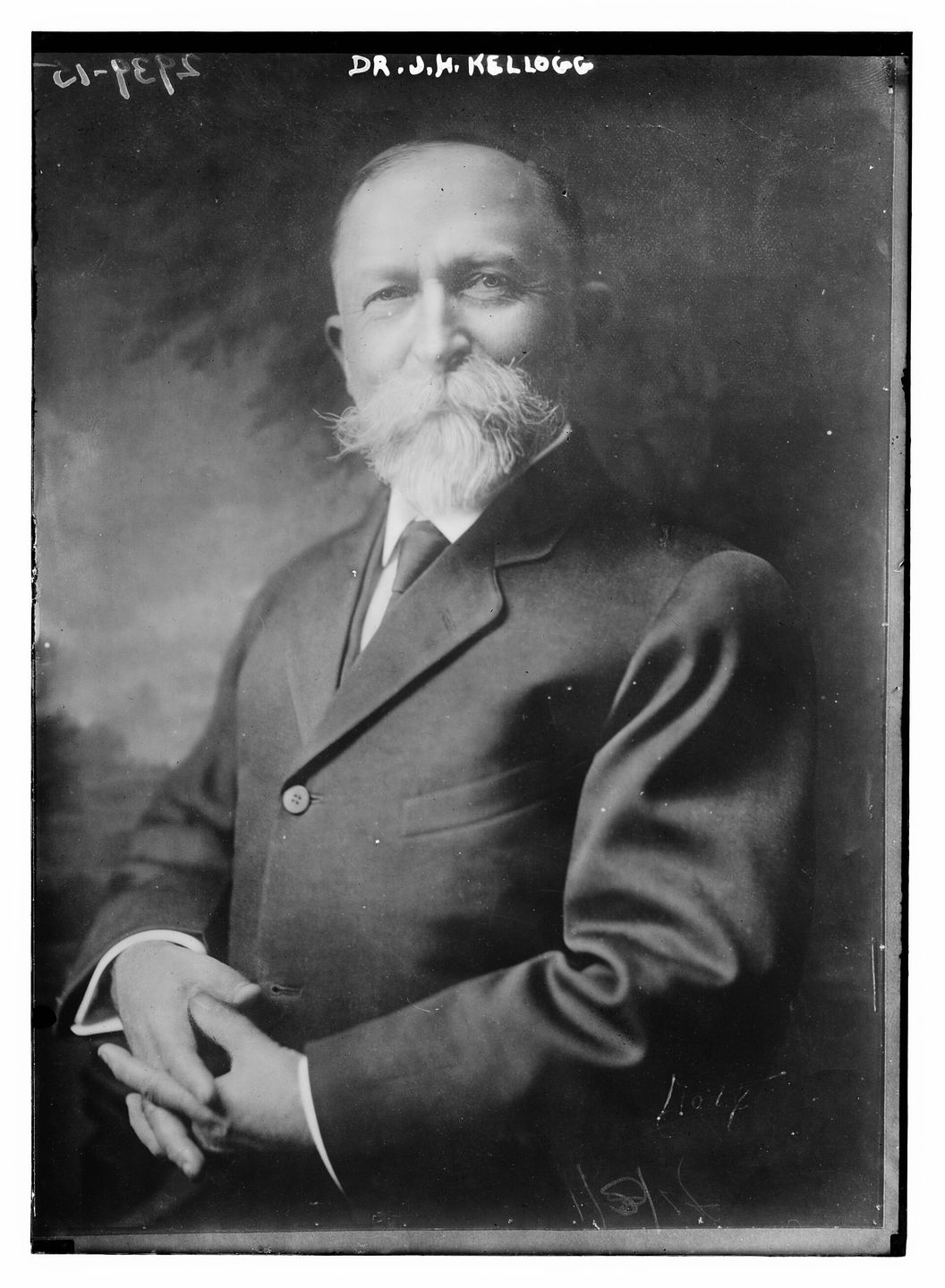
Dr. John Harvey Kellogg (1852–1943), the physician, health reformer, and accidental inventor of Corn Flakes, who ran the Battle Creek Sanitarium in Michigan for over 40 years. Bain News Service, publisher, Public domain, via Wikimedia Commons
The Accidental Breakfast
On this day in 1852 — John Harvey Kellogg was born, and would stumble onto cornflakes while trying to reform how Americans ate.
3 min read
John Harvey Kellogg was born on February 26, 1852, in Tyrone, Michigan. He grew up in a Seventh-day Adventist household, a religious community that emphasized health, vegetarianism, and abstinence from alcohol, tobacco, and caffeine. Kellogg absorbed these values and spent his life trying to convince the rest of America to adopt them. In the process, he accidentally created one of the most ubiquitous food products in the world.
Kellogg trained as a physician and became the superintendent of the Battle Creek Sanitarium in Michigan in 1876. The sanitarium was a health resort that promoted what Kellogg called "biologic living," a combination of vegetarian diet, exercise, hydrotherapy, and various other treatments that ranged from sensible to bizarre. Patients came for weeks or months, submitted to Kellogg's regimens, and paid handsomely for the privilege. The sanitarium was part hospital, part spa, and part laboratory for Kellogg's nutritional experiments.
Kellogg believed that the American diet was a disaster. People ate too much meat, too much fat, and too much sugar. Breakfast, in particular, was a problem. The standard American breakfast in the late 19th century consisted of heavy, greasy foods: bacon, sausage, fried eggs, biscuits. Kellogg wanted something lighter, easier to digest, and vegetarian. He began experimenting with grain-based foods.
In 1894, Kellogg and his brother Will Keith Kellogg were working on a boiled wheat dough intended to be rolled into thin sheets and baked into a type of biscuit. One batch of dough was left out overnight and went stale. Rather than discard it, they ran it through the rollers anyway. Instead of forming a sheet, the dough broke into individual flakes. They baked the flakes and served them to patients. The flakes were a hit. Kellogg had accidentally invented a new form of breakfast cereal.
The brothers experimented further, eventually switching from wheat to corn. Corn flakes were lighter, crisper, and had a milder flavor. They were easy to store, easy to prepare, and could be mass-produced. John saw them as a health food, a way to reform the American diet. Will saw them as a business opportunity. The two brothers eventually had a falling out over the commercialization of the product. Will wanted to add sugar to make the flakes more appealing to consumers. John refused, insisting that sugar was unhealthy. Will left the sanitarium, founded the Kellogg Company in 1906, and added sugar. The cereal became a commercial success.
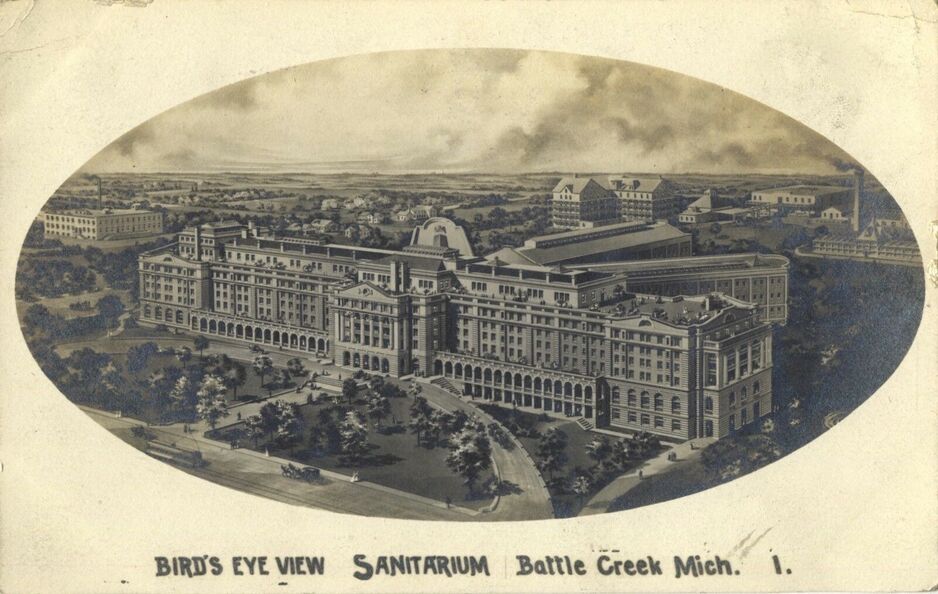
A bird's-eye view of the Battle Creek Sanitarium in Michigan around 1911 — the sprawling health resort where Kellogg ran his regimens of vegetarian diet, exercise, and hydrotherapy for over 40 years, and where Corn Flakes were accidentally born. Gage Printing Co., Public domain, via Wikimedia Commons
John Harvey Kellogg continued running the sanitarium and promoting his health theories. He was a prolific writer, publishing books and pamphlets on diet, exercise, and sexual health. He advocated for a bland, low-stimulation diet as a way to curb what he saw as excessive sexual desire. He believed that spicy foods, meat, and masturbation were linked to moral and physical decay. His views were extreme, even for his time, but they were also influential. He helped popularize vegetarianism, whole grains, and the idea that diet could be a tool for health rather than just sustenance.
Kellogg died in 1943 at the age of 91. He never reconciled with his brother. The sanitarium eventually closed, but the Kellogg Company thrived, becoming one of the largest food manufacturers in the world. Cornflakes, once a health food designed to curb appetite and promote digestion, became a sugary breakfast staple marketed to children with cartoon mascots.
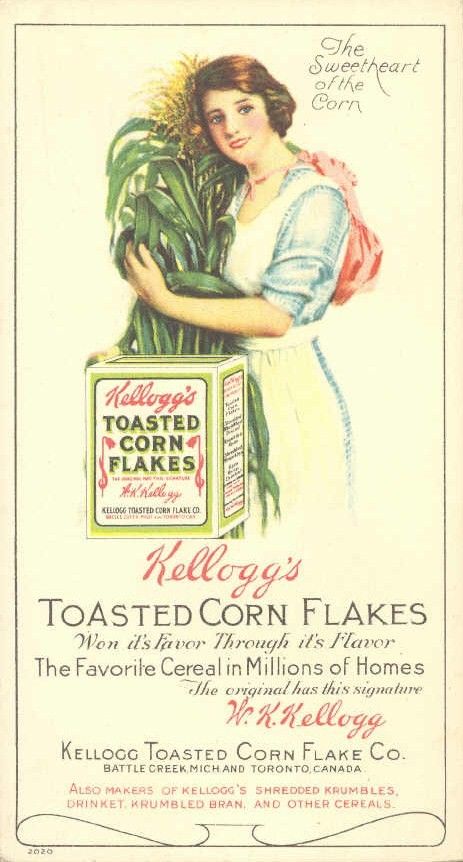
A vintage Kellogg's Corn Flakes advertisement blotter from the 1910s — showing how John Harvey Kellogg's accidental health food invention was transformed into a mass-marketed breakfast product by his brother will Keith Kellogg. Public domain, via Wikimedia Commons
The story of cornflakes is a case study in unintended consequences. Kellogg set out to design a food product that would improve public health and moral behavior. What he created was a commodity that would be reengineered for profit, stripped of its original purpose, and sold to millions. The flakes themselves are a product of accident and constraint: stale dough, repurposed equipment, and the willingness to serve something unexpected to patients who had no choice.
Kellogg's legacy is complicated. He advanced ideas about nutrition and preventive health that were ahead of his time, but he also promoted pseudoscience and held views on sexuality and race that were deeply problematic. His invention endures, though not in the form he intended. Every box of cornflakes is a reminder that design is never finished, that products escape their creators, and that the market will reshape anything to fit its needs. Breakfast, like everything else, is negotiable.
studio / on-this-day / Feb 26