studio / on-this-day / Feb 23
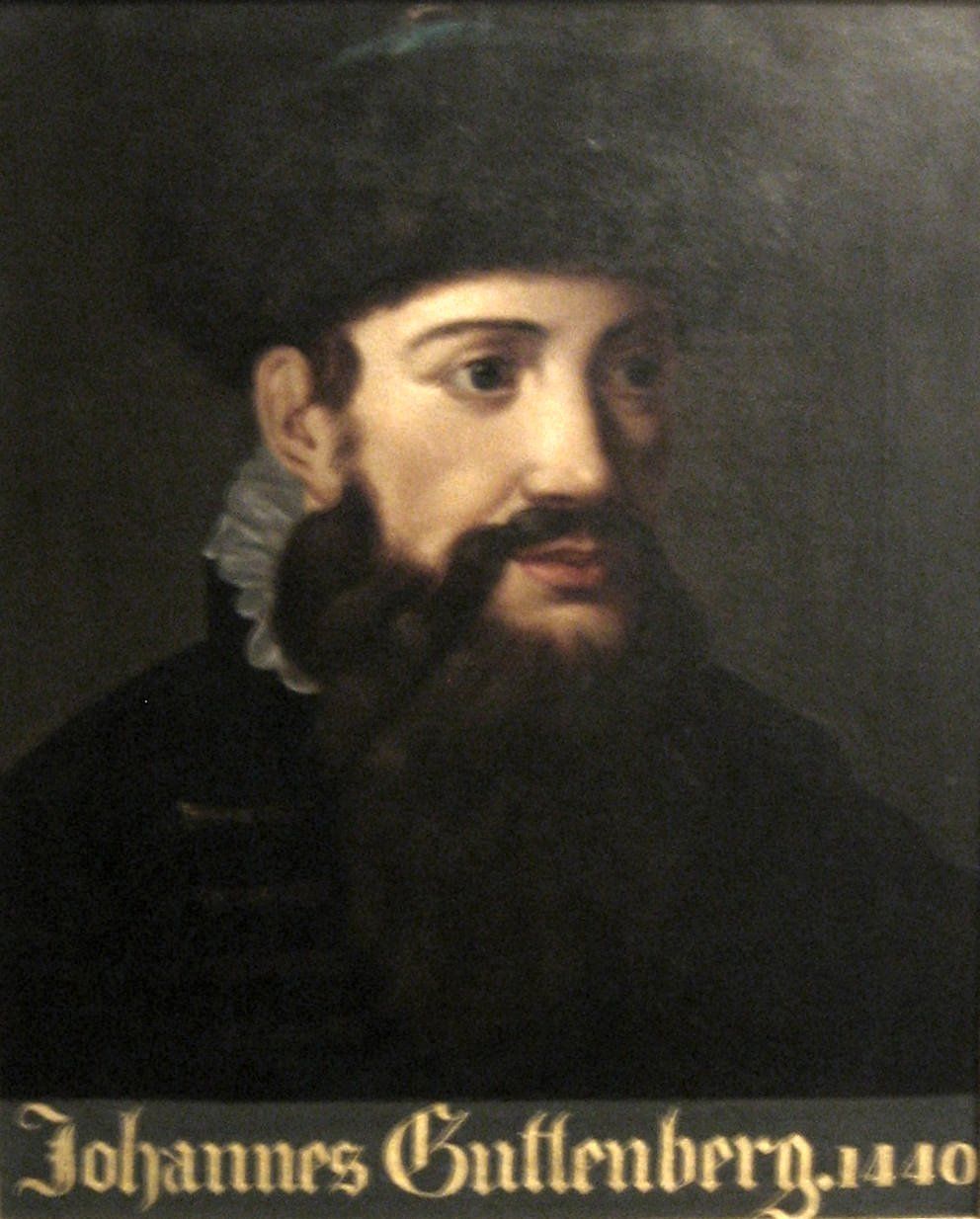
Anonymous portrait of Johannes Gutenberg dated to 1440, held at the Gutenberg Museum in Mainz, Germany — where Gutenberg completed the printing of his 42-line Bible around February 23, 1455. Unidentified painter, Public domain, via Wikimedia Commons
Movable Type, Immovable Change
On this day in 1455 — the Gutenberg Bible was finished, the first great book set in movable type, and copying knowledge stopped being a bottleneck.
3 min read
Around February 23, 1455, Johannes Gutenberg completed the printing of his 42-line Bible in Mainz, Germany. It was not the first book ever printed. Woodblock printing had existed in Asia for centuries, and even in Europe, small texts had been reproduced using carved wooden blocks. But the Gutenberg Bible was the first major work produced using movable metal type, a system that would fundamentally alter the production and distribution of knowledge in Europe and, eventually, the world.
Gutenberg's innovation was not a single invention but a convergence of technologies. He adapted the wine press, a common agricultural tool, into a printing press capable of applying even pressure across a page. He developed a durable metal alloy for casting type that could withstand repeated use. He formulated an oil-based ink that adhered to metal and transferred cleanly to paper. And he designed a system of movable type: individual letters cast in reverse, arranged into words and lines, locked into a frame, inked, pressed onto paper, then disassembled and reused.
The system was modular, reusable, and scalable. A scribe might spend a year copying a single Bible by hand. Gutenberg's press could produce hundreds in the same time, each identical to the others. The Bible he printed had 1,282 pages, printed in two columns of 42 lines each, in a Gothic typeface that mimicked the handwriting of scribes. He printed approximately 180 copies, about 135 on paper and 45 on vellum. Of those, fewer than 50 survive today, scattered across libraries and private collections.
The impact was not immediate but it was inevitable. At first, printed books were expensive and rare, affordable only to institutions and wealthy patrons. But the technology spread quickly. Within 50 years, printing presses operated in over 200 cities across Europe. By 1500, an estimated 20 million books had been printed. Ideas that once circulated among a small elite of scribes and scholars could now reach a much wider audience.
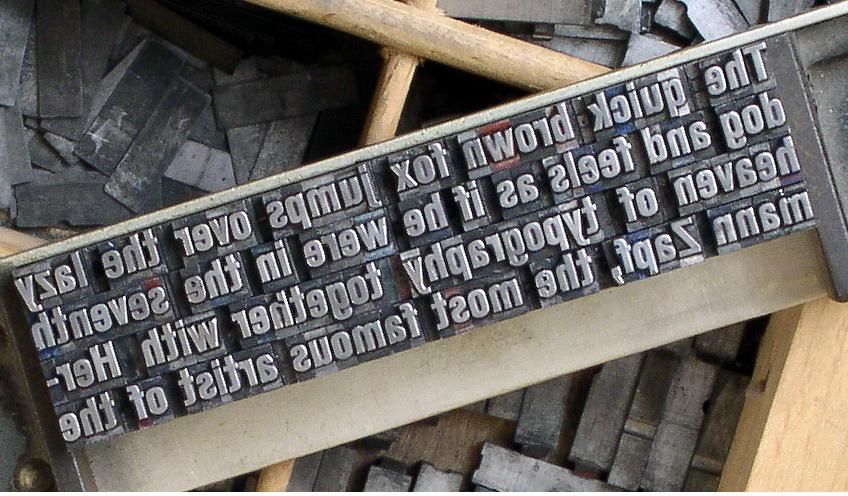
Individual pieces of Movable metal type, each letter cast in reverse to be arranged into lines, inked, pressed, then disassembled and reused — the modular system at the heart of Gutenberg's press. CC BY 2.5, via Wikimedia Commons
The Protestant Reformation, which began in 1517 when Martin Luther nailed his 95 Theses to a church door, would have been impossible without the printing press. Luther's writings were printed and distributed across Europe in a matter of weeks. The press allowed for the rapid dissemination of religious, scientific, and political ideas, bypassing the gatekeepers who had controlled access to knowledge for centuries. The Catholic Church, which had held a near-monopoly on literacy and learning, could no longer control the flow of information.
Gutenberg himself did not profit from his invention. He borrowed heavily to finance his printing operation and was sued by his creditor, Johann Fust, who seized his equipment and continued the business. Gutenberg died in obscurity in 1468. He did not live to see the full consequences of what he had set in motion.
The printing press was a multiplier. It took a task that required skilled labor and made it mechanical. It standardized text, eliminating the variations and errors that crept into handwritten manuscripts. It created a feedback loop: more books meant more readers, which created demand for more books, which incentivized further innovation in printing technology. Fonts became standardized. Page layouts became consistent. Indexes, title pages, and pagination emerged as design conventions.
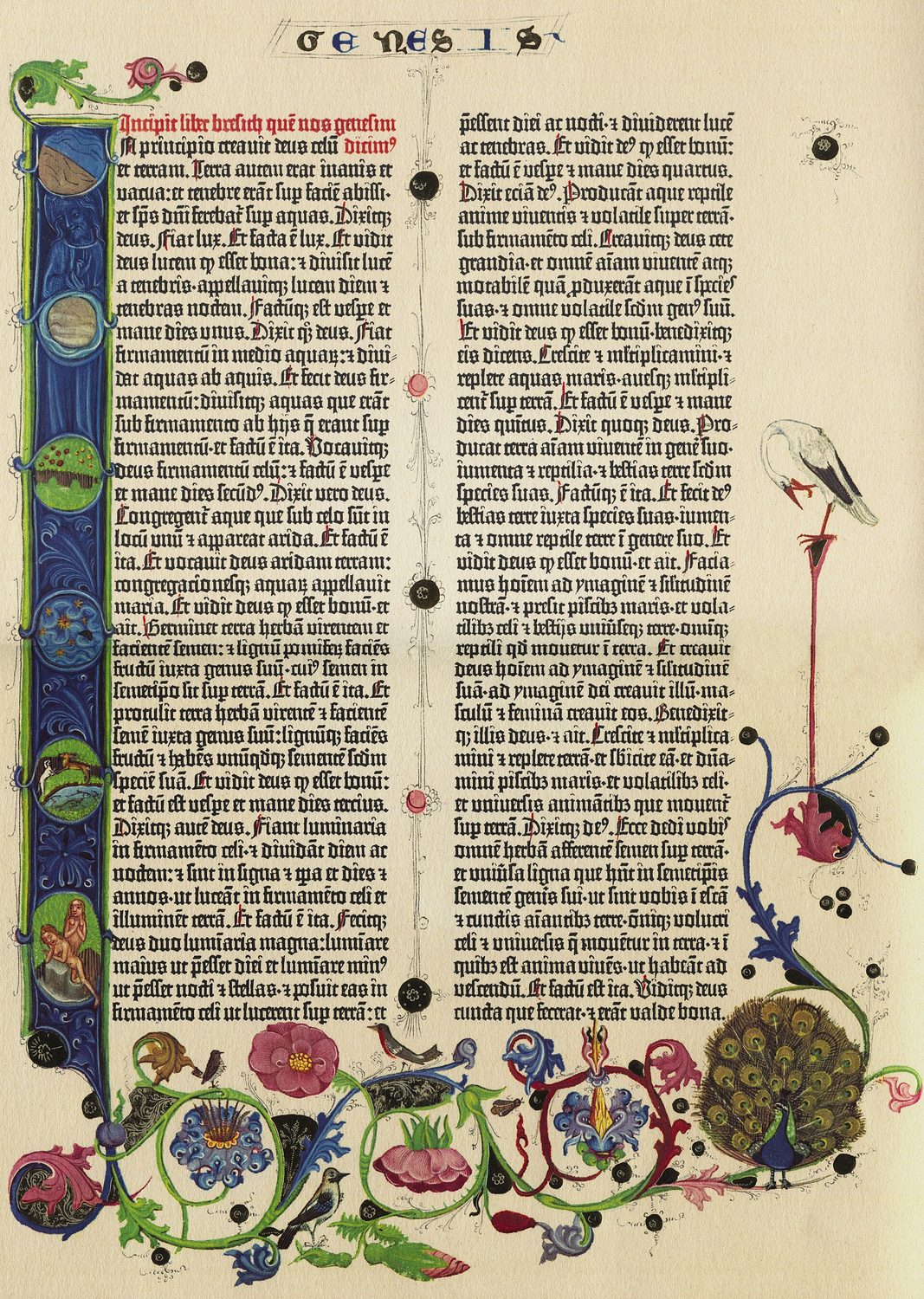
A page of the Gutenberg Bible, the first major work printed with movable type in Europe. Public domain, via Wikimedia Commons
Movable type was a design system in the truest sense. It treated text as a set of interchangeable components that could be recombined infinitely. It anticipated the modularity that defines modern software and digital typography. The characters Gutenberg cast were physical objects, but the system he created was conceptual: a framework for organizing information that could be adapted, refined, and scaled.
We live in a world shaped by that framework. The screen you are reading this on displays digital text rendered from typefaces that descend, conceptually, from the metal letters Gutenberg cast in the 15th century. The idea that information can be reproduced, distributed, and consumed at scale is so embedded in modern life that it feels inevitable. But it was not always so. Before Gutenberg, knowledge was scarce, controlled, and expensive. After Gutenberg, it became abundant, distributed, and cheaper with every passing decade. The change was not instant, but it was immovable.
studio / on-this-day / Feb 23