studio / on-this-day / Dec 14
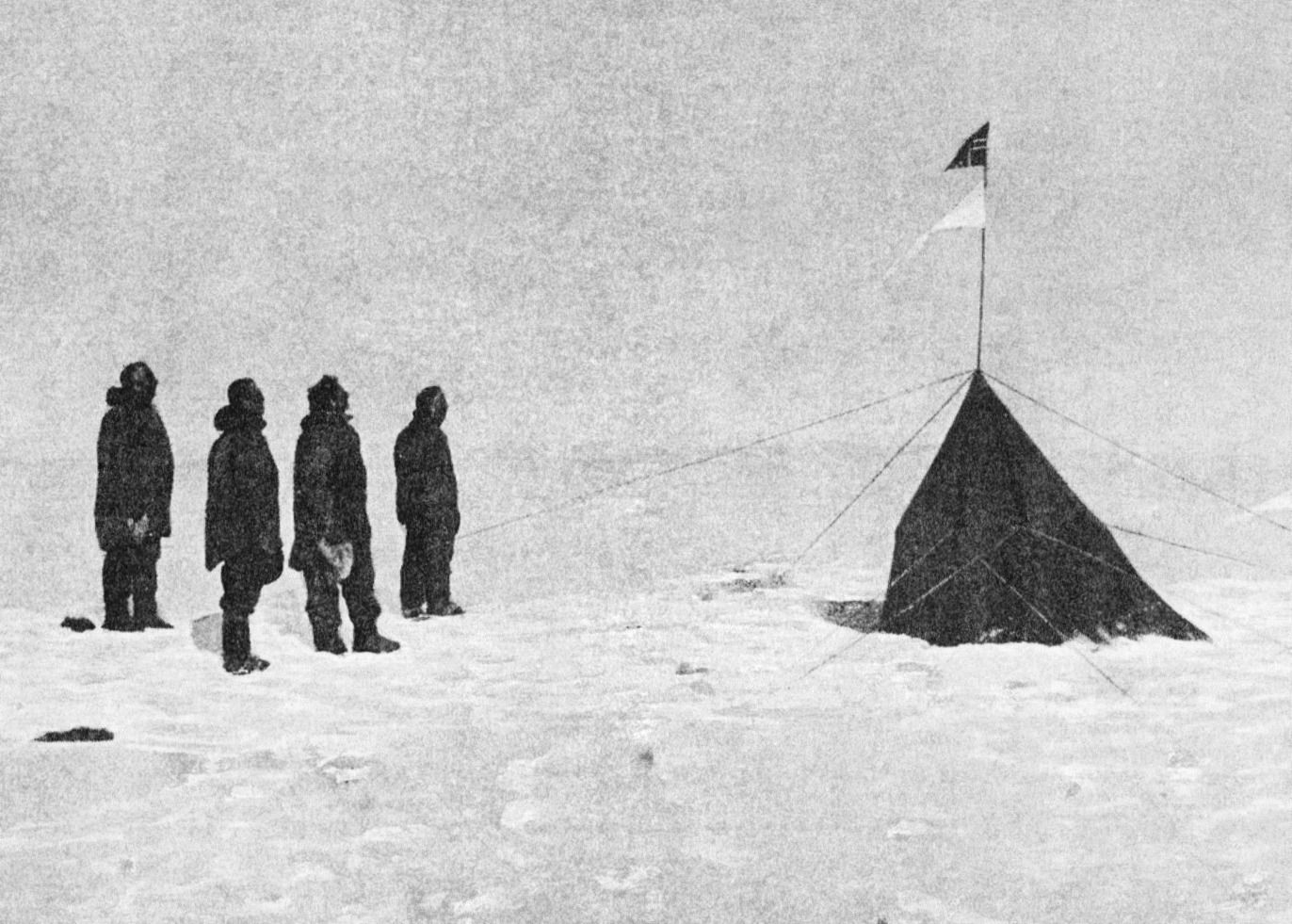
Amundsen's team at the South Pole, December 14, 1911. Olav Bjaaland (1863-1961)[1], Public domain, via Wikimedia Commons
The Race to the Bottom of the World
On this day in 1911 — Roald Amundsen reached the South Pole thirty-three days ahead of his rival, having out-prepared him at every step.
3 min read
On December 14, 1911, at approximately 3 p.m., Norwegian explorer Roald Amundsen and four companions stood at 90 degrees south latitude, the geographic South Pole, the southernmost point on Earth. They planted the Norwegian flag, took measurements to confirm their position, and set up a small tent with a note inside for Robert Falcon Scott, the British explorer leading a competing expedition. Amundsen's team had traveled 1,400 miles across Antarctica in 99 days, using dog sleds, skis, and meticulous planning. They arrived healthy, well-fed, and ahead of schedule. Scott's team arrived 33 days later, exhausted and low on supplies. All five members of Scott's polar party died on the return journey. Amundsen's entire team survived.
The difference between the two expeditions was not courage or determination. Both teams endured brutal conditions: temperatures below minus 40 degrees Fahrenheit, blizzards, crevasses, altitude sickness, and complete isolation. The difference was preparation and system design. Amundsen had spent years studying polar survival. He learned from the Inuit in the Arctic, adopting their clothing, their diet, and their use of sled dogs. He tested equipment obsessively, modified it, and tested it again. His supply depots were stocked with surplus food and fuel, positioned at precise intervals along the route. His dogs were well-fed and rotated regularly to prevent exhaustion. He accounted for every variable he could control.
Scott's expedition, by contrast, relied on a mix of motorized sledges, ponies, and man-hauling. The motorized sledges broke down almost immediately. The ponies were poorly suited to Antarctic conditions and had to be shot. Scott's men ended up dragging heavy sleds themselves, burning thousands of calories per day in subzero temperatures. Their supply depots were placed too far apart. Their food rations were insufficient. Their clothing was inadequate. Scott made decisions based on British naval tradition and a romanticized notion of suffering as noble. Amundsen made decisions based on efficiency and survival.
Amundsen's route was also better. He chose the Axel Heiberg Glacier, a steep but direct path to the polar plateau. Scott took the Beardmore Glacier, a longer, more gradual route. Amundsen's team covered an average of 15 to 20 miles per day. Scott's team averaged 10 to 12. Amundsen built in rest days. Scott pushed his men relentlessly. When Amundsen reached the pole, his team was in good spirits. They spent three days at the pole, taking measurements and leaving markers. Then they turned around and skied back, arriving at their base camp on January 25, 1912, having lost no men and only a few dogs.
Scott's team reached the pole on January 17, 1912. They found Amundsen's tent and the Norwegian flag. Scott wrote in his diary: "The worst has happened... All the day dreams must go... Great God! This is an awful place." The return journey was a disaster. Temperatures dropped. Blizzards slowed progress. One man, Edgar Evans, suffered a head injury and died. Another, Lawrence Oates, walked out into a blizzard to his death, famously saying, "I am just going outside and may be some time." Scott and the remaining two men, Edward Wilson and Henry Bowers, died in their tent just 11 miles from a supply depot. Their bodies and Scott's diary were found eight months later.
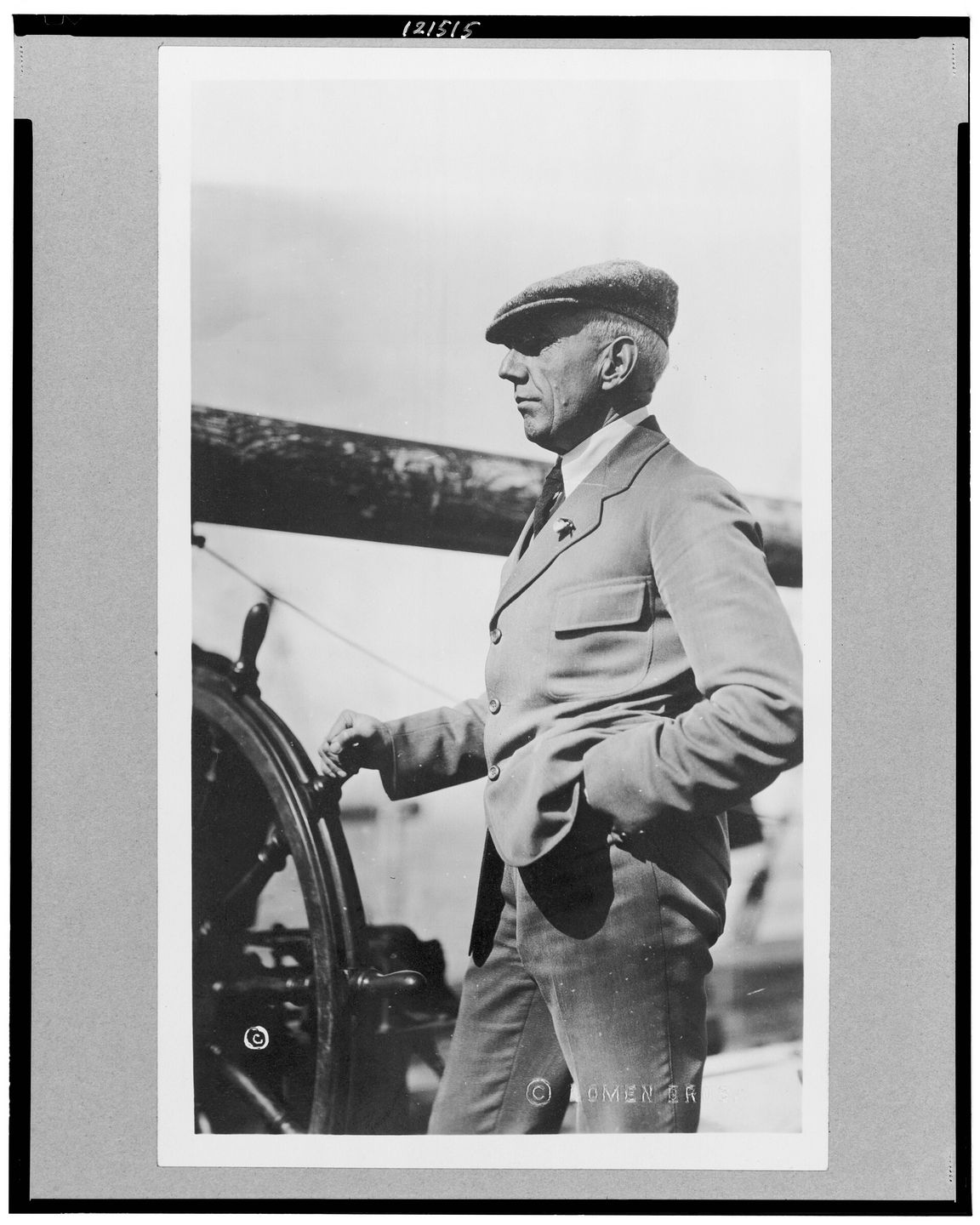
Roald Amundsen, Norwegian polar explorer. Lomen Bros., Public domain, via Wikimedia Commons
Scott became a tragic hero in Britain. His death was framed as a noble sacrifice. Amundsen's success was acknowledged but often downplayed, portrayed as coldly technical rather than heroic. But from a design perspective, Amundsen's achievement is more interesting. He treated polar exploration as an engineering problem. He identified the constraints: distance, temperature, food supply, terrain. He designed a system to optimize for those constraints. He used the best available tools, tested them, and adapted them. He eliminated unnecessary risks. He succeeded not because he was lucky but because he planned better.
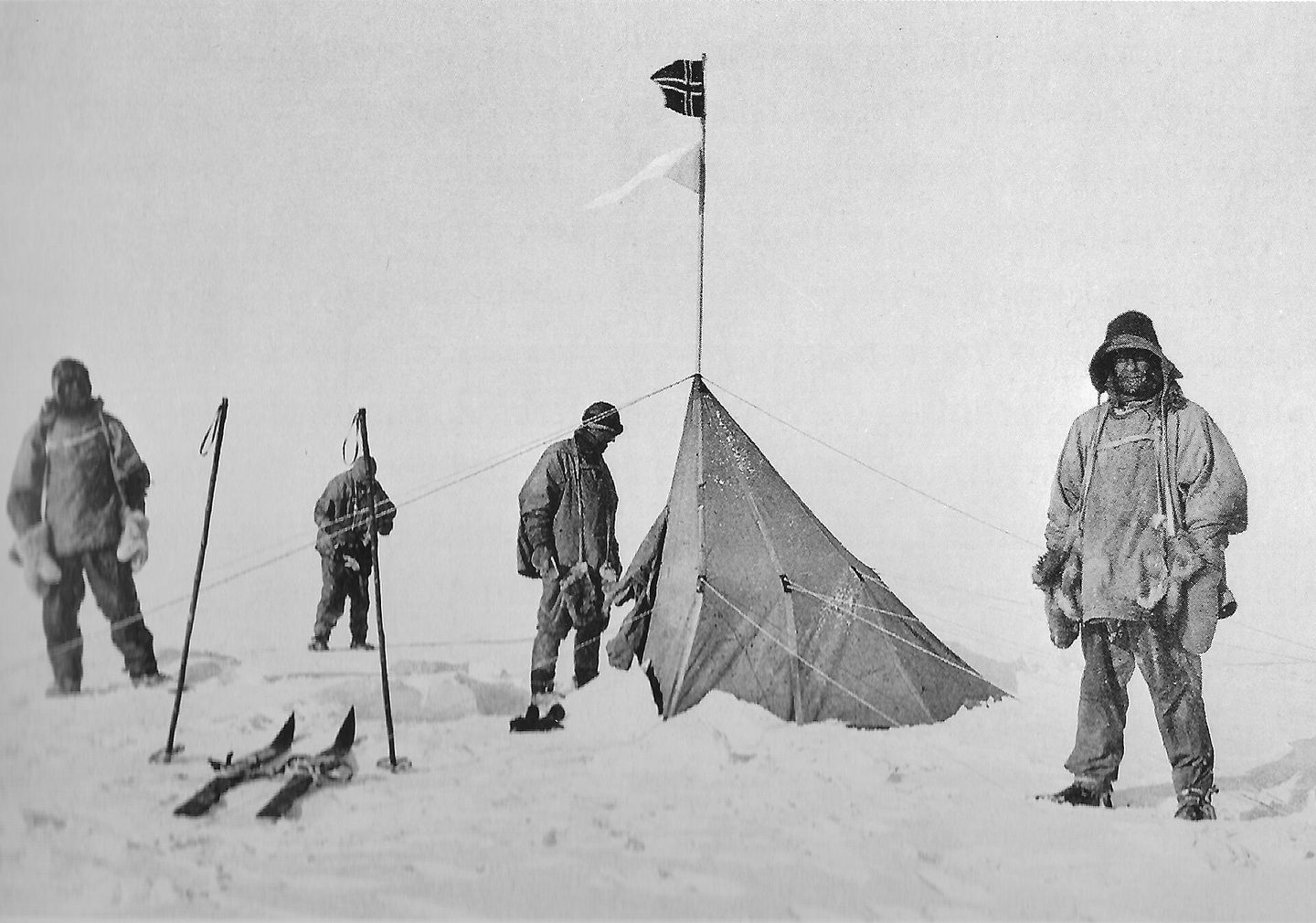
Scott's party at polheim, the tent Amundsen left at the South Pole, January 1912. Henry Bowers, Public domain, via Wikimedia Commons
What Amundsen demonstrated is that preparation is a form of design. Exploration is often romanticized as spontaneous, daring, and improvisational. But the most successful expeditions are the most carefully designed. Amundsen's route to the South Pole was plotted in advance. His supply depots were positioned based on calculations. His equipment was purpose-built. His team was trained. He left nothing to chance that could be controlled. Scott's expedition was brave, but bravery without design is insufficient. Systems fail when they aren't built to handle the conditions they face. Amundsen built a system that worked. Scott did not. On December 14, 1911, at the bottom of the world, that difference was everything.
studio / on-this-day / Dec 14