studio / on-this-day / Nov 27
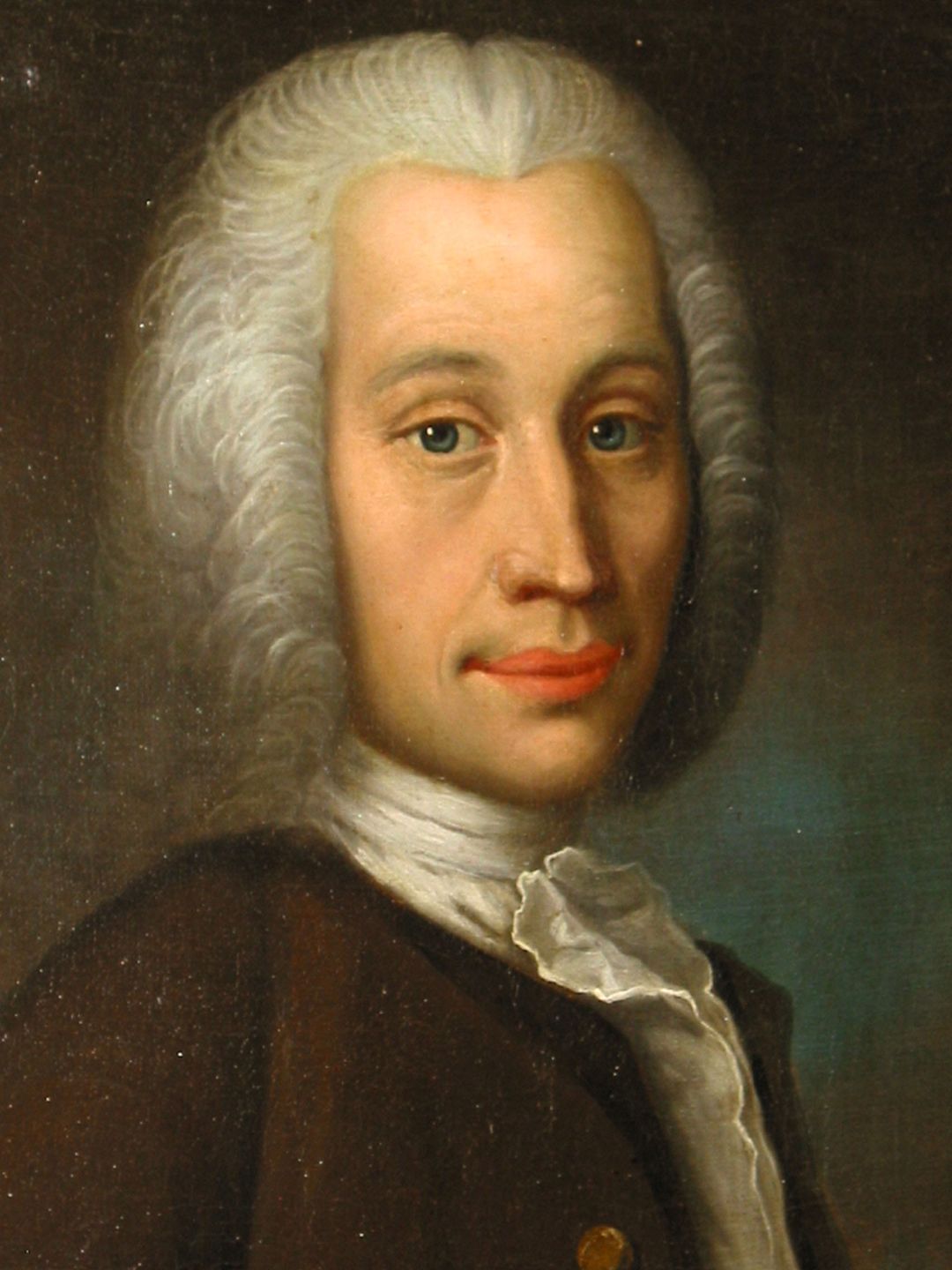
Anders Celsius, Swedish astronomer and physicist. Olof Arenius, Public domain, via Wikimedia Commons
Measuring Heat by Numbers
On this day in 1701 — Anders Celsius was born, and would design the temperature scale that runs from freezing water to boiling.
2 min read
Anders Celsius was born on November 27, 1701, in Uppsala, Sweden, into a family of scientists. His father, grandfather, and both grandfathers were professors of astronomy. He followed the pattern, becoming a professor of astronomy at Uppsala University in 1730. His primary work involved measuring the shape of the Earth, studying the aurora borealis, and cataloging stars. But his lasting contribution was a thermometer scale so intuitive it became the global standard for temperature measurement outside the United States.
In 1742, Celsius proposed a temperature scale based on two fixed points: the freezing point of water and its boiling point at standard atmospheric pressure. He assigned 0 degrees to the boiling point and 100 degrees to the freezing point. The scale was inverted, with higher numbers representing colder temperatures. After his death in 1744, the scale was reversed, either by Carl Linnaeus or another colleague, creating the version we use today: 0 for freezing, 100 for boiling. The reversal made the scale more intuitive. Heat increases with number, cold decreases.
What made the Celsius scale powerful was its use of base 10 and natural reference points. Water freezes and boils at predictable temperatures under normal conditions. The 100-degree span between those points was easy to divide into smaller increments. The scale matched how people think about counting and measurement. It was decimal, like currency and the metric system. It avoided arbitrary numbers, unlike the Fahrenheit scale, where water freezes at 32 and boils at 212. Celsius was designed to be obvious, a temperature system anyone could learn in minutes.
The scale spread slowly. Sweden adopted it in the 1750s. France made it part of the metric system during the Revolution. By the late 19th century, most of the world used Celsius for scientific work and daily weather reporting. The United States remained an outlier, sticking with Fahrenheit for cultural and infrastructural reasons. But in science, medicine, and global communication, Celsius became the default. When NASA reports Mars surface temperatures or meteorologists track ocean heat, they use Celsius. The scale became invisible through ubiquity, a standard so widely adopted it doesn't feel like a choice.
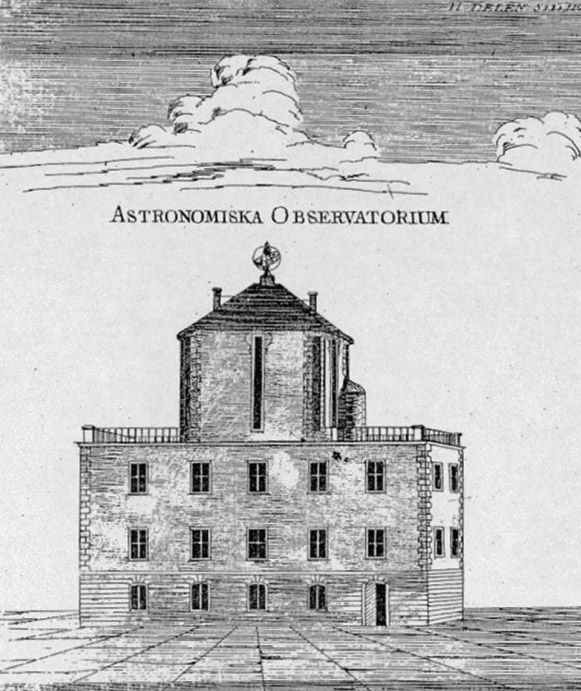
The Celsius Observatory in Uppsala, where Anders Celsius worked as professor of astronomy. Public domain, via Wikimedia Commons
Celsius didn't invent the thermometer. Galileo, Daniel Fahrenheit, and others had built temperature measurement tools decades earlier. What Celsius contributed was simplification, the reduction of measurement to its most essential structure. Two points. A hundred increments. No fractions or offset values. His scale was interface design applied to physics, the idea that a tool works best when it matches human intuition. Temperature is something everyone experiences but few can quantify. Celsius made it quantifiable using numbers that felt natural. That was the innovation, not the instrument but the way it counted.

Celsius's original thermometer scale — note that his version was inverted, with 0 at boiling and 100 at freezing. The scale was reversed after his death. Anders Celsi, which I've rotated and traced the crucial parts as a SVG, Public domain, via Wikimedia Commons
studio / on-this-day / Nov 27