studio / on-this-day / Nov 26
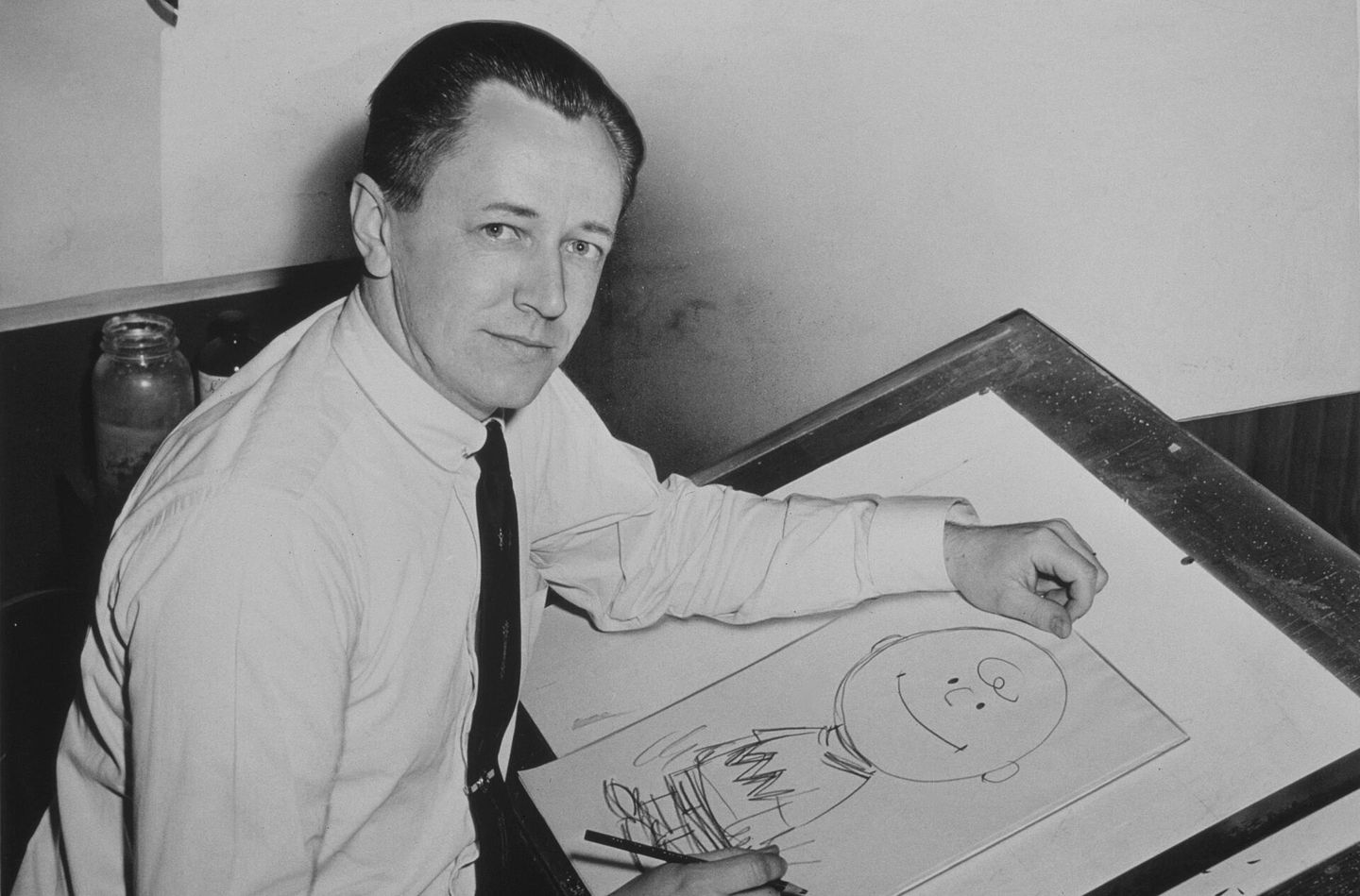
Charles Schulz, 1956. Roger Higgins, World Telegram staff photographer, Public domain, via Wikimedia Commons
The Architecture of Small Failures
On this day in 1922 — Charles Schulz was born, and would draw Peanuts for fifty years, a daily meditation on failure in a few plain lines.
2 min read
Charles Monroe Schulz was born on November 26, 1922, in Minneapolis, Minnesota. His family called him Sparky, after a horse in the comic strip Barney Google. He grew up shy, insecure, mediocre at school, better at drawing than talking. In 1950, he sold a comic strip to United Feature Syndicate. They renamed it Peanuts against his wishes. Schulz hated the title. He thought it trivialized the work, made it sound inconsequential. He drew the strip every day for 49 years and 10 months, publishing 17,897 strips, never using an assistant, never taking a break. The last original strip ran on February 13, 2000, the day after he died.
Peanuts was structurally simple. Four panels. A small cast of children and a dog. Minimal backgrounds. Repetitive scenarios: Lucy pulling away the football, Linus waiting for the Great Pumpkin, Charlie Brown losing baseball games, Snoopy fighting imaginary enemies from a doghouse rooftop. The design was constrained, almost austere. Schulz drew with clean, economical lines. No shadows. No clutter. Every mark had to carry meaning because there was no room for anything decorative. The strip looked easy. It wasn't.
The real architecture of Peanuts was emotional, not visual. Schulz built a world where children spoke like adults, where loneliness was the default state, where effort rarely led to success. Charlie Brown never won a baseball game. He never kicked the football. The Little Red-Haired Girl never noticed him. Peanuts was about persistence without reward, about showing up to lose again. It was a system designed around failure as the engine, not the exception. Schulz understood that comedy comes from recognizing the gap between what we want and what we get, and that gap is permanent.
The strip influenced how American culture talked about anxiety, depression, and self-doubt. It normalized admitting you felt inadequate. Charlie Brown was a loser, but he was also the protagonist, the one the reader rooted for even knowing he would fail. Schulz gave permission to be uncertain, to be vulnerable, to keep trying even when the outcome was predictable. He made melancholy feel universal rather than isolating. Peanuts was therapeutic without being self-help. It didn't offer solutions. It offered recognition.
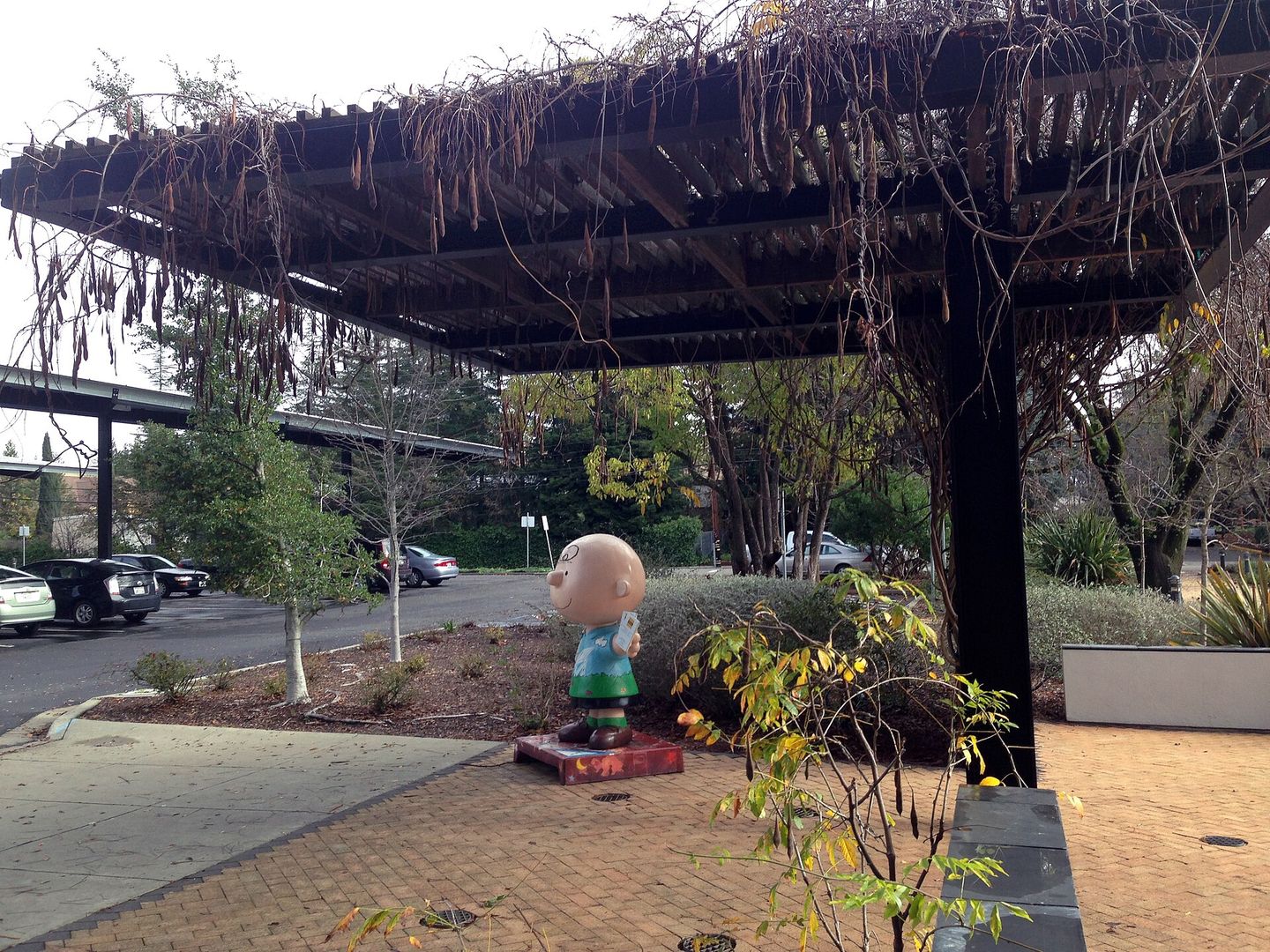
A Charlie Brown statue at the Charles m. Schulz Museum in santa rosa, California. Myotus, CC BY-SA 4.0, via Wikimedia Commons
Schulz earned over a billion dollars from Peanuts through syndication, licensing, and merchandising. The strip became a commercial empire while retaining its emotional core. Snoopy sold insurance. Charlie Brown appeared on lunchboxes. The characters became iconic not despite their sadness but because of it. Schulz had designed something durable by being honest about impermanence. Every strip reset. Every day started with the same flawed characters making the same mistakes. It was iterative, cumulative, relentless. A half-century of small failures, drawn in ink, running in newspapers, reminding people that continuation is not the same as victory, but it's enough.
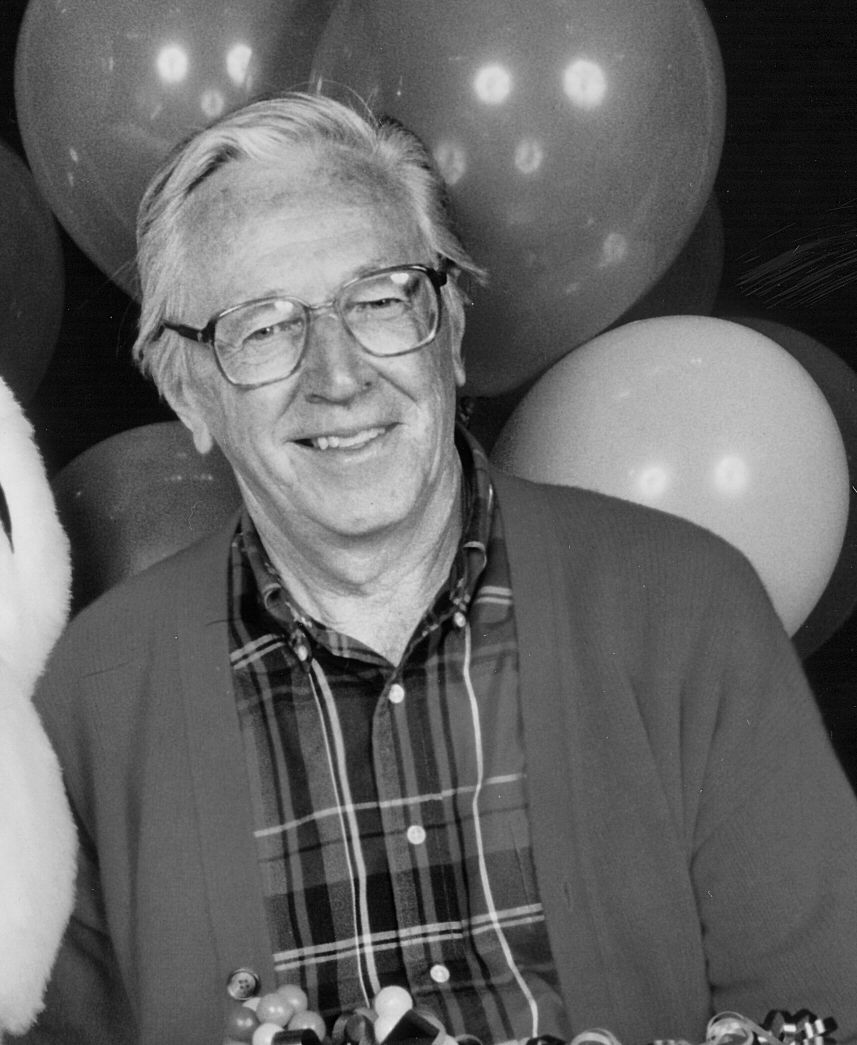
Charles Schulz, 1993 — still drawing Peanuts after more than four decades. CC BY 2.0, via Wikimedia Commons
studio / on-this-day / Nov 26