studio / on-this-day / Nov 23
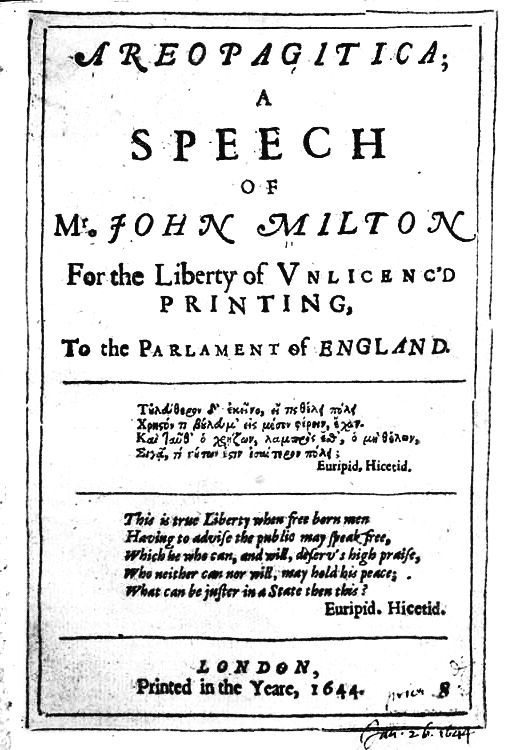
Areopagitica title page, 1644. Public domain, via Wikimedia Commons
The Case for Unlicensed Truth
On this day in 1644 — John Milton published Areopagitica, one of the first sustained arguments that the press should be free of licensing.
3 min read
John Milton published Areopagitica on November 23, 1644, as a direct challenge to the English Parliament's Licensing Order of 1643, which required all publications to be approved by government censors before printing. Milton's tract was 40 pages long, written in the form of a classical oration addressed to Parliament, and it made a simple, radical argument: that truth doesn't need gatekeepers, that ideas should compete openly, that censorship weakens society more than it protects it. The title referenced the Areopagus, the hill in Athens where free citizens debated matters of state. Milton was invoking democracy's origin point to argue that England was abandoning its principles.
The Licensing Order had been passed as a control mechanism during the English Civil War, a way to suppress sedition and heresy in a country fracturing along religious and political lines. All printed material had to be registered, reviewed, and approved. Unlicensed printing was a criminal offense. Milton himself had published unlicensed pamphlets on divorce, which had been condemned and banned. Areopagitica was also unlicensed, a deliberate act of defiance disguised as reasoned argument. Milton was not just critiquing the law. He was breaking it in public, using the act of publication as proof that unlicensed speech could be responsible and valuable.
Milton's central metaphor compared censorship to the murder of a living idea. He argued that books are not passive objects but extensions of the human mind, that suppressing a book is suppressing thought itself. Truth, he wrote, needs no policies to protect it. Let truth and falsehood grapple in free and open encounter, and truth will prevail. The metaphor was elegant and optimistic, assuming that people, given access to competing ideas, would choose wisely. He trusted the marketplace of ideas before the term existed, believed that good information would drive out bad through natural selection.
The argument had limits Milton himself wouldn't have recognized. He wasn't advocating for universal free speech. He explicitly excluded Catholic publications, which he saw as propaganda for a foreign power. He had no patience for atheism or blasphemy. His vision of free expression was constrained by the religious and political boundaries of his time. But the framework he built, the idea that censorship is a form of intellectual violence, that prior restraint stifles discovery, that societies grow stronger by allowing dissent, became foundational to liberal democratic thought.
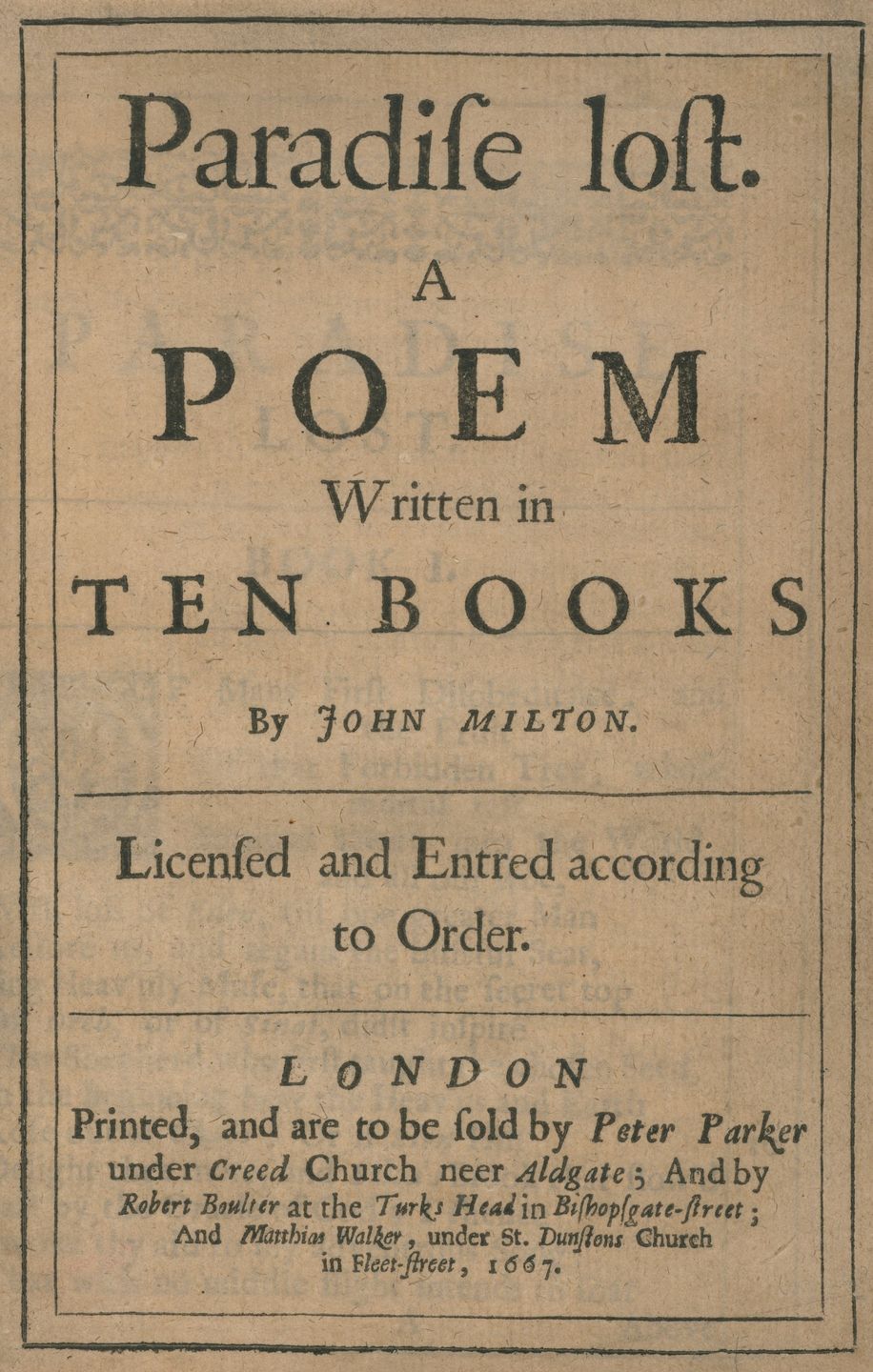
Title page of Paradise Lost, First edition, 1667 — the epic Milton wrote two decades after Areopagitica. John Milton, Public domain, via Wikimedia Commons
Areopagitica had almost no immediate effect. Parliament ignored it. The Licensing Order remained in force for decades. Milton's tract was more cited than read, more influential in retrospect than in practice. But it endured. By the 18th century, it was a cornerstone text for advocates of press freedom in England and America. John Stuart Mill referenced it. Thomas Jefferson echoed it. The First Amendment to the U.S. Constitution enshrined its principles without naming them. Milton's argument became the default position, the baseline assumption that speech should be free unless there's a compelling reason to restrict it.
The tension Milton identified, between order and expression, between safety and openness, has never been resolved. Every generation re-litigates it. Print gave way to broadcast, broadcast to the internet, and each transition brought new arguments about who should control the flow of information. Platforms replaced publishers. Algorithms replaced editors. The mechanisms changed, but the question remained the same: who decides what can be said, and on what grounds? Milton's answer, that truth is self-correcting and censorship is self-defeating, still resonates. But so does the counterargument, that lies spread faster than corrections, that some speech causes harm, that openness without accountability is chaos. Areopagitica didn't settle the debate. It just gave us a vocabulary for having it.
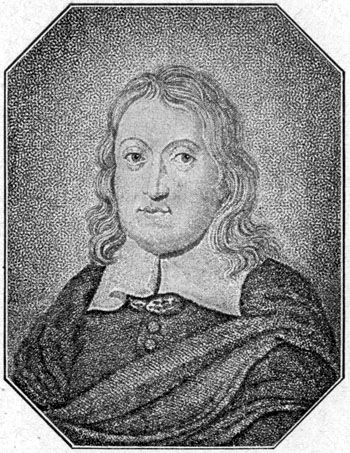
John Milton, author of Areopagitica and Paradise Lost. Public domain, via Wikimedia Commons
studio / on-this-day / Nov 23