studio / on-this-day / Oct 28
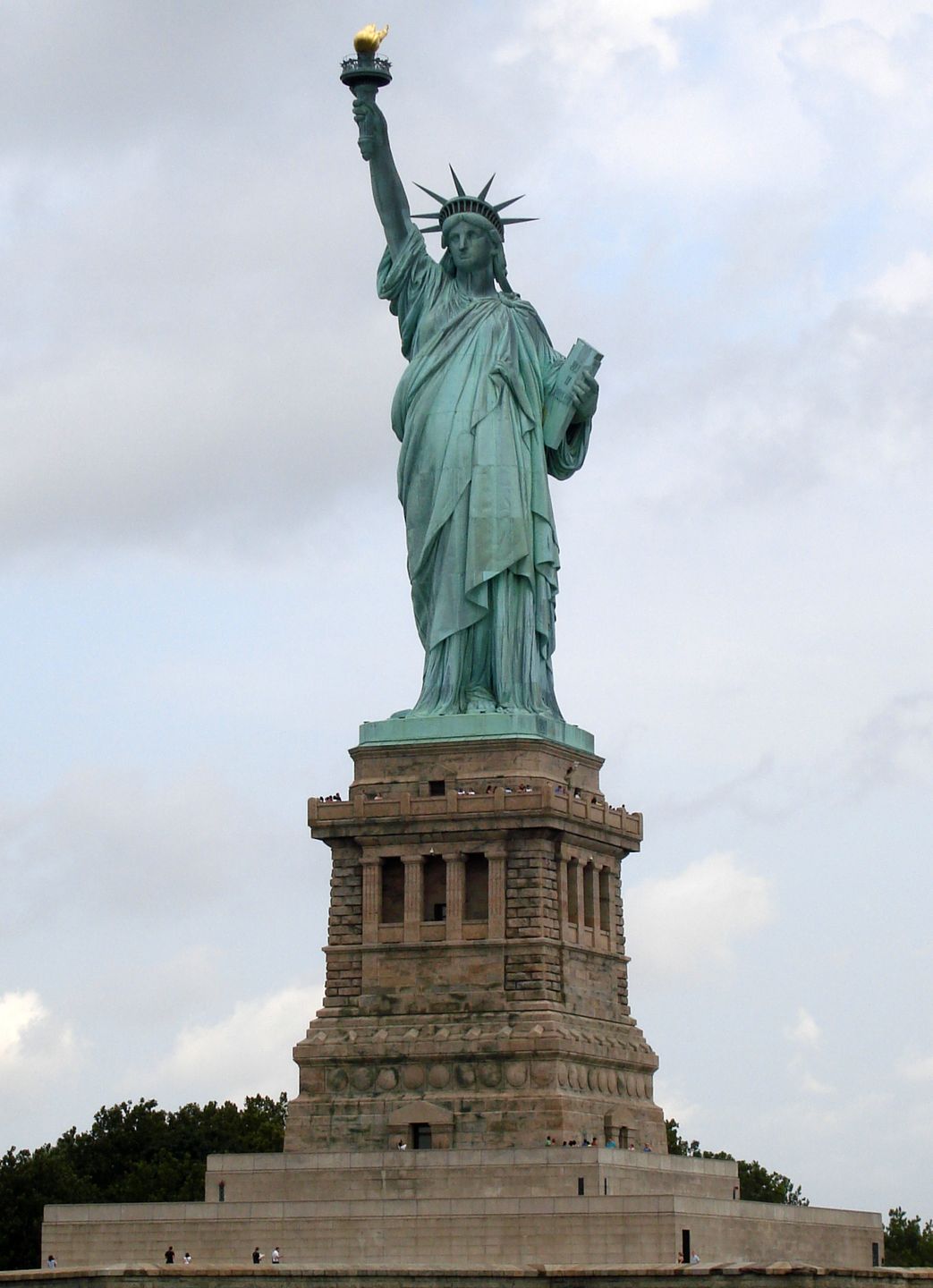
The Statue of Liberty on Liberty island, New York harbor. Elcobbola, Public domain, via Wikimedia Commons
Liberty as Engineering
On this day in 1886 — the Statue of Liberty was dedicated, a skin of engineered copper draped over an iron frame by Eiffel and Bartholdi.
3 min read
On October 28, 1886, President Grover Cleveland dedicated the Statue of Liberty in New York Harbor. The statue was a gift from France, commemorating the alliance between the two nations during the American Revolution. It had taken nine years to build, three years to assemble on-site, and required solving engineering problems that had never been attempted at that scale. The result was a 151-foot copper statue supported by an iron framework, standing on a pedestal that brought the total height to 305 feet. It was, at the time, the tallest structure in New York City.
The sculptor, Frédéric Auguste Bartholdi, designed the statue's exterior. But the real engineering challenge fell to Gustave Eiffel, who designed the internal iron skeleton that would support the copper skin. Eiffel's framework was a pioneering use of structural engineering, creating a flexible armature that could support the statue's weight while allowing it to sway in strong winds. The copper sheets, hammered into shape using a technique called repoussé, were hung on the framework using iron bars and rivets. The design allowed the copper to expand and contract with temperature changes without cracking.
The statue was shipped from France in 214 crates and reassembled on what was then called Bedloe's Island. The pedestal, designed by American architect Richard Morris Hunt, was built with funds raised through a public campaign after the U.S. government initially refused to pay for it. Newspaper publisher Joseph Pulitzer led the fundraising effort, promising to print the name of every donor in his paper. More than 120,000 people contributed, most giving less than a dollar. The pedestal became a monument to crowdfunding before the term existed.
The statue's symbolism has evolved over time. Initially conceived as a monument to liberty and republicanism, it became associated with immigration after Emma Lazarus's poem "The New Colossus" was mounted on the pedestal in 1903. The poem's lines, "Give me your tired, your poor, your huddled masses yearning to breathe free," reframed the statue as a beacon for immigrants arriving by sea. Millions of people passing through Ellis Island saw the statue as their first glimpse of America.
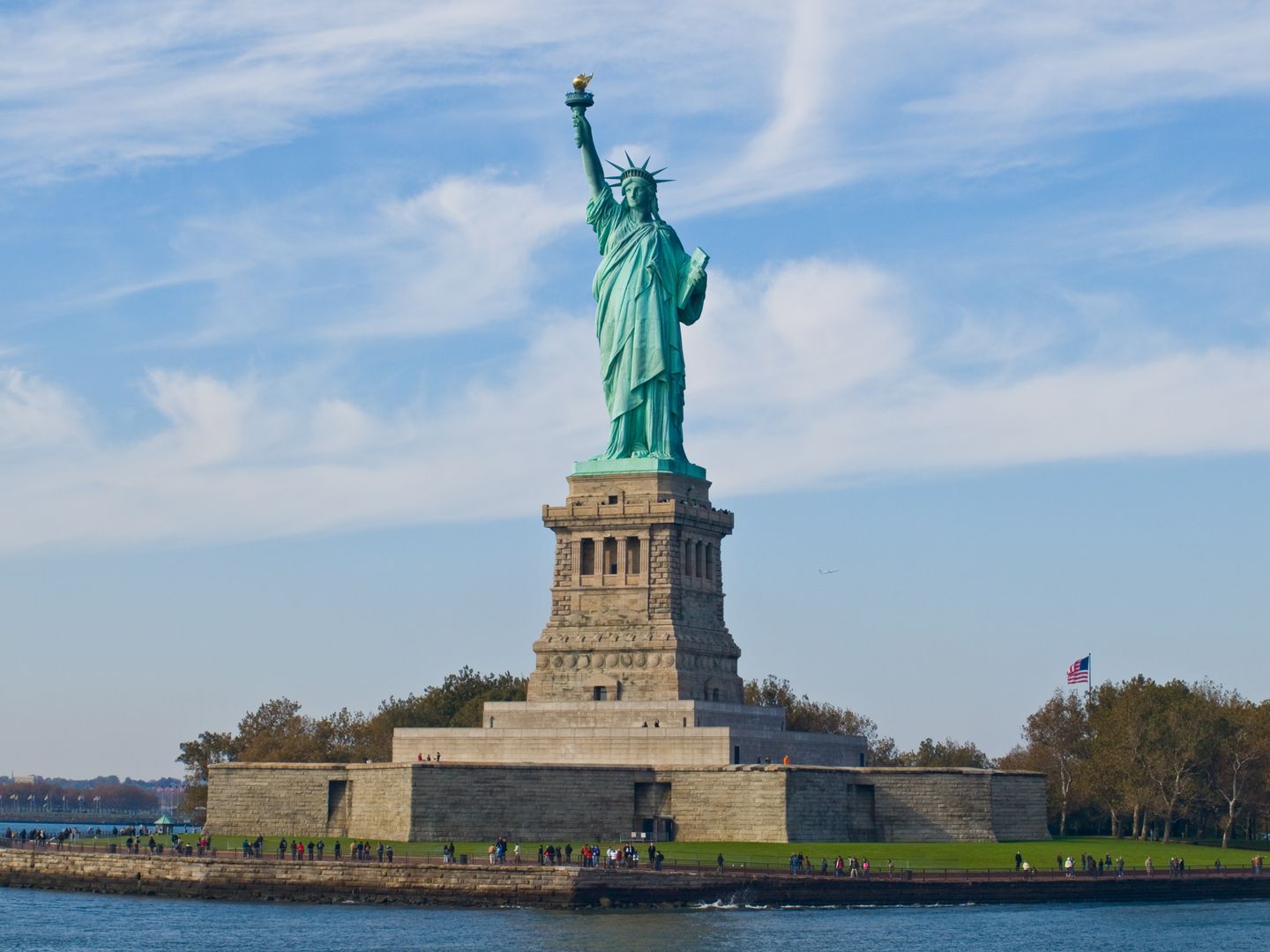
The Statue of Liberty, dedicated on October 28, 1886, New York harbor. William Warby, CC BY 2.0, via Wikimedia Commons
From an engineering perspective, the Statue of Liberty demonstrated what was possible when art and structural design worked in concert. Eiffel's iron framework was a precursor to the skeleton frame construction that would later enable skyscrapers. The statue proved that large-scale structures could be both functional and symbolic, that engineering could serve aesthetic and political purposes without compromising structural integrity.
The copper exterior has oxidized over the decades, turning from its original reddish-brown to the green patina it has today. This was not a flaw. The patina is a protective layer that prevents further corrosion. The statue's color changed naturally, but the change was accepted and eventually embraced as part of its identity. This is a useful metaphor for how designed systems age. The best designs accommodate change rather than resist it.
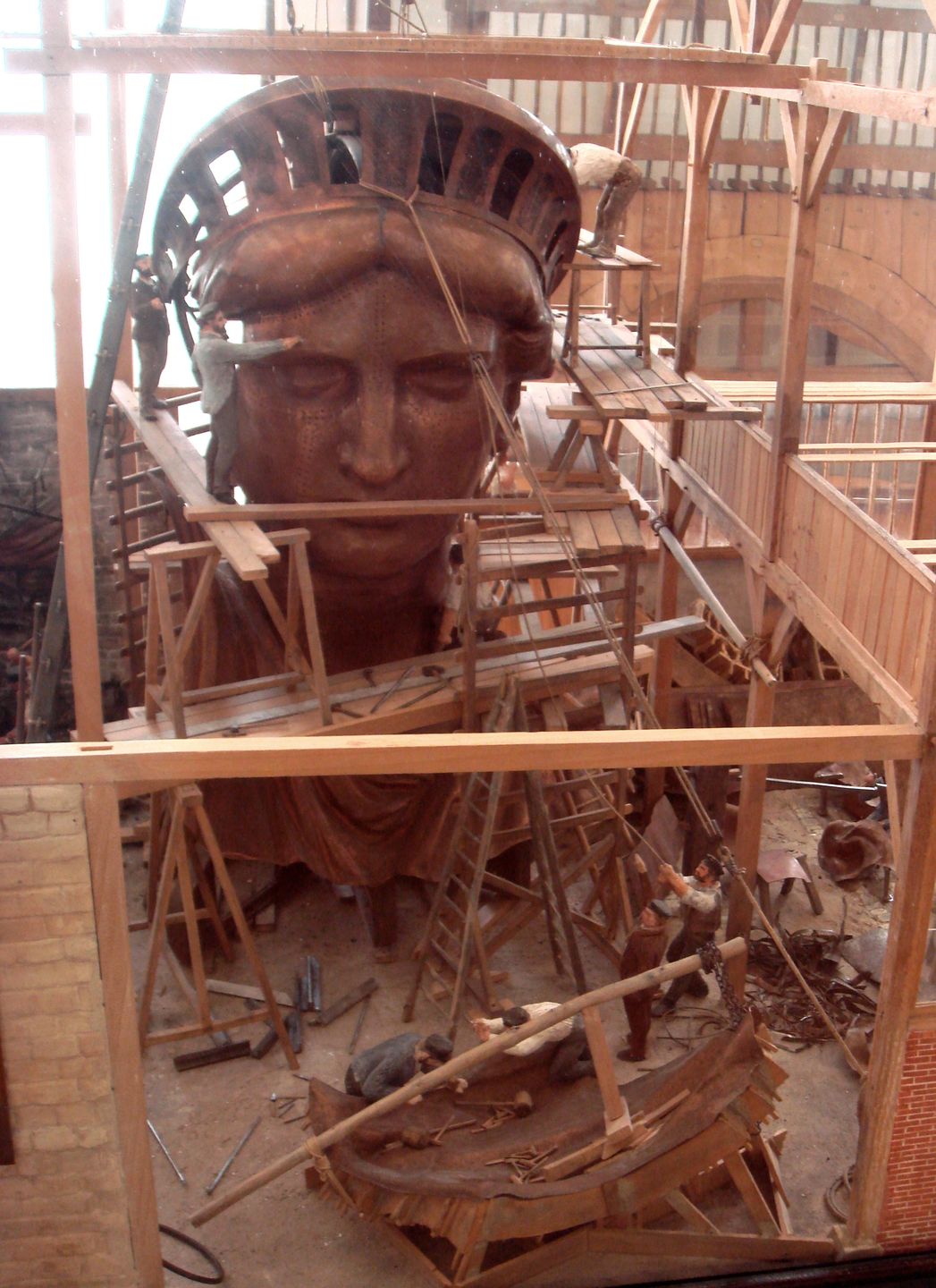
The copper Statue rising in bartholdi's Paris workshop, circa 1880, before shipment to New York. PHGCOM, CC BY-SA 3.0, via Wikimedia Commons
The statue has been restored multiple times, most notably in the 1980s when the internal iron framework was replaced with stainless steel to prevent rust. The torch, which had been modified in 1916 and leaked water for decades, was completely rebuilt to match Bartholdi's original design. These interventions were necessary to preserve the structure, but they were done in a way that maintained the statue's appearance and symbolic function.
Today, the Statue of Liberty is one of the most recognizable monuments in the world. It appears on currency, in films, and as shorthand for American identity. But it is also a lesson in collaborative design: a French sculptor, a French engineer, an American architect, and 120,000 small donors coming together to build something that none of them could have built alone. Liberty was not just an idea. It was a structure that had to be designed, funded, built, and maintained. And it still stands because people decided it was worth the effort.
studio / on-this-day / Oct 28