studio / on-this-day / Oct 26
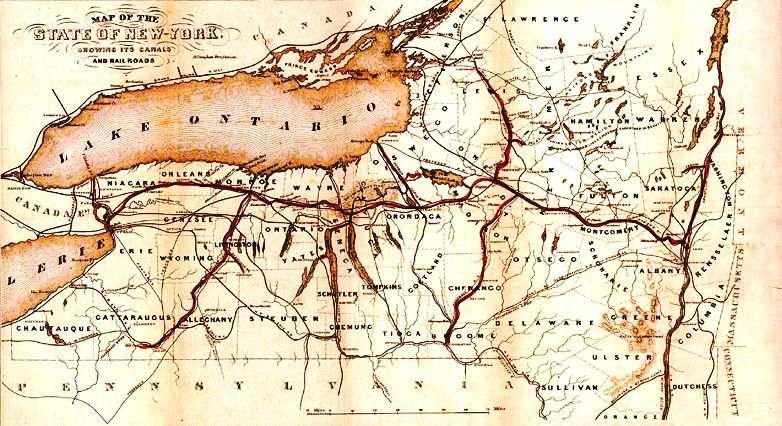
Map of the Erie Canal connecting the great lakes to new York. Public domain, via Wikimedia Commons
The Ditch That Built New York
On this day in 1825 — the Erie Canal opened, three hundred and sixty-three miles dug by hand to link the Great Lakes to the Atlantic.
3 min read
On October 26, 1825, the Erie Canal officially opened. It was 363 miles long, 40 feet wide, and four feet deep, stretching from Albany on the Hudson River to Buffalo on Lake Erie. The canal was dug almost entirely by hand, using shovels, pickaxes, and black powder. It took eight years and cost seven million dollars, a staggering sum for the time. Critics called it "Clinton's Folly" after Governor DeWitt Clinton, who championed the project. They said it was too expensive, too ambitious, and would never pay for itself.
They were wrong. The canal paid for itself in nine years. Shipping costs between the Great Lakes and New York City dropped by 95 percent. Goods that had taken weeks to transport overland by wagon could now move by barge in days. Wheat from Ohio, lumber from Michigan, and manufactured goods from New York flowed through the canal, transforming the regional economy. New York City became the dominant port on the East Coast, surpassing Boston and Philadelphia. The canal made it the commercial capital of the United States.
The engineering challenge was immense. The canal had to cross rivers, swamps, and the Niagara Escarpment, a 60-foot-high ridge of rock. Engineers designed 83 locks to raise and lower boats as the canal climbed and descended nearly 600 feet in elevation. They built 18 aqueducts to carry the canal over rivers and valleys. None of the engineers had formal training. They learned by doing, experimenting with materials and techniques as they went. It was infrastructure design by trial and error.
The labor force was equally improvised. Thousands of workers, many of them Irish immigrants, dug the canal using tools that had not changed since Roman times. They worked in swamps infested with mosquitoes, where malaria and dysentery were common. Hundreds died during construction. The work was brutal, but it created an economic engine that would shape the development of the entire country.
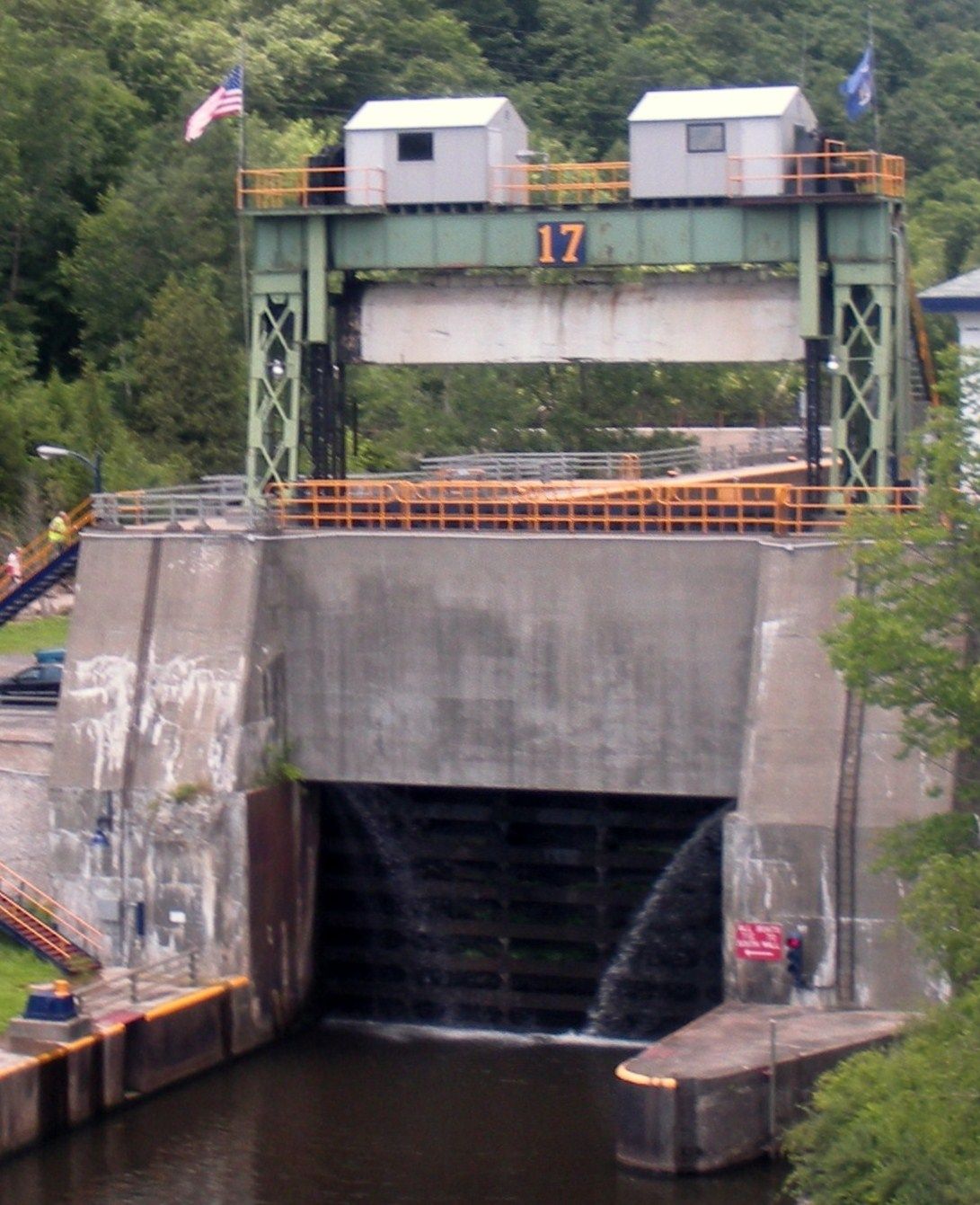
Lock 17 on the Erie Canal — the Canal's lock system lifted boats over changes in elevation. DCwom, CC BY-SA 3.0, via Wikimedia Commons
The canal did more than move goods. It moved people. Settlers used it to reach the western frontier. Towns sprang up along its route: Syracuse, Rochester, Buffalo. These were not accidental. They were planned around the canal's logistics. If your town was on the canal, you had access to markets. If not, you were isolated. Geography became negotiable. The canal redrew the map.
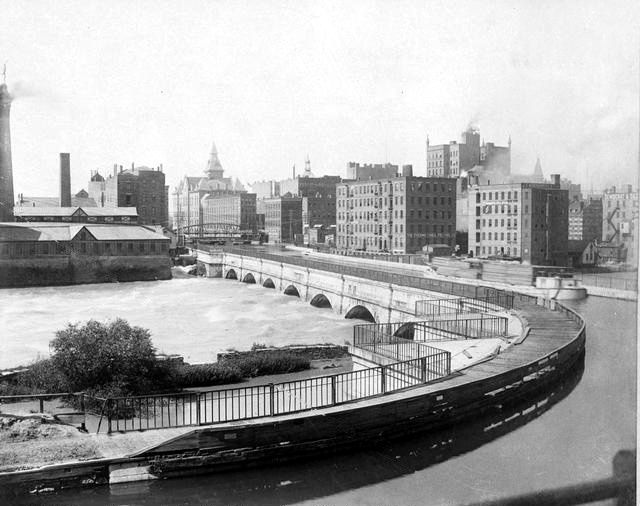
The Erie Canal aqueduct at Rochester, around 1890 — one of 18 aqueducts that carried the Canal over rivers and valleys. Public domain, via Wikimedia Commons
There is a parallel to digital infrastructure here. The canal was a platform that enabled commerce, communication, and migration at a scale that had not been possible before. It created network effects. The more people used it, the more valuable it became. Businesses located near it because other businesses were already there. It was the 19th-century equivalent of the internet: a physical network that collapsed distance and enabled new forms of economic activity.
The Erie Canal also demonstrated the power of public investment in infrastructure. The state of New York funded the project when private investors refused to take the risk. The returns were enormous, not just financially but in terms of economic development and population growth. The canal generated wealth that rippled through the economy for decades.
Today, the canal is mostly a recreational waterway. Railroads and highways long ago replaced it as the primary means of moving freight. But its legacy persists. It established New York as the financial and cultural center of the country. It proved that large-scale civil engineering projects could reshape economies. And it showed that infrastructure is not just about moving things from one place to another. It is about creating the conditions for growth, connection, and possibility. The ditch they dug by hand became the foundation of a global city.
studio / on-this-day / Oct 26