studio / on-this-day / Oct 25
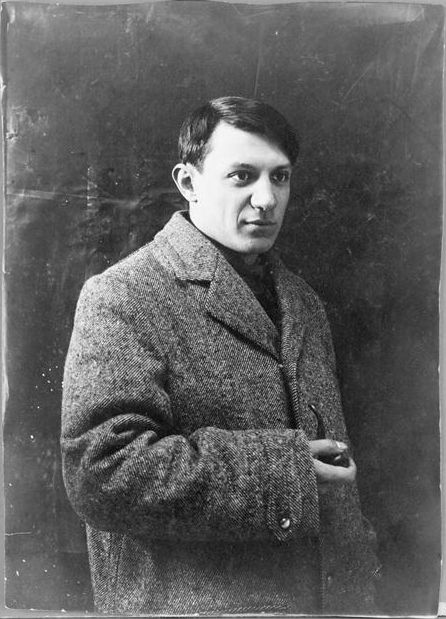
Pablo Picasso, 1908. Public domain, via Wikimedia Commons
The Problem of Staying an Artist
On this day in 1881 — Pablo Picasso was born, who said every child is an artist and that the trick is staying one into adulthood.
3 min read
Pablo Picasso was born on October 25, 1881, in Málaga, Spain. He lived 91 years and produced an estimated 50,000 artworks: paintings, sculptures, ceramics, drawings, prints. The sheer volume is staggering. But what made Picasso significant was not quantity. It was his willingness to abandon what worked and start over, repeatedly, throughout his career.
Picasso could draw with photographic accuracy by the time he was a teenager. His early work was technically flawless, trained in the classical tradition. He could have built a successful career painting realistic portraits and landscapes. Instead, he spent his twenties dismantling the conventions of representation. The Blue Period gave way to the Rose Period, which gave way to Cubism, which he co-invented with Georges Braque in 1907.
Cubism broke objects into geometric fragments and reassembled them from multiple perspectives simultaneously. It rejected the idea that a painting should represent a single viewpoint frozen in time. Instead, it showed what an object might look like if you could see it from all angles at once, collapsed into two dimensions. The result was disorienting and radical. Critics hated it. The public was confused. Picasso kept working.
After Cubism, Picasso moved through Surrealism, Neoclassicism, and eventually a late style that was more expressive and less concerned with formal innovation. He never stayed in one mode long enough for it to define him. This refusal to settle into a recognizable style was unusual. Most artists find something that works and repeat it. Picasso found something that worked and moved on.
Guernica by Pablo Picasso, 1937 — one of the most powerful anti-war statements in modern art. Chrysthel Annely Schwegler Cabuto, CC BY-SA 3.0, via Wikimedia Commons
His most famous quote is often misattributed but captures his philosophy: "Every child is an artist. The problem is how to remain an artist once we grow up." Children create without self-consciousness. They do not worry about technique, marketability, or legacy. They make things because the act of making is intrinsically interesting. Adults lose that. They become concerned with external validation, with whether their work is good enough, with what people will think.
Picasso managed to retain a kind of productive recklessness throughout his life. He experimented constantly, often producing work that was ugly, unfinished, or deliberately crude. He was not precious about his output. He treated art as a problem-solving exercise, not a sacred act. This approach has parallels in software development and design. The best practitioners are the ones who are willing to throw away code, redesign interfaces, and start from scratch when the old approach stops working.
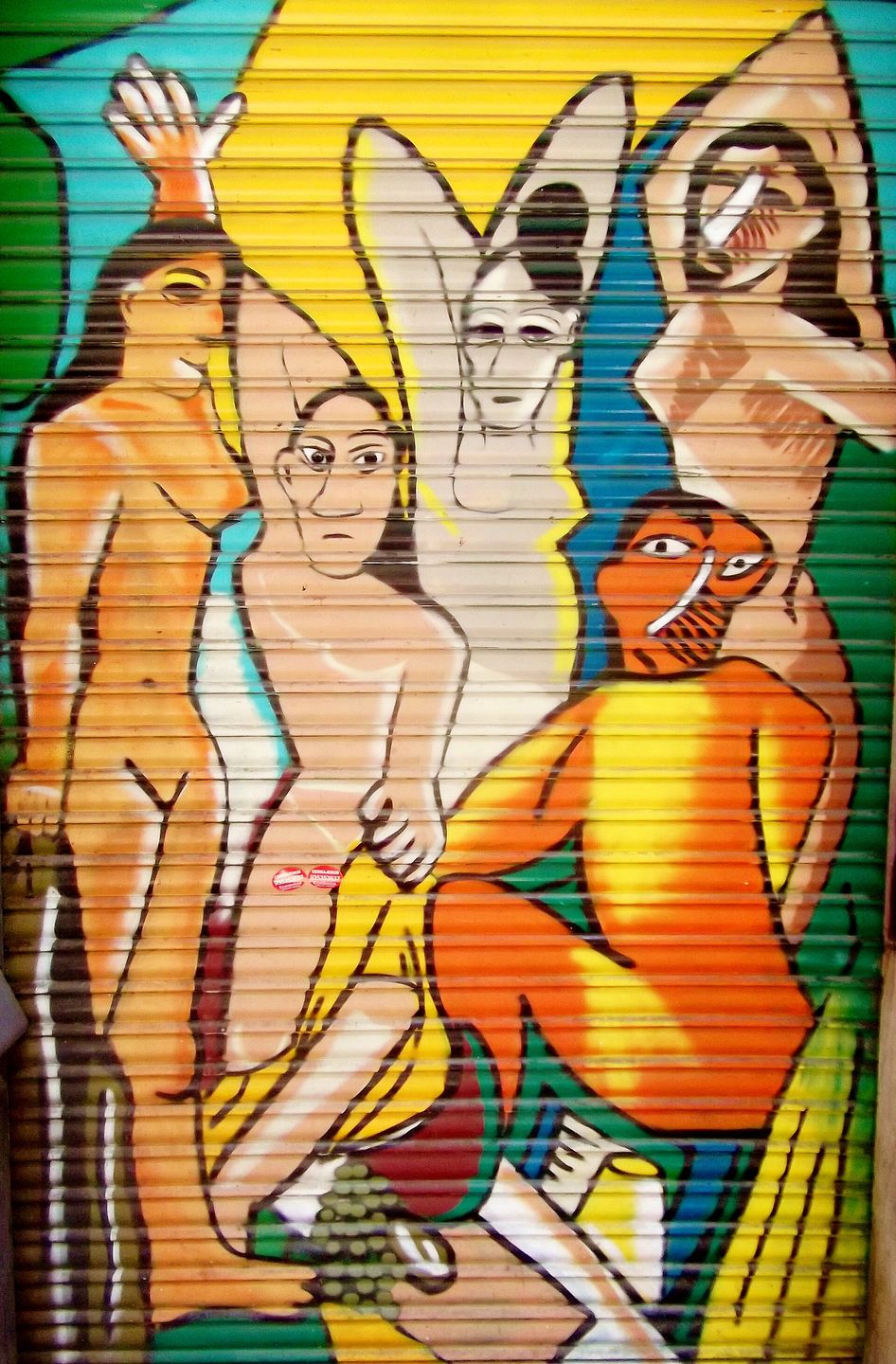
Les Demoiselles d'Avignon, 1907 — the radical work that broke representation and opened the way to Cubism. Domesticflight, CC BY-SA 2.0, via Wikimedia Commons
There is a danger in mythologizing Picasso. He was difficult, egotistical, and often cruel to the people around him, particularly the women in his life. His genius did not make him a good person. But separating the work from the person, what remains is a model of sustained creative output driven by relentless iteration. He did not wait for inspiration. He worked every day, producing vast amounts of material, most of which no one remembers. The masterpieces emerged from the volume.
The lesson is not to be like Picasso. It is to recognize that staying creatively productive requires abandoning the safety of what you know how to do. Mastery is not the endpoint. It is the moment when you have to decide whether to keep refining the same thing or risk looking incompetent by trying something new. Picasso chose risk, over and over, for nine decades. That is why we still talk about him.
studio / on-this-day / Oct 25