studio / on-this-day / Oct 24
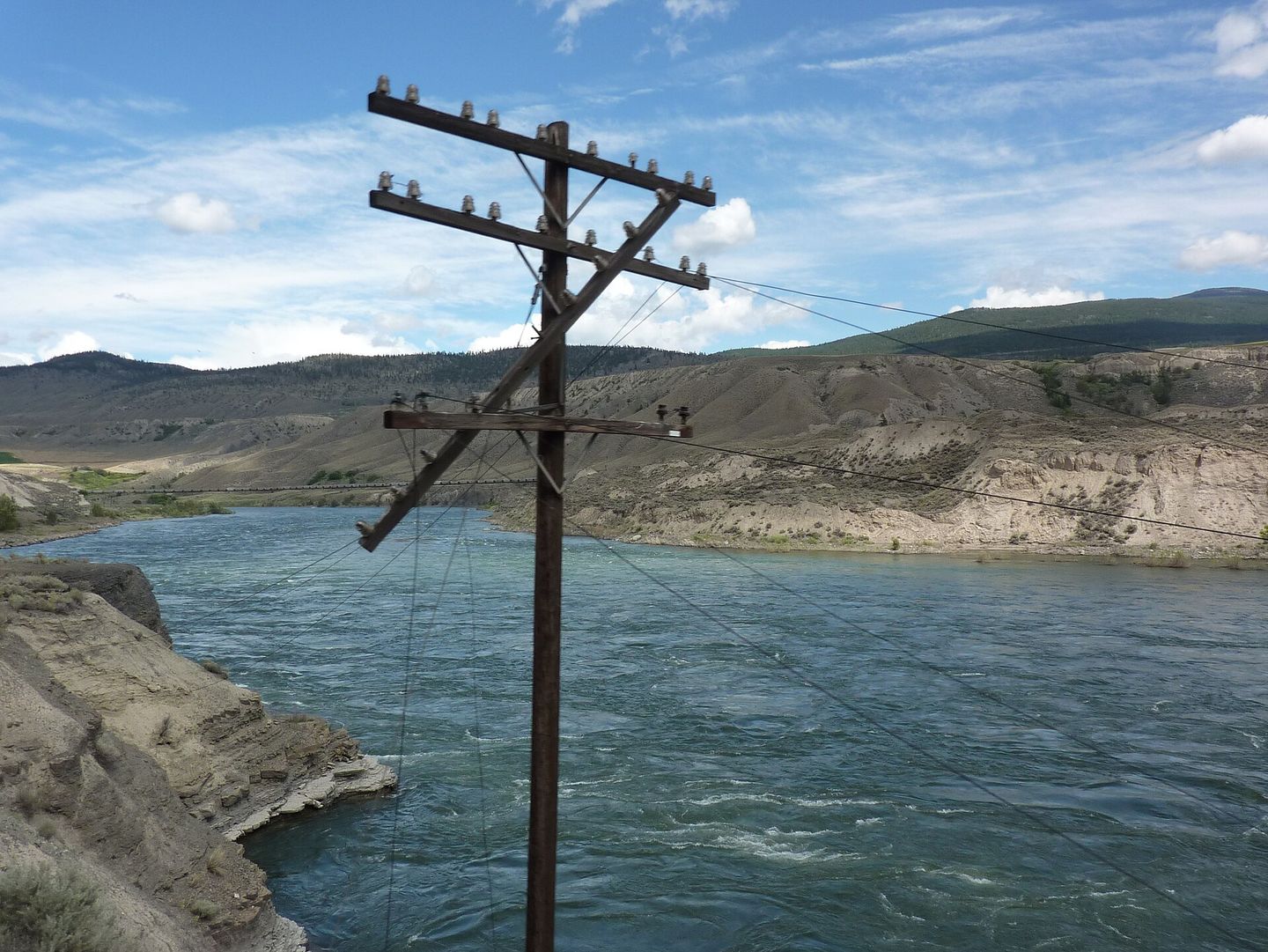
Telegraph pole carrying wires across the landscape. Andrew Bowden from London, United Kingdon, CC BY-SA 2.0, via Wikimedia Commons
The Wire That Killed the Horse
On this day in 1861 — the first transcontinental telegraph message crossed the country, and the Pony Express was obsolete within days.
3 min read
On October 24, 1861, the first transcontinental telegraph message was transmitted between San Francisco and Washington, D.C. The message traveled at the speed of electricity, arriving almost instantly. Two days later, the Pony Express shut down. The riders, the relay stations, the horses, the entire romanticized infrastructure of mail delivery across the American West became unnecessary in the time it took to string a wire across the country.
The Pony Express had been operational for only 18 months. It was a marvel of logistics and endurance. Riders covered nearly 2,000 miles in ten days, changing horses every 10 to 15 miles, riding through hostile territory, extreme weather, and darkness. The system employed 80 riders, 400 horses, and 190 relay stations. It was expensive, dangerous, and financially unsustainable. The company never made a profit. But it captured the imagination because it was heroic and visible. People could see the riders. They could not see the electrical pulses in a wire.
The telegraph was less glamorous but infinitely more practical. Messages that took ten days by horse took seconds by wire. The cost per message dropped dramatically. Businesses could coordinate across distances that previously required weeks of travel. Stock prices, news, and military orders moved at a speed that fundamentally changed how decisions were made. Information became decoupled from physical transport.
Building the transcontinental telegraph required solving massive logistical problems. The route crossed deserts, mountains, and territories controlled by Native tribes who saw the poles as an intrusion. Workers had to dig holes and plant poles in frozen ground and solid rock. They had to string thousands of miles of wire without breaking it. They dealt with supply chain failures, equipment breakdowns, and attacks. The eastern and western lines met in Salt Lake City on October 24, completing the circuit.
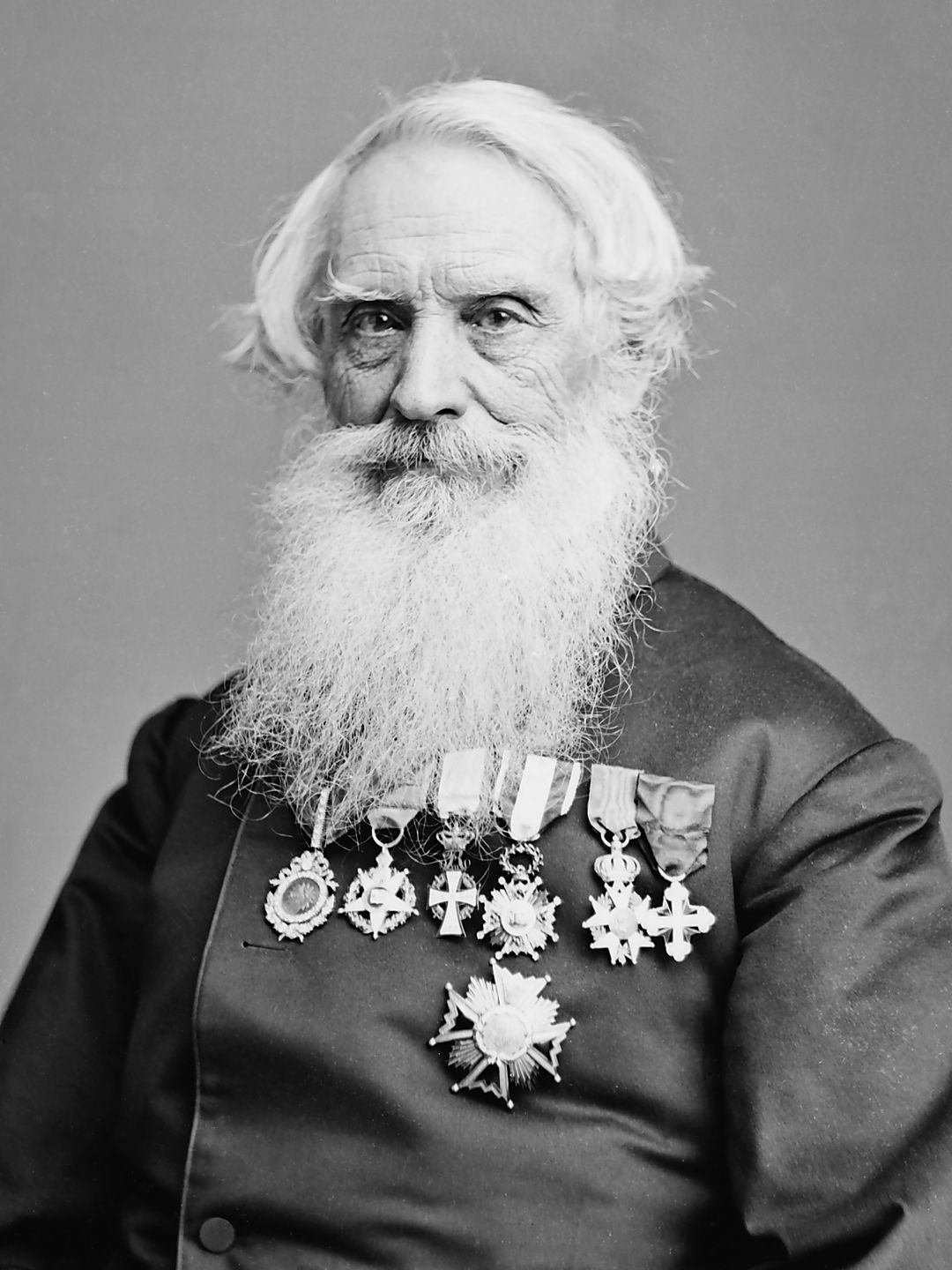
Samuel Morse, inventor of the telegraph and Morse code, whose system made the transcontinental telegraph possible. Mathew Benjamin Brady, Public domain, via Wikimedia Commons
The immediate impact was political. The Civil War had started earlier that year. The Union needed a way to communicate quickly with California to keep it from aligning with the Confederacy. The telegraph made that possible. California stayed in the Union, in part because Lincoln could coordinate with officials there in real time. Strategic communication became a tool of statecraft.
But the deeper change was structural. The telegraph created the first real-time communication network at continental scale. Before, information moved at the speed of horses, ships, or trains. After, it moved at the speed of light. This changed business, journalism, and governance. Markets became synchronized. News became immediate. Coordination across distance became trivial. The telegraph was the first system to abstract communication from physical presence.

An 1862 map of the Pacific telegraph route, the line that connected the coasts. J. Calvin Smith, J. M. Atwood, map engraver., Public domain, via Wikimedia Commons
The Pony Express is remembered fondly as a symbol of frontier ingenuity. But it was also an example of a system that worked briefly and was then rendered obsolete by a better technology. The riders did not fail. They were simply replaced by a system that was faster, cheaper, and more scalable. This is the pattern of technological disruption: not that the old system stops working, but that it becomes uncompetitive.
The transcontinental telegraph lasted until the telephone and later the internet replaced it. But the principle it established remains: infrastructure that moves information faster than people can travel changes how society organizes itself. Distance stops being the limiting factor. Time becomes the constraint. And eventually, even time compresses to near-zero latency. The wire that killed the horse was just the first step toward a world where communication happens faster than the human brain can process it.
studio / on-this-day / Oct 24