studio / on-this-day / Oct 23
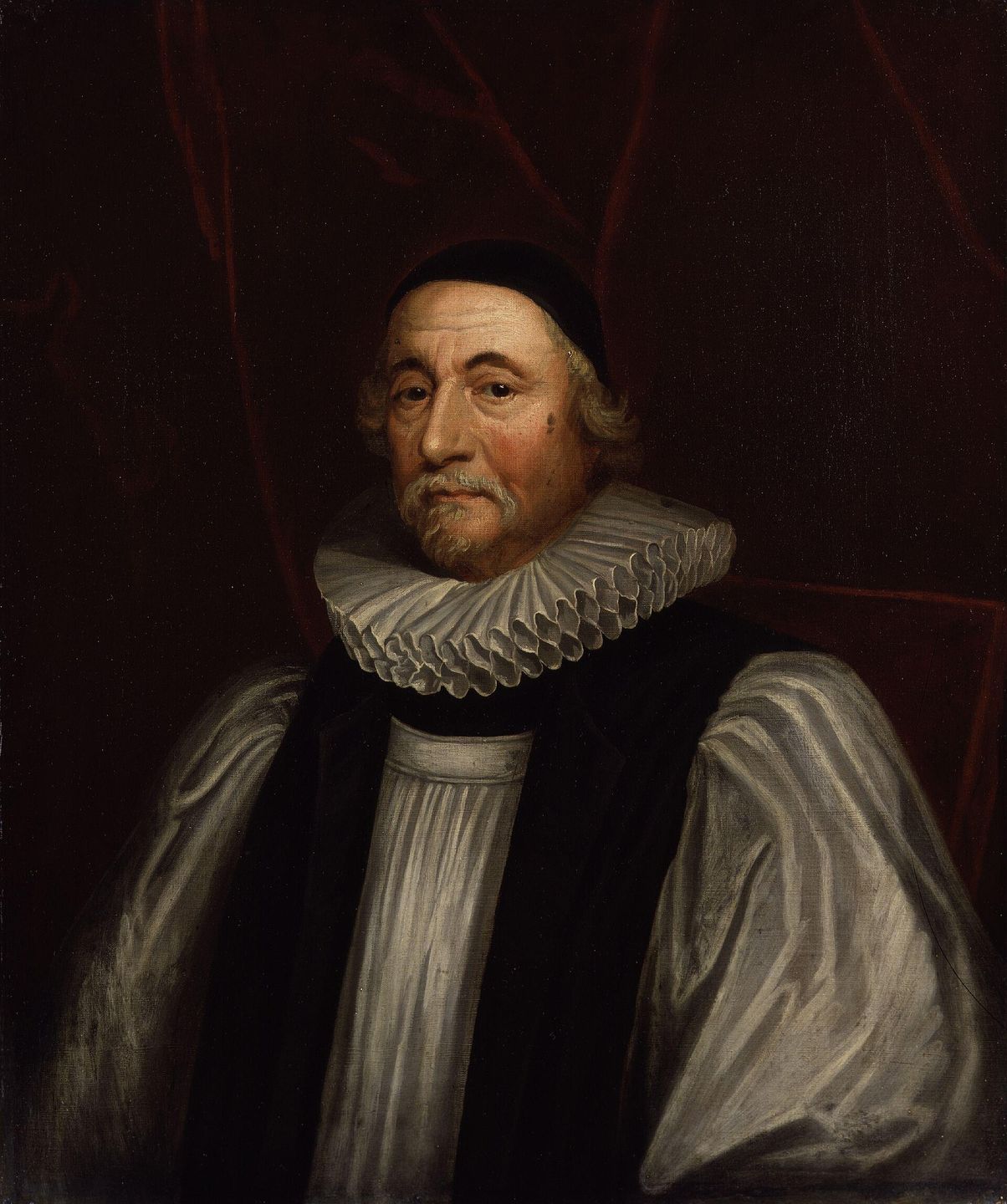
Archbishop James Ussher, who calculated the date of Creation. After Peter Lely, Public domain, via Wikimedia Commons
The Date the World Began
On this day in 4004 BC — by Archbishop Ussher's reckoning, the world was created, the first firmly dated entry in a designed history.
3 min read
James Ussher, Archbishop of Armagh and Primate of All Ireland, published his Annals of the World in 1650. The book was a chronology of human history from the beginning of time to his present day, meticulously calculated from biblical texts, astronomical records, and historical sources. Ussher concluded that the world was created on the evening preceding Sunday, October 23, 4004 BC. The precision was striking. Not just a year, but a specific day of the week, down to the time of day.
Ussher was not guessing. He was working within a framework that treated scripture as a reliable historical document and genealogy as a form of data. The Bible contains detailed family trees, reign lengths of kings, and references to astronomical events like eclipses. Ussher cross-referenced these against known historical dates from other cultures, particularly the Babylonians and Persians. He used astronomy to verify events like the death of Herod and the birth of Christ. His calculation was an act of scholarship, using the best methods available in the 17th century.
The result was a timeline that gave every event in human history an absolute date. Adam was created on day six of creation week. Noah's flood began in the year 2348 BC. The Tower of Babel was built in 2242 BC. Abraham was born in 1996 BC. The precision gave history a structure, a sense of order that people found deeply reassuring. If you could know exactly when the world began, you could know where you stood in the arc of time.
Ussher's date became canonical, literally. It was printed in the margins of the King James Bible for centuries, giving it an authority that exceeded its original intent. Most readers did not distinguish between the biblical text and Ussher's annotations. They absorbed the date as if it were scripture itself. The idea that the Earth was roughly 6,000 years old became embedded in Western culture for generations.

A medieval Creation scene; Ussher dated the event to 4004 BC. Public domain, via Wikimedia Commons
Of course, Ussher was wrong. Geology, paleontology, and radiometric dating later revealed that the Earth is approximately 4.5 billion years old, not 6,000. But what makes Ussher interesting is not the error. It is the method. He was trying to impose structure on a chaotic universe, to build a framework that made sense of everything. This is what designers do. They take incomplete information and construct coherent systems. Ussher built a timeline the way an architect builds a blueprint, using the best data available and filling in the gaps with reasoned inference.
His chronology influenced how people thought about history as a linear, measurable phenomenon. Before Ussher, dates were often vague or relative. Events were described as happening "in the time of King X" or "before the great fire." Ussher's work encouraged the idea that history could be mapped precisely, that every event had a fixed position in time. This mindset would later influence the development of scientific timelines, stratigraphic dating, and eventually the precise calibration of atomic clocks.
There is a parallel here to how we design systems today. We take incomplete requirements, make assumptions based on available evidence, and build models that we know will eventually be revised. Ussher's chronology was a model. It served its purpose for the knowledge base of its time, and when new data emerged, it was replaced. This is not failure. It is iteration.

Title page of Ussher's Annals of the World, the chronology that fixed Creation at 4004 BC. James Ussher (1581-1656), Public domain, via Wikimedia Commons
The date October 23, 4004 BC, is a reminder that all systems, no matter how precisely calculated, are provisional. They reflect the limits of what we know at the time we build them. Ussher gave the world a birthday. Science gave it a different one. Both were acts of design, attempts to make sense of the unknown by imposing structure on it. The fact that one replaced the other does not diminish the effort. It just means we keep building better models.
studio / on-this-day / Oct 23