studio / on-this-day / Oct 12
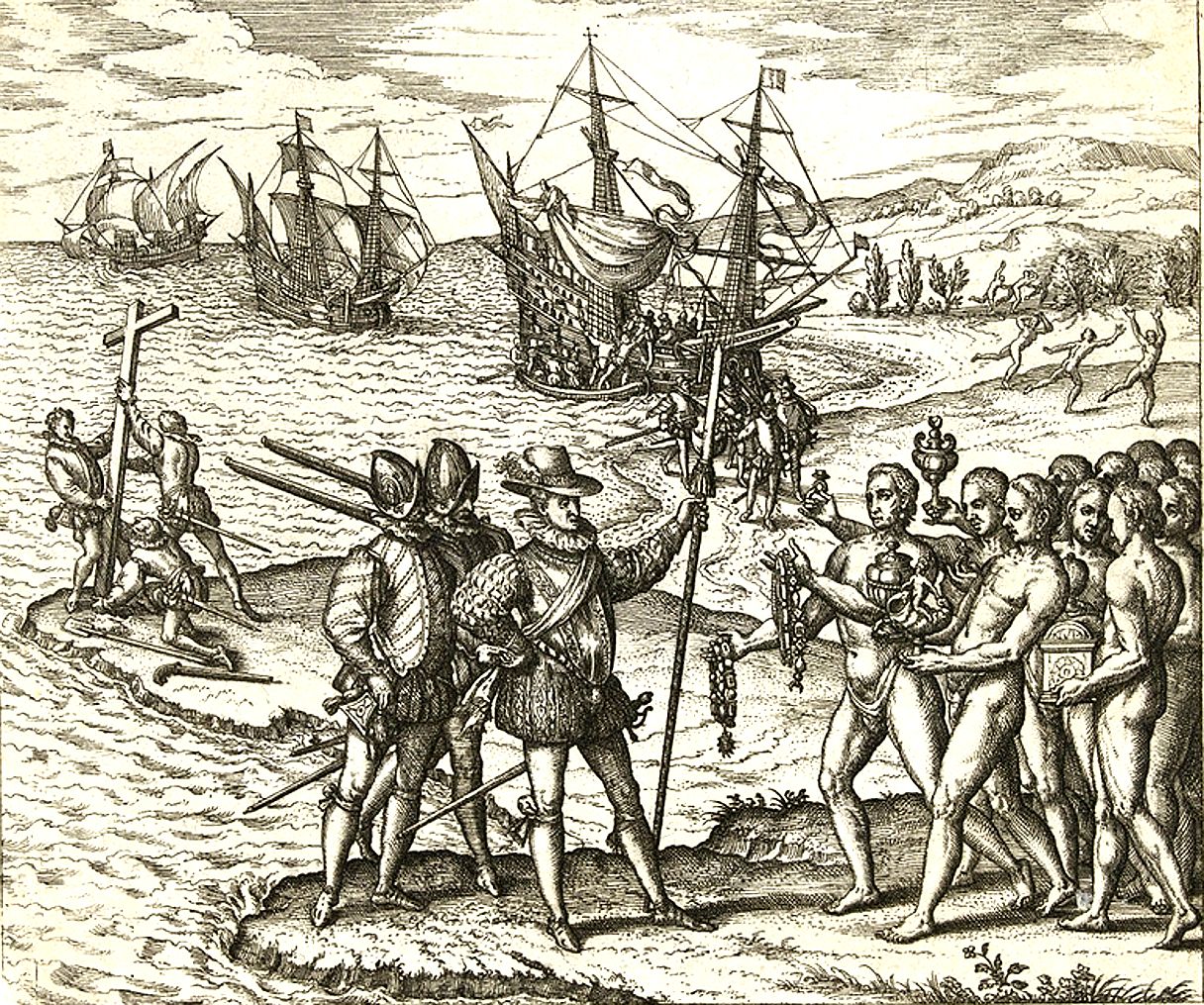
Columbus landing on Hispaniola, historical engraving. Theodor de Bry, Public domain, via Wikimedia Commons
The Error That Changed Everything
On this day in 1492 — Columbus reached the Americas by getting the size of the Earth badly wrong, an error with world-altering consequences.
3 min read
On October 12, 1492, Christopher Columbus and his crew sighted land after more than two months at sea. They had left Spain on August 3, sailing west across the Atlantic in search of a new route to Asia. Columbus believed he had reached the East Indies. He was wrong. He had landed in the Bahamas, encountering a world Europeans did not know existed. The error would reshape history in ways no one could have predicted.
Columbus was looking for spices, silk, and gold, the riches of Asia that European merchants could only access through overland routes controlled by intermediaries. A sea route west would bypass those middlemen and deliver untold wealth to whoever controlled it. Columbus calculated that sailing west across the Atlantic would be faster than sailing east around Africa. He was wrong about the distance, wrong about the geography, and wrong about what he would find. But he was certain he was right.
The voyage was made possible by advances in navigation, shipbuilding, and cartography. The caravel, a small, maneuverable ship, could sail against the wind. The magnetic compass and the astrolabe allowed sailors to estimate their position. Maps, though wildly inaccurate, gave sailors a framework for understanding their journey. Columbus used all of these tools, and he still miscalculated. He believed the Earth was smaller than it is and that Asia extended much farther east than it does. Both errors made the journey seem feasible.
What Columbus found instead was a hemisphere populated by millions of people with their own civilizations, languages, and histories. The Taíno people of the Bahamas greeted Columbus and his crew. Within decades, they were nearly extinct, victims of disease, enslavement, and violence. The encounter initiated a process that would devastate indigenous populations across the Americas, killing an estimated 90% of the pre-Columbian population within a century.
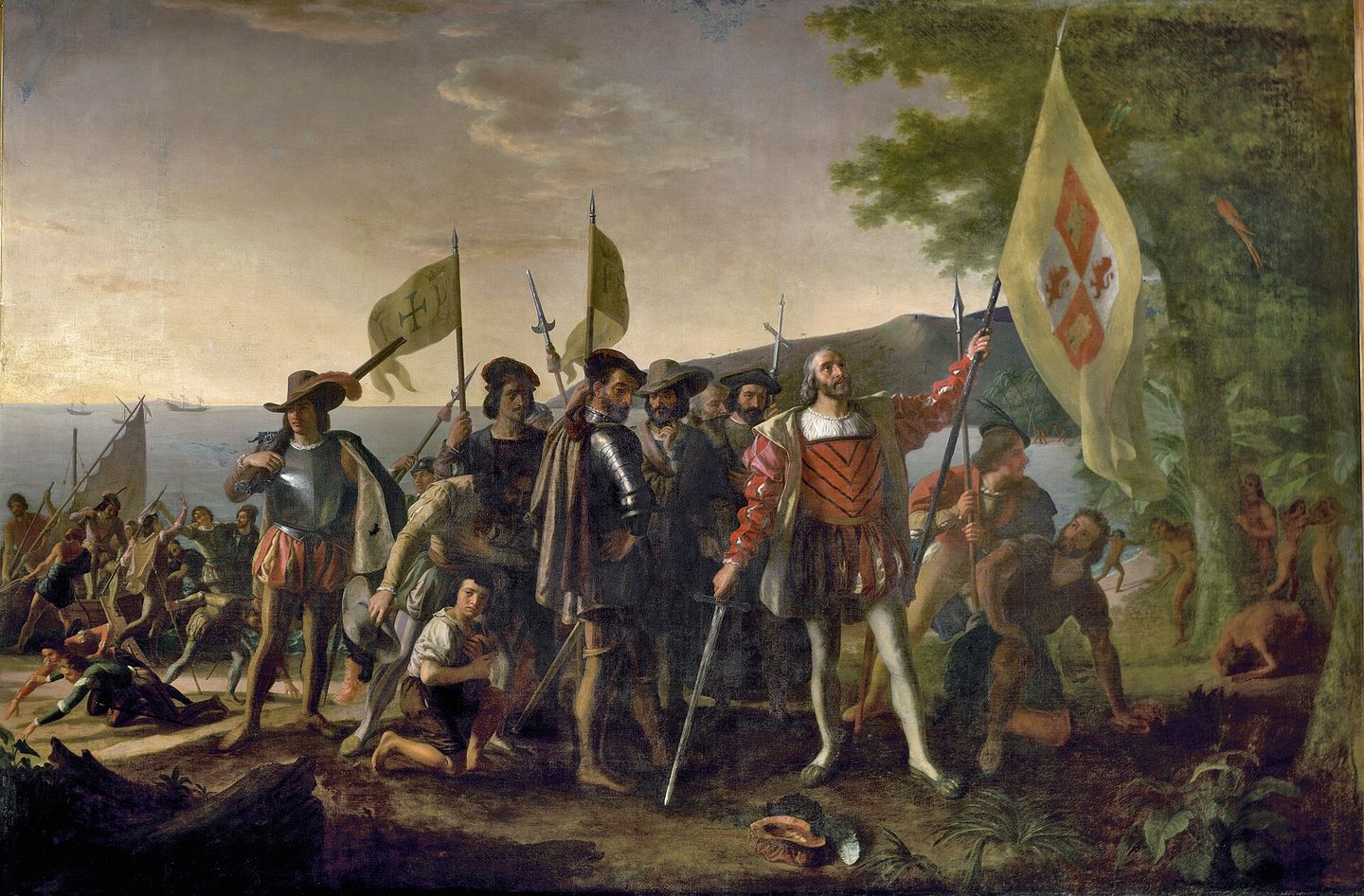
Landing of Columbus by John Vanderlyn, 1847. Wikimedia Commons, via Wikimedia Commons
The Columbian Exchange, as historians call it, was the transfer of plants, animals, diseases, and people between the Old World and the New. Europeans brought horses, cattle, wheat, and smallpox. The Americas contributed potatoes, tomatoes, maize, and tobacco. The exchange transformed diets, economies, and ecosystems on both sides of the Atlantic. It also enabled the transatlantic slave trade, which forcibly transported over 12 million Africans to the Americas over the next four centuries.
Columbus made four voyages to the Americas, never accepting that he had not reached Asia. He died in 1506, still believing he had found a new route to the East Indies. The Americas were named for Amerigo Vespucci, another explorer who recognized that the lands Columbus reached were not part of Asia but a separate continent. Columbus's error became someone else's namesake.
The impact of 1492 is impossible to overstate. European colonization transformed the Americas, destroying civilizations, displacing populations, and extracting resources on a scale that fueled centuries of European wealth and power. The encounter also initiated globalization, connecting continents that had been isolated for millennia. The modern world, with all its inequalities, interdependencies, and cultural exchanges, traces back to Columbus's miscalculation.
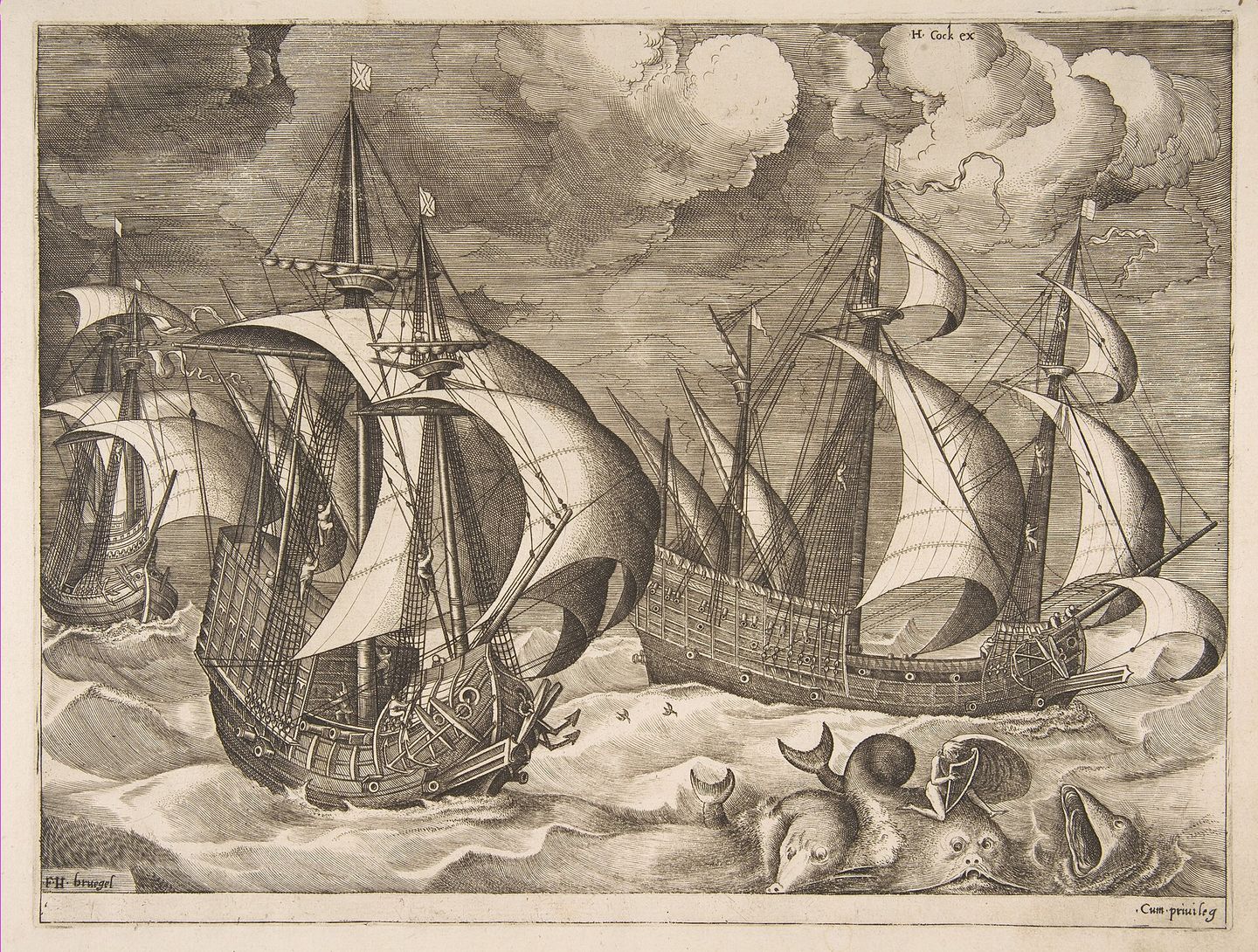
Three caravels in a rising squall, the kind of small ship Columbus sailed across the Atlantic. Pieter Brueghel the Elder / Frans Huys / Hieronymus Cock, CC0, via Wikimedia Commons
There is no neutral way to tell this story. For some, Columbus is an explorer who opened the New World. For others, he is a colonizer who initiated genocide. Both are true. The same journey that connected continents also destroyed cultures. The same technology that enabled navigation enabled conquest. Columbus did not cause everything that followed, but he set it in motion.
October 12, 1492, is the day two worlds collided. Columbus's error changed the course of history, proving that sometimes the most consequential discoveries are the ones we never intended to make. The world he encountered was not empty, not waiting to be discovered, not a prize to be claimed. It was inhabited, complex, and thriving. The encounter was not a beginning. It was an interruption, one that we are still reckoning with.
studio / on-this-day / Oct 12