studio / on-this-day / Sep 13
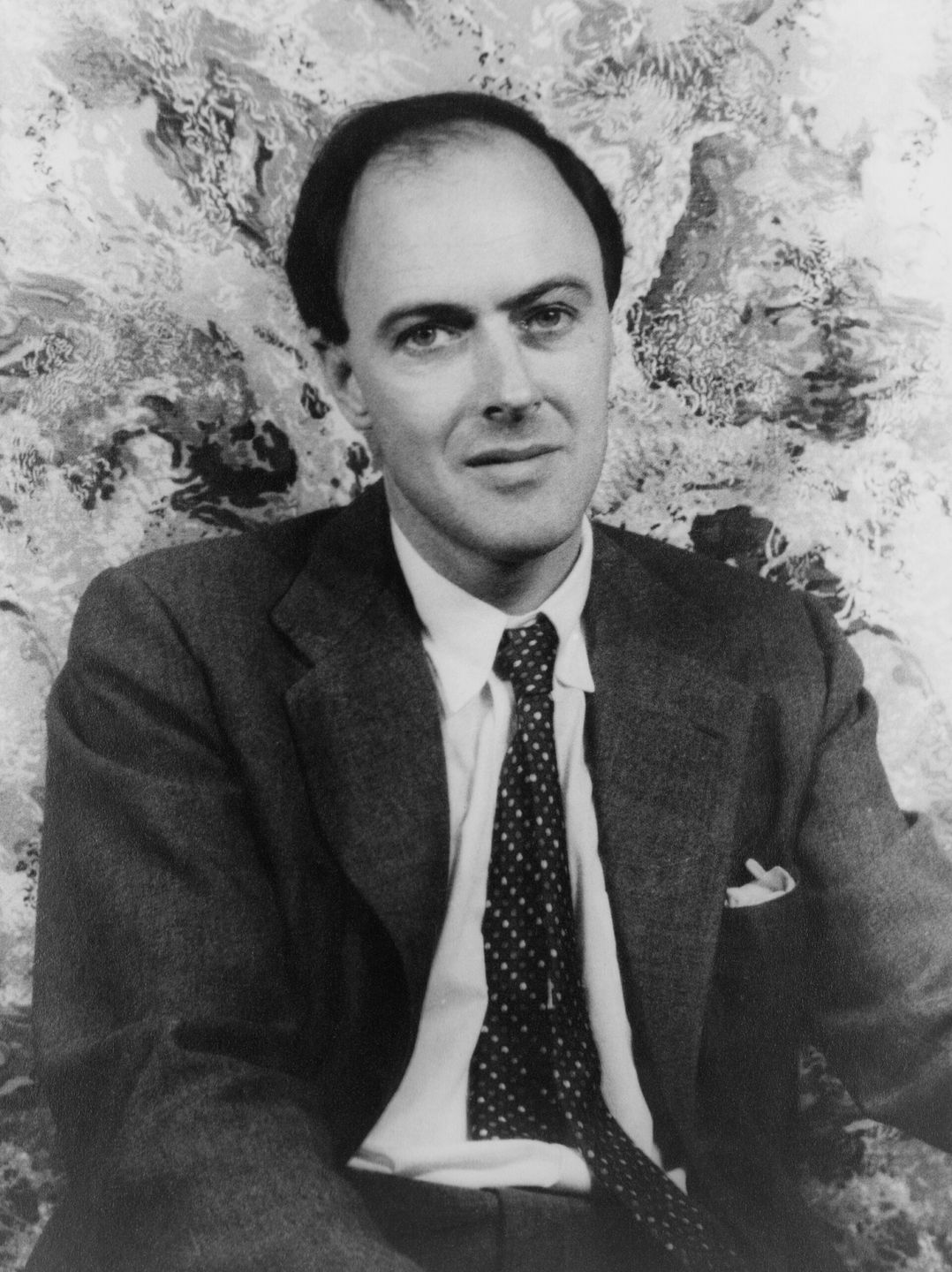
Roald Dahl. Carl Van Vechten, Public domain, via Wikimedia Commons
The Dark Machinery of Childhood
On this day in 1916 — Roald Dahl was born, and would write children's stories that work like dark little machines dressed up as sweets.
3 min read
Roald Dahl was born on September 13, 1916, in Llandaff, Wales, to Norwegian parents. He grew up speaking Norwegian at home, endured brutal British boarding schools, worked for Shell Oil in East Africa, flew fighter planes in World War II, and survived a plane crash that left him with a fractured skull. He became a spy, a screenwriter, and eventually one of the most popular children's authors in history. His books have sold over 300 million copies, been adapted into films and musicals, and shaped how generations of children understand storytelling. They are also, without exception, deeply strange.
Dahl did not write children's books the way most adults think children's books should be written. His protagonists are often orphans, outcasts, or victims of neglect. Adults in his stories are grotesque, cruel, or indifferent. Parents die, children are abused, and the world is presented as fundamentally unfair. But the stories are also funny, inventive, and satisfying in a way that sanitized children's literature rarely is. Dahl understood that children already know the world is unfair. What they want is to see the bad guys punished and the clever kids win. His books delivered that, with a side of dark humor and inventive violence.
Charlie and the Chocolate Factory is the most famous example. On the surface, it is a whimsical adventure about a poor boy who wins a golden ticket to tour a magical factory. But it is also a story about class inequality, parental failure, and a series of children being punished in increasingly grotesque ways for their flaws. Augustus Gloop gets sucked up a pipe. Violet Beauregarde turns into a giant blueberry. Veruca Salt is thrown down a garbage chute. Mike Teavee is shrunk by television. The punishments are absurd, darkly funny, and disturbingly specific. Dahl's moral universe is Old Testament: misbehave, and you will suffer consequences that are both poetic and brutal.
Matilda follows a similar logic. A brilliant, neglected girl discovers she has telekinetic powers and uses them to punish the adults who abuse her. The headmistress, Miss Trunchbull, is a monster who throws children by their hair and locks them in a torture chamber called The Chokey. Matilda's revenge is methodical and satisfying. Dahl was not interested in teaching children to forgive or to turn the other cheek. He was interested in teaching them that they could fight back, that intelligence and creativity were weapons, and that bad people deserved what they got.
The structure of Dahl's stories is mechanical in the best sense. Every detail is a setup for a later payoff. Every character flaw leads to a specific punishment. Every act of cruelty is eventually repaid. His books are engines of narrative satisfaction, designed to give young readers exactly what they want: justice, revenge, and the triumph of the underdog. He wrote with the precision of an engineer and the sensibility of a sadist. His books are dark not because he was writing for children, but because he was writing honestly about childhood, which is already dark.

The Roald Dahl Museum and Story Centre in Great Missenden, near where he lived and wrote. Acediscovery, CC BY 4.0, via Wikimedia Commons
Dahl was also a difficult person. He was openly antisemitic, dismissive of American culture, and notoriously combative with publishers and critics. His personal life was marked by tragedy. His daughter Olivia died of measles at age seven. His son Theo was severely injured in an accident as an infant, leading Dahl to help design a medical valve to treat hydrocephalus. His first wife, actress Patricia Neal, suffered a series of debilitating strokes, and Dahl nursed her back to partial recovery through a regimen he designed himself. He was controlling, demanding, and often cruel. The darkness in his books was not an act. It was who he was.
Roald Dahl, author of charlie and the Chocolate Factory, matilda, and the bfg — born September 13, 1916. Carl Van Vechten, Public domain, via Wikimedia Commons
When Dahl died in 1990, he was buried with some of his favorite things: snooker cues, good burgundy, chocolates, HB pencils, and a power saw. It was the kind of detail that could have come from one of his own stories. His books remain in print, still selling millions of copies a year. They have been adapted, criticized, sanitized, and defended. But they endure because they do what good design does: they solve a problem. The problem is that most children's literature lies to children about how the world works. Dahl did not lie. He just wrapped the truth in chocolate and made it funny. That is why children still read him, and why adults still remember his stories decades later. They are machines built to last.
studio / on-this-day / Sep 13