studio / on-this-day / Sep 11
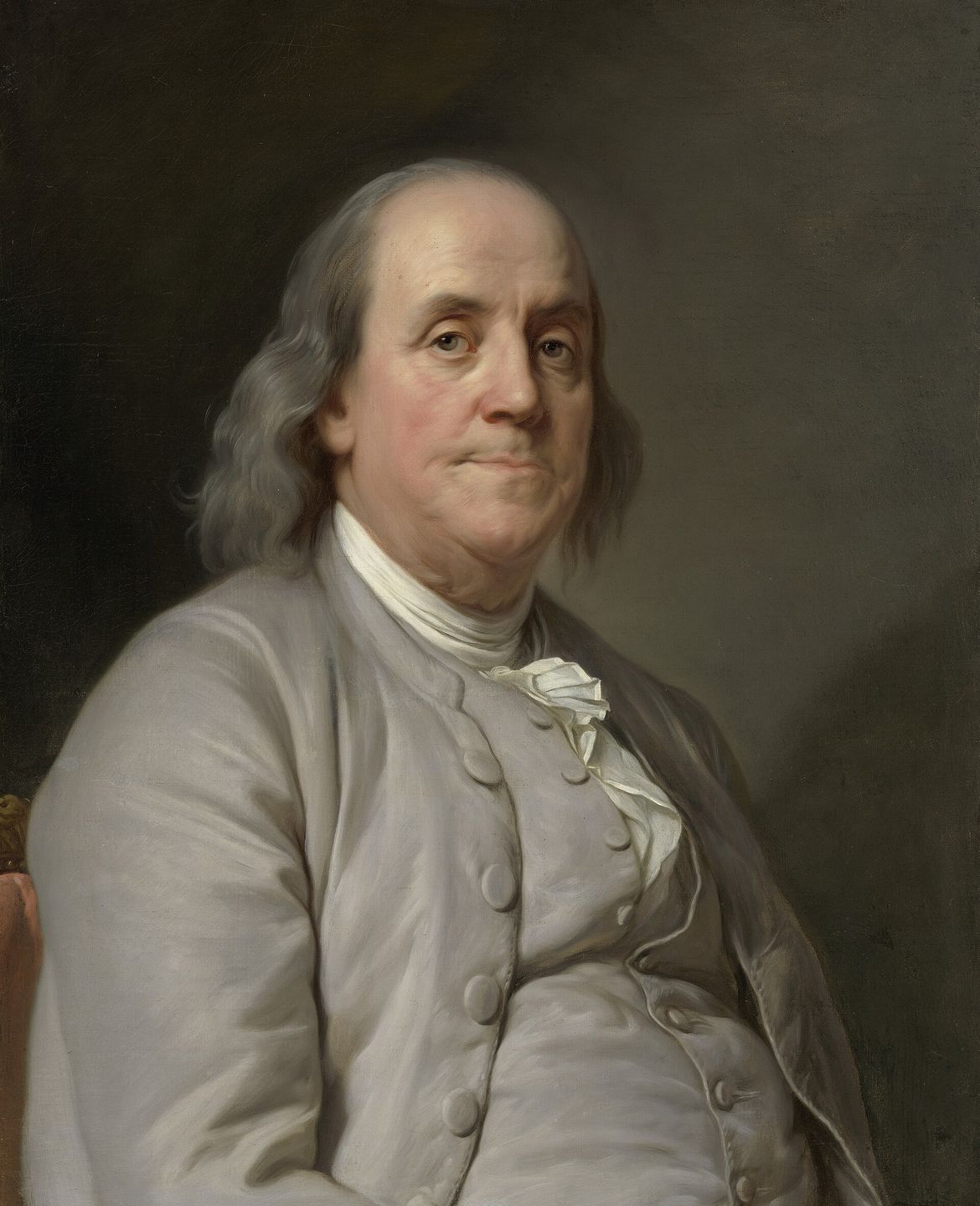
Benjamin Franklin, portrait by Joseph Duplessis, 1778. Joseph-Siffred Duplessis, Public domain, via Wikimedia Commons
The Letter That Changed Nothing
On this day in 1783 — Benjamin Franklin wrote "there never was a good war or a bad peace."
2 min read
In September 1783, Benjamin Franklin, then in Paris, where he had just helped negotiate the treaty that ended the American Revolution, wrote a letter to his old friend Josiah Quincy. In it, he included a line that would outlive both men: "There never was a good war or a bad peace." It was a simple observation, the kind of thing that sounds obvious once someone says it out loud. But it was also a radical statement for its time, and Franklin knew it. Wars were routinely justified as necessary, honorable, even glorious. Peace, by contrast, could be shameful if it meant surrender or weakness. Franklin flipped that logic. War, he argued, was never worth its cost. Peace, no matter how imperfect, was always preferable.
Franklin wrote those words two years before the American Revolution began. He was still working to prevent the conflict, lobbying British officials to ease colonial tensions and find diplomatic solutions. He believed that reason, negotiation, and mutual self-interest could solve political disputes. He was wrong. Within two years, the colonies would be at war with Britain, and Franklin would be helping to design the rebellion he had tried to avoid. His letter did not stop anything. It was just one more piece of correspondence in a career filled with them. But the line stuck.
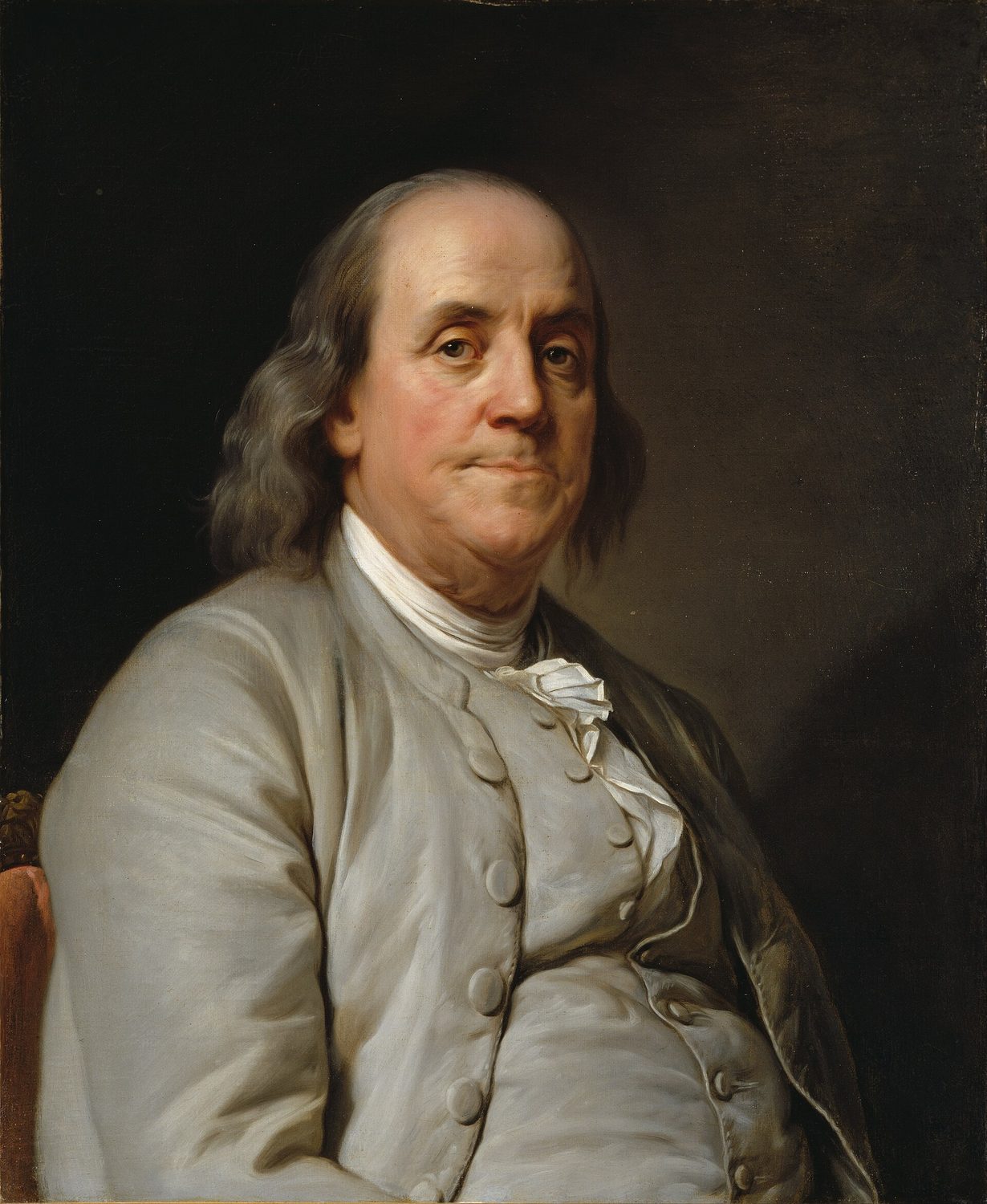
Benjamin Franklin, who wrote his 'good war / bad peace' letter from Paris in 1783. Public domain, via Wikimedia Commons
The phrase has been quoted ever since, usually by people trying to prevent wars or justify avoiding them. It appears in peace movements, anti-war speeches, and diplomatic negotiations. It is the kind of aphorism that gets engraved on monuments and cited in op-eds. But it has never actually stopped a war. Wars happen anyway, justified by leaders who believe their particular conflict is the exception, the necessary one, the unavoidable one. Franklin's line is repeated because it sounds true, but it has no power to change behavior. It is a design principle with no enforcement mechanism.
Franklin himself did not live by the maxim. He supported the Revolutionary War, helped secure French military aid, and designed parts of the new American government. He understood that sometimes principles collide with reality. Peace is better than war, but not if the alternative is subjugation. The phrase was never meant to be absolute. It was an observation about costs. Wars consume resources, destroy infrastructure, kill people, and leave lasting scars. Even a war that achieves its objectives does so at a price that is rarely worth paying. Peace, even flawed peace, allows societies to build rather than destroy.
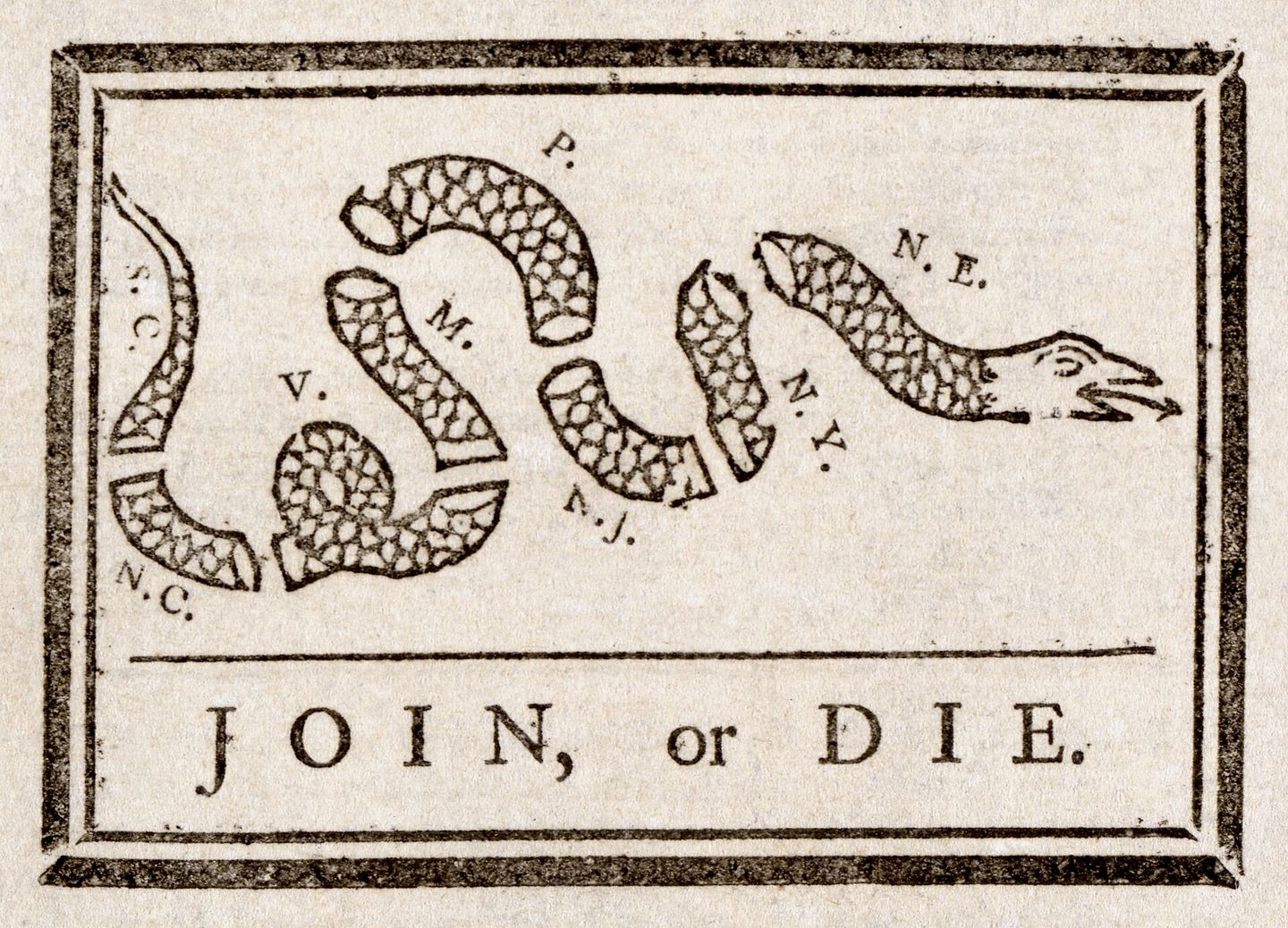
Join, or Die — Franklin's 1754 political cartoon, an early argument for colonial unity. Benjamin Franklin, Public domain, via Wikimedia Commons
The letter Franklin wrote in 1783 survives in archives. The war whose ending he had just helped negotiate had cost far more, in lives and money, than anyone had bargained for. The peace that followed was hard-won, imperfect, and has been reinterpreted by every generation since. Franklin's line endures because it captures a truth about human systems: conflict is expensive, cooperation is cheaper, and we keep choosing the expensive option anyway. The phrase has been repeated for over two centuries, and wars have continued unabated. That is not a failure of the idea. It is a reminder that good ideas do not implement themselves. They require systems designed to make them work. Franklin knew that. He spent his life designing those systems, one invention, one treaty, one compromise at a time. The letter was just a footnote. The work was everything else.
studio / on-this-day / Sep 11