studio / on-this-day / Aug 5
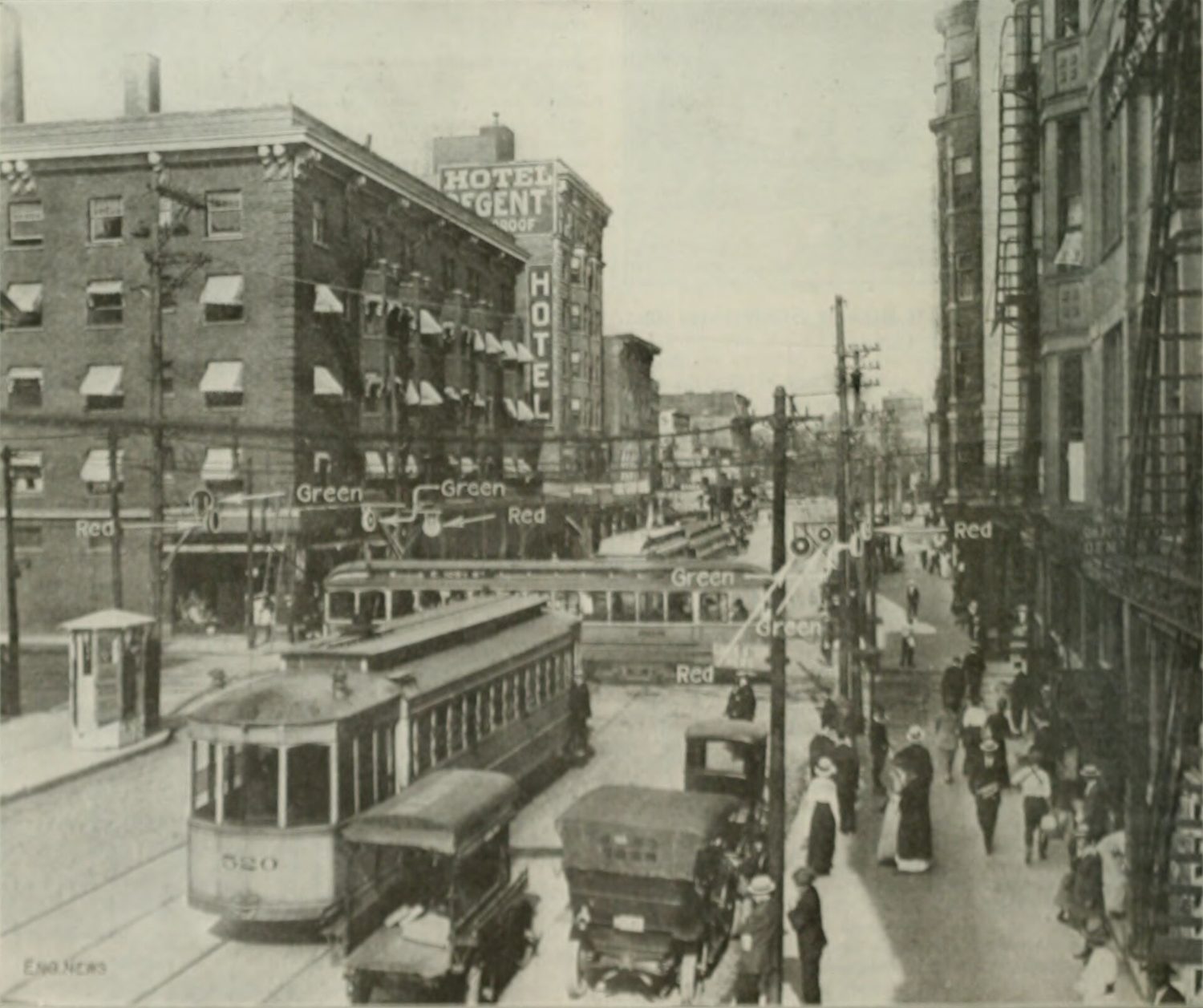
Euclid Avenue at East 105th Street in Cleveland, where the first electric traffic signal was installed in 1914. Public domain, via Wikimedia Commons
The First Machine to Direct the Streets
On this day in 1914 — the first electric traffic signal was switched on in Cleveland, and cities began handing the job of managing their own chaos to a machine.
4 min read
On August 5, 1914, at the corner of Euclid Avenue and East 105th Street in Cleveland, Ohio, the first electric traffic signal was switched on. It had two colors, red and green, and a buzzer, and an officer worked it from a booth on the corner. It looks quaint now. It was the start of one of the most quietly pervasive systems in modern life: the automatic management of who may move and who must wait.
The problem it solved was new and getting worse fast. For all of history an intersection had been negotiated by human beings, on foot, on horseback, in carriages, working it out among themselves. The automobile broke that. Cars were faster, heavier, and more numerous than the old informal etiquette could handle, and they mixed with streetcars, wagons, and pedestrians in a lethal free-for-all. Cities were drowning in traffic and collisions, and the existing fix, a police officer standing in the middle waving his arms, did not scale.
The signal was a machine that encoded a rule and applied it impartially. Red means stop, green means go, and the light does not care who you are, how important you believe you are, or how much of a hurry you are in. It replaced thousands of tiny, contested human negotiations with a single, automatic, universally legible instruction. That substitution, of a clear rule for constant improvisation, is one of the most powerful moves in all of design.
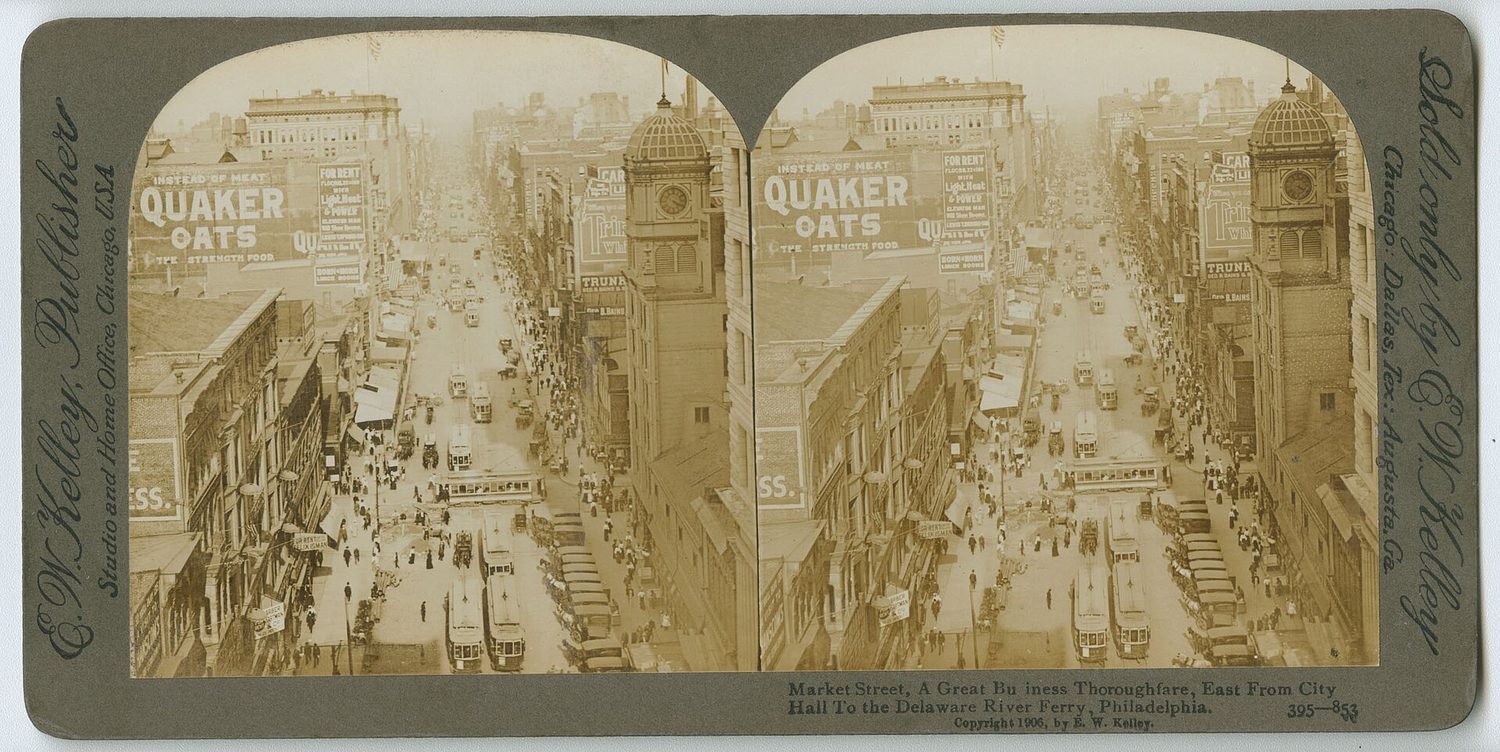
A busy city thoroughfare in the early automobile era, the kind of disorder the traffic signal was built to manage. No restrictions, via Wikimedia Commons
What makes it profound is how much it accomplishes with how little. The signal has no intelligence; it does not see the cars or sense the danger. It simply cycles through its states on a schedule, and yet by doing so it organizes the behavior of everyone who can see it. The order emerges not from the machine understanding the situation but from everyone agreeing to obey the same simple, visible signal.
From that Cleveland corner it spread everywhere, growing into the timed, sensor-fed, networked systems that now choreograph the movement of entire cities. But the core idea has never changed: at the places where our paths cross and conflict, we have agreed to let a small, impartial machine tell us whose turn it is, because the alternative, everyone deciding for themselves, gets people killed.
It is worth noticing how completely we have absorbed it. We obey a colored light on an empty road at three in the morning, alone, with no one watching, because the habit of the shared rule runs that deep. A good system becomes invisible; we stop seeing it as a choice someone designed and start treating it as simply how the world works.
On August 5, 1914, a city took the oldest human negotiation, the right of way, and handed it to a machine. The machine was almost stupidly simple, and that was the point. It turned a deadly, chaotic intersection into an orderly one not by being smart, but by giving everyone the same clear rule to obey, at the same time, for good.
studio / on-this-day / Aug 5