studio / on-this-day / Aug 21
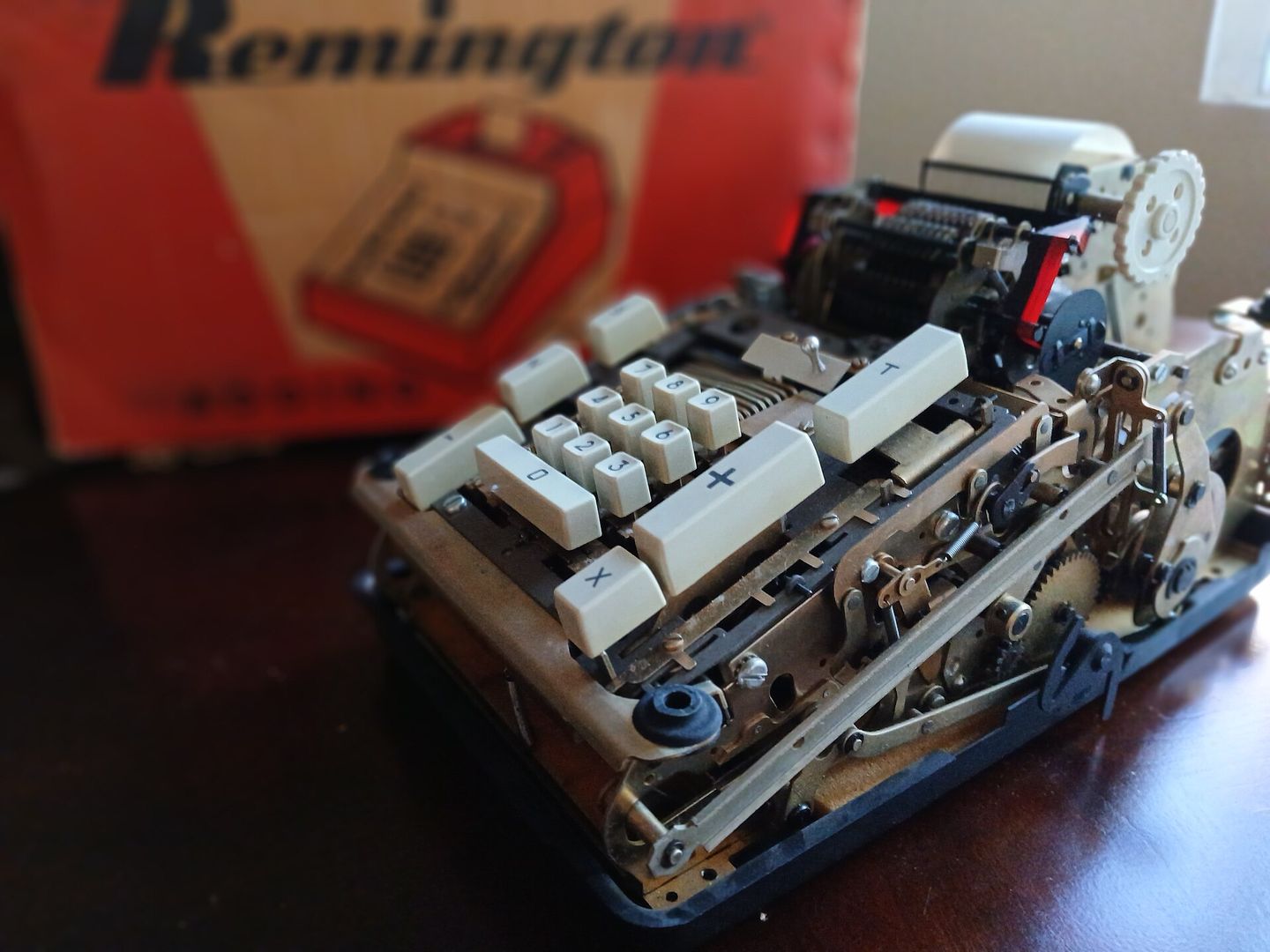
A Remington Adding Machine — mechanical calculators like this one, descending from Burroughs' 1888 patent, became essential office equipment in the early 20th century. Issac I Navarro, CC BY 4.0, via Wikimedia Commons
The Machine That Could Count
On this day in 1888 — William Seward Burroughs patented a practical adding machine, and arithmetic began to run without a human doing it.
3 min read
On August 21, 1888, William Seward Burroughs received a patent for a practical adding and listing machine. It was a mechanical calculator that could add columns of numbers, print the results on paper, and do it faster and more accurately than a human clerk. The device didn't just automate arithmetic. It changed the economics of bookkeeping, made large-scale accounting feasible, and laid the groundwork for the business machines that would evolve into computers.
Burroughs had worked as a bank clerk in the 1870s and knew firsthand how tedious and error-prone manual addition could be. Ledgers were filled by hand. Totals were calculated multiple times to catch mistakes. A single transposed digit could throw off an entire day's work. Burroughs believed there had to be a better way, and he spent years designing a machine that could handle the repetitive task of adding numbers while producing a printed record of each calculation.
Earlier adding machines existed, but they were unreliable and difficult to use. Burroughs' innovation was in the mechanism. His machine used a system of gears, levers, and springs that allowed an operator to input numbers by pulling handles. A printed tape recorded each entry and the running total. The machine was built with enough precision that it could be trusted for financial work, which meant businesses could justify the cost of buying one.
The first commercial models were produced in the early 1890s by the American Arithmometer Company, which would later become the Burroughs Adding Machine Company. The machines were expensive, but they paid for themselves quickly in businesses that processed large volumes of transactions. Banks, insurance companies, and retail operations adopted them. The adding machine became as essential to office work as the typewriter.
What Burroughs created was more than a tool. It was a shift in how businesses thought about labor. If a machine could handle calculations, human workers could focus on interpretation, decision-making, and customer interaction. The role of the clerk changed from manual computation to data entry and verification. This was an early example of automation reshaping white-collar work, a pattern that would repeat throughout the 20th century.
The adding machine also had design implications. It required standardized forms and processes. If numbers were going to be entered mechanically, they needed to be formatted consistently. This pushed businesses toward systematic record-keeping and made accounting more legible across different organizations. The machine imposed structure on information.
Burroughs himself didn't live to see the full impact of his invention. He died in 1898 at age 43, likely from the effects of overwork and tuberculosis. But his company thrived. By the mid-20th century, Burroughs Corporation was one of the largest business machine manufacturers in the world, producing calculators, accounting systems, and eventually electronic computers. The lineage from his mechanical adding machine to the digital computers that replaced them is direct.
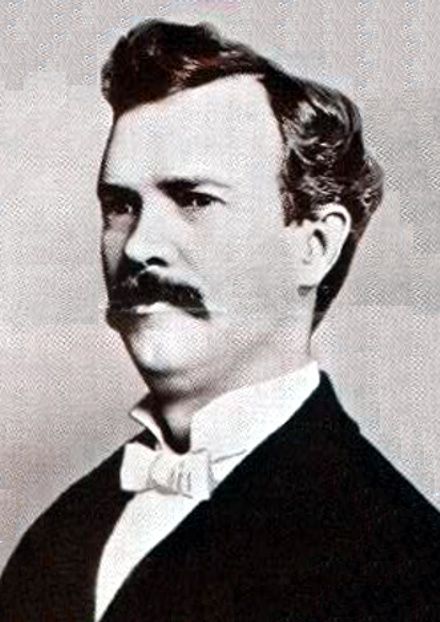
William Seward Burroughs (1855–1898), whose patent for a practical Adding and listing Machine transformed bookkeeping and laid the groundwork for the information age. Public domain, via Wikimedia Commons
The adding machine also influenced design thinking in unexpected ways. Its success demonstrated that if you could mechanize a repetitive cognitive task, you could create a market. This principle drove the development of punch card tabulators, cash registers, and eventually programmable computers. The idea that machines could be trusted with precision work, that they could be faster and more reliable than humans at specific tasks, became foundational to the information age.
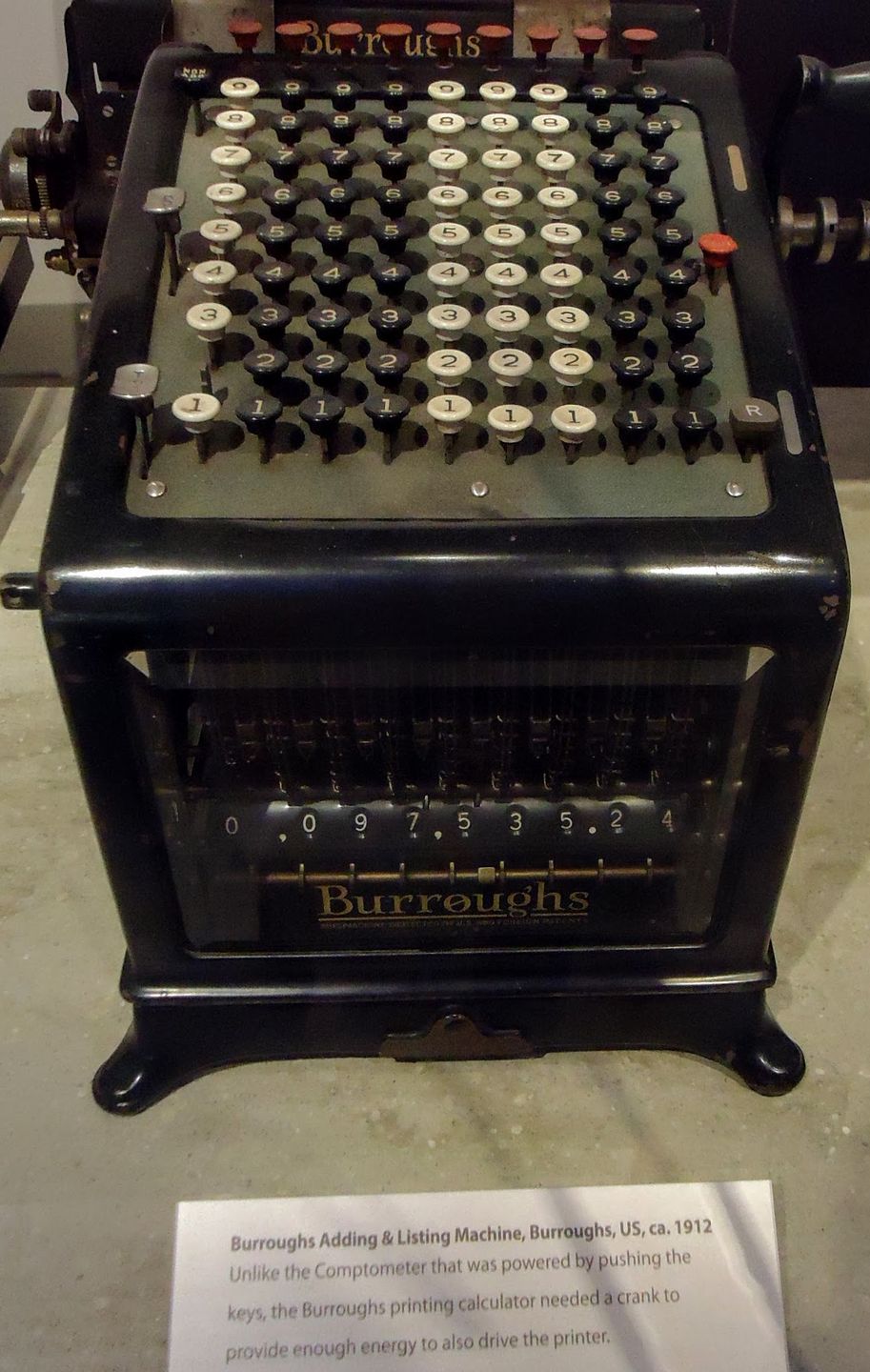
A Burroughs Adding and listing Machine from 1912, on display at the computer history museum — the keyboard-and-crank design that grew directly from Burroughs' 1888 patent. Tomwsulcer, CC0, via Wikimedia Commons
Today, the arithmetic functions that Burroughs automated are handled by software running on processors that can perform billions of calculations per second. But the principle remains the same. If a task is repetitive and rule-based, it can be automated. The adding machine was one of the first devices to prove that at commercial scale, and in doing so, it redefined what human labor should focus on. Not the calculation itself, but what you do with the result.
studio / on-this-day / Aug 21