studio / on-this-day / Aug 19
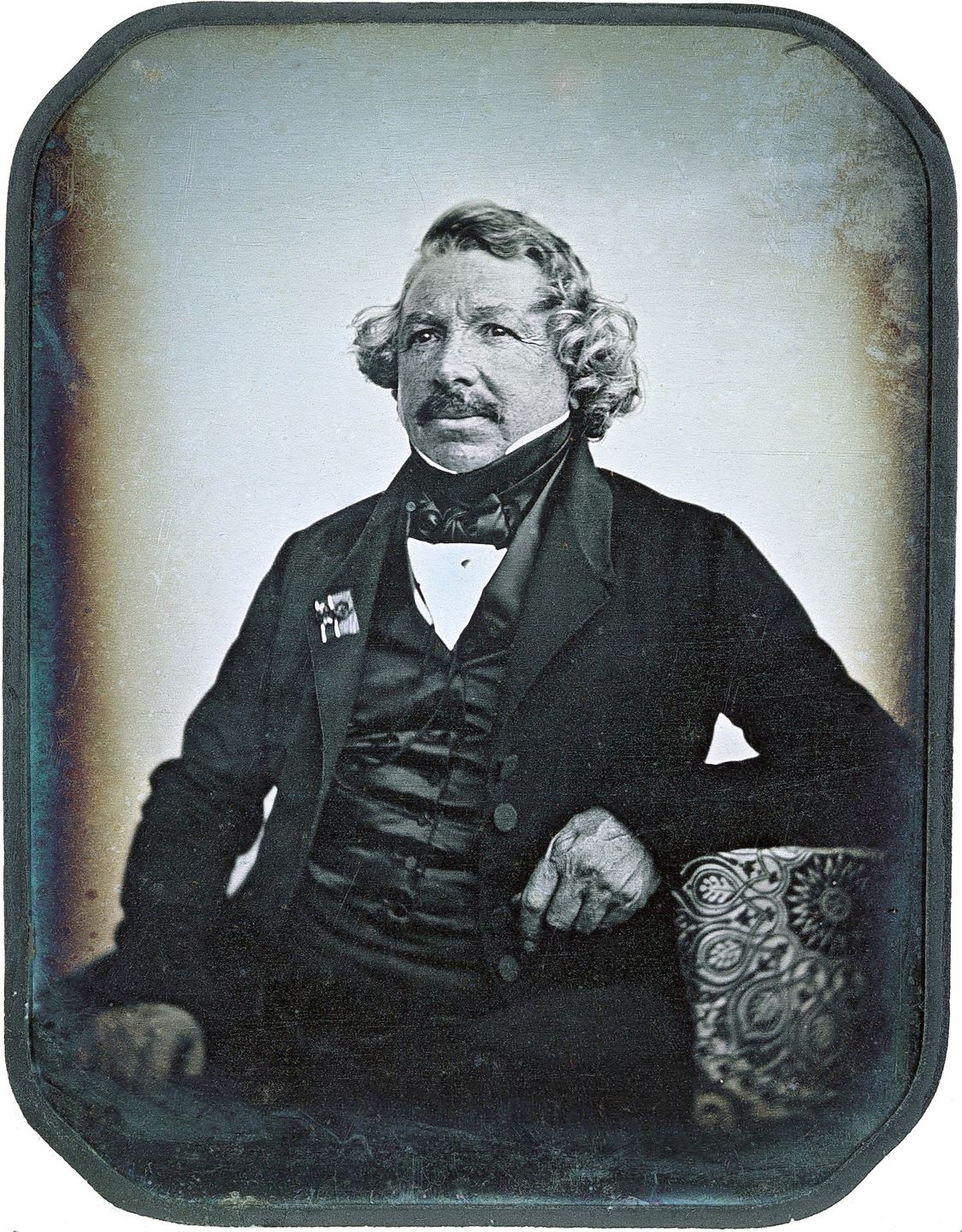
Louis Daguerre, the French artist and chemist whose photographic process was announced to the world on August 19, 1839. Jean-Baptiste Sabatier-Blot, Public domain, via Wikimedia Commons
The Day Light Learned to Remember
On this day in 1839 — the daguerreotype was announced to the world, and for the first time light itself could be made to remember.
3 min read
On August 19, 1839, the French government announced the details of Louis Daguerre's photographic process to the world at a meeting of the French Academy of Sciences. The daguerreotype was the first practical method for capturing and preserving an image from life. For the first time in human history, you could point a device at a scene, wait a few minutes, and have a permanent, detailed record of what was there. Memory became mechanical. Vision became reproducible.
Daguerre had been working on the process for years, building on the earlier experiments of Nicéphore Niépce, who had managed to capture the first photographic image in 1826 using bitumen and an eight-hour exposure. Niépce died before the work was complete, and Daguerre refined the process into something practical. His method used a copper plate coated with silver, polished to a mirror finish. The plate was exposed to iodine vapor, making it light-sensitive. After exposure in a camera, the plate was developed with mercury vapor and fixed with salt water, creating a positive image that looked almost three-dimensional.
The French government bought the rights to the daguerreotype and released it to the public for free, a rare act of openness that accelerated adoption. Within months, daguerreotype studios appeared in Paris, London, and New York. People lined up to have their portraits taken, something that had previously required hours of sitting for a painter. The exposure time for a daguerreotype was still long, often 15 to 30 seconds, which is why early photographs show people looking stiff and unsmiling. You had to hold perfectly still.
What made the daguerreotype revolutionary was its precision. Painters could interpret, simplify, or idealize. A photograph could only show what was there. The level of detail was startling. You could see the texture of fabric, the grain of wood, the wrinkles in a face. It was reality preserved on metal, a record that didn't rely on memory or artistic skill. This had philosophical implications. If a machine could capture truth more accurately than a human, what did that mean for art, for evidence, for history itself?
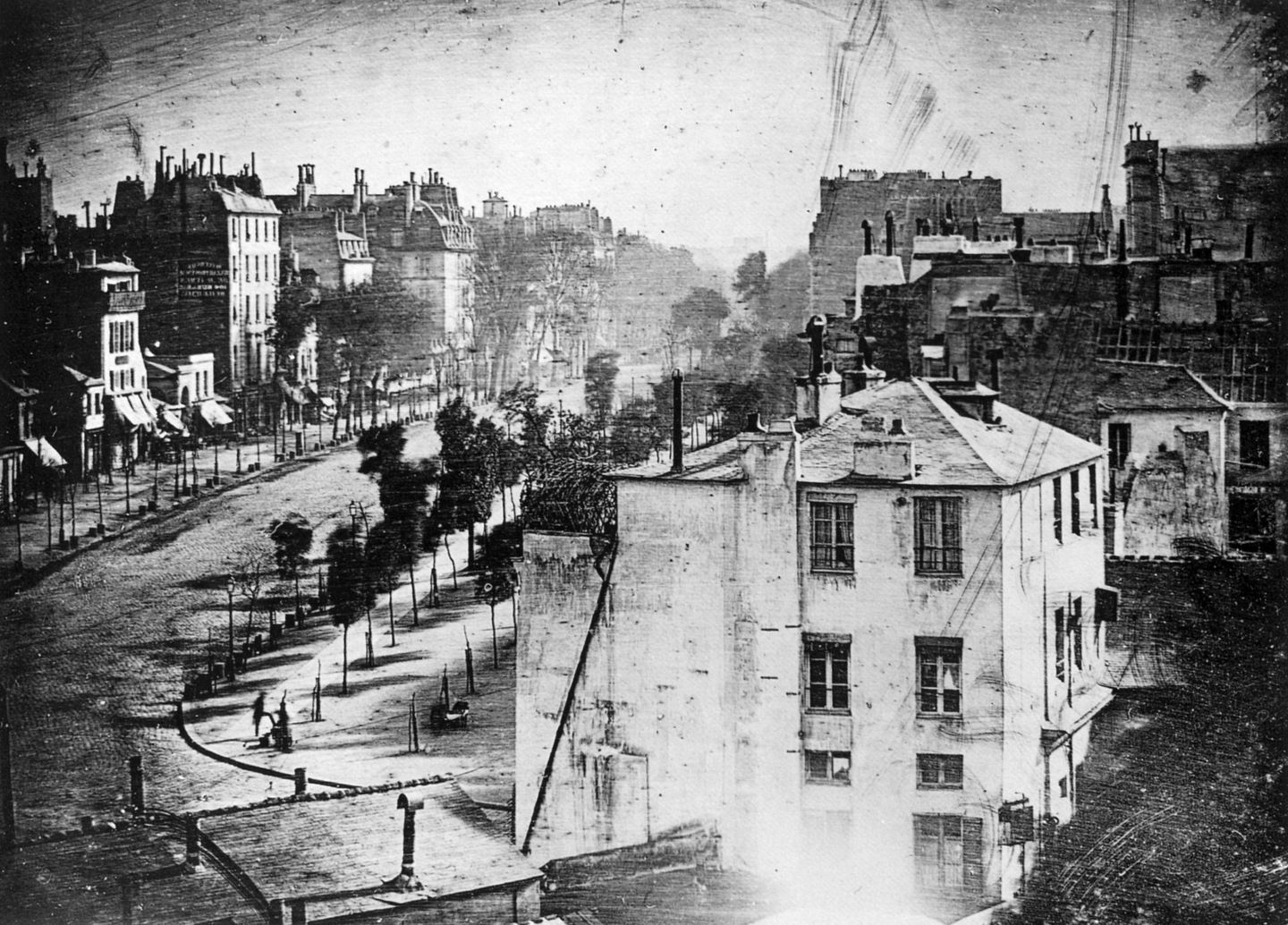
Boulevard du Temple, Paris, c. 1838 — one of the earliest surviving daguerreotypes, taken by Daguerre himself. The long exposure time made the busy street appear empty, except for a man having his shoes shined, who stood still long enough to be captured. Louis Daguerre, Public domain, via Wikimedia Commons
The daguerreotype also revealed something about human behavior. Once people could see themselves as others saw them, self-awareness changed. Portraits had always been aspirational, idealized. Photographs were factual. You couldn't argue with a daguerreotype. It showed you as you were, not as you wished to be. This created a new relationship with appearance, one that would only intensify as photography became faster, cheaper, and more ubiquitous.
Commercially, the daguerreotype launched an industry. Studios proliferated. Equipment manufacturers thrived. Chemists refined processes. Photographers became professionals, developing techniques for lighting, composition, and retouching. The idea of a photograph as a designed artifact rather than a simple record took shape. People understood that even mechanical truth could be framed, lit, and staged.
The daguerreotype also had limitations. Each image was unique, captured on a single metal plate. You couldn't make copies without photographing the daguerreotype itself. The images were fragile, prone to tarnishing, and had to be kept in protective cases. They were also laterally reversed, like looking in a mirror. But these limitations didn't matter much. The ability to capture an image at all was so revolutionary that the flaws seemed minor.
Within a decade, the daguerreotype began to be replaced by processes that allowed multiple prints from a single negative. The wet collodion process, developed in 1851, was faster and could produce paper prints. By the 1860s, daguerreotypes were fading from use. But their impact remained. They established photography as a legitimate form of documentation, communication, and art. They proved that light could be stored, that time could be frozen, that a moment could be saved forever.
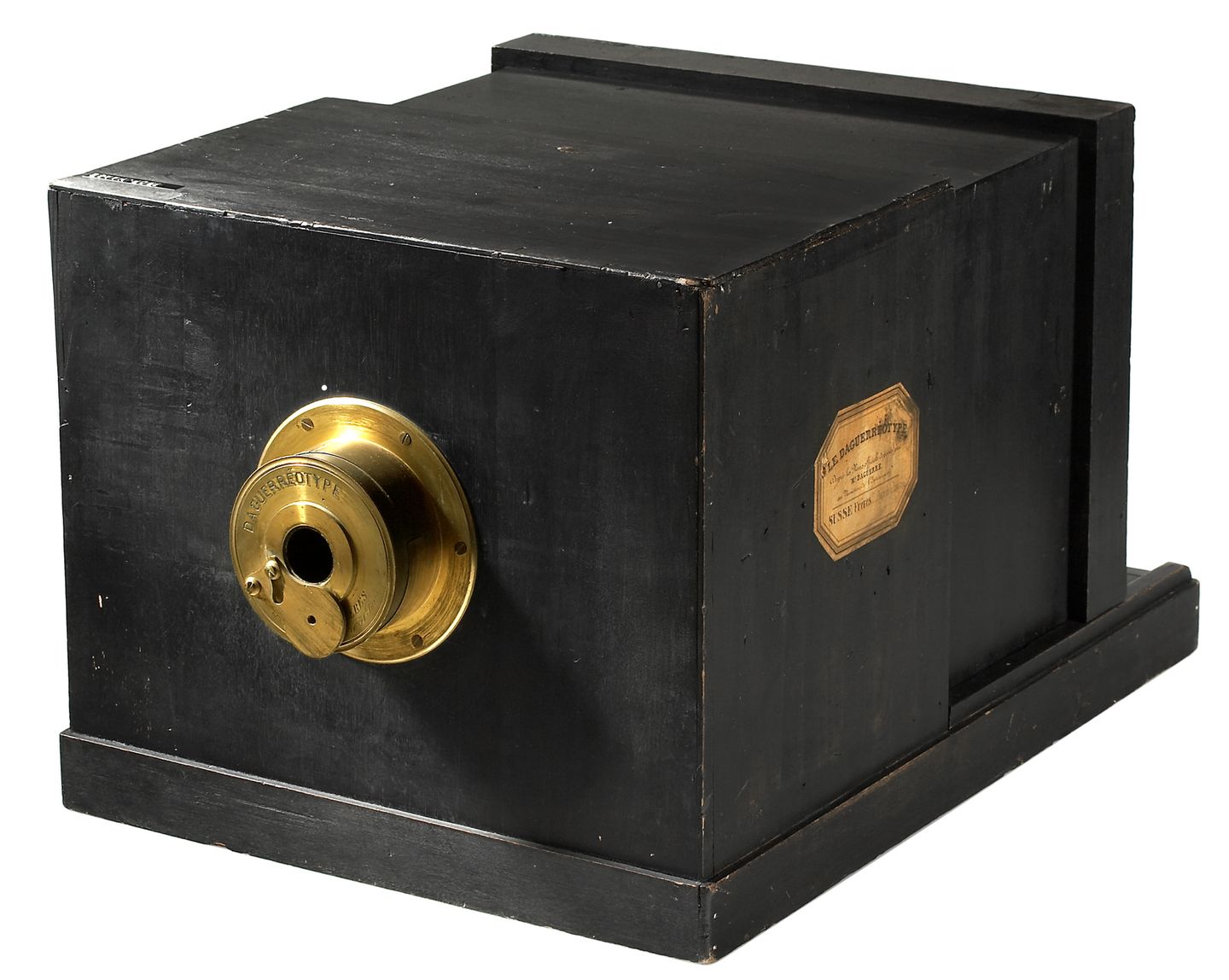
A susse Frères daguerreotype camera from 1839 — the first commercially manufactured camera, built to Daguerre's specifications and sold to the Public the same year the process was announced. Liudmila & Nelson, Public domain, via Wikimedia Commons
The announcement on August 19, 1839, didn't just introduce a new technology. It introduced a new way of thinking about reality. If you could capture what you saw, you could share it, study it, and compare it. Photography became the foundation for scientific observation, legal evidence, journalism, and visual culture. The daguerreotype was the first step toward a world where images are as common as words, where every moment can be recorded, and where memory is no longer the only way to hold on to the past.
studio / on-this-day / Aug 19