studio / on-this-day / Aug 15
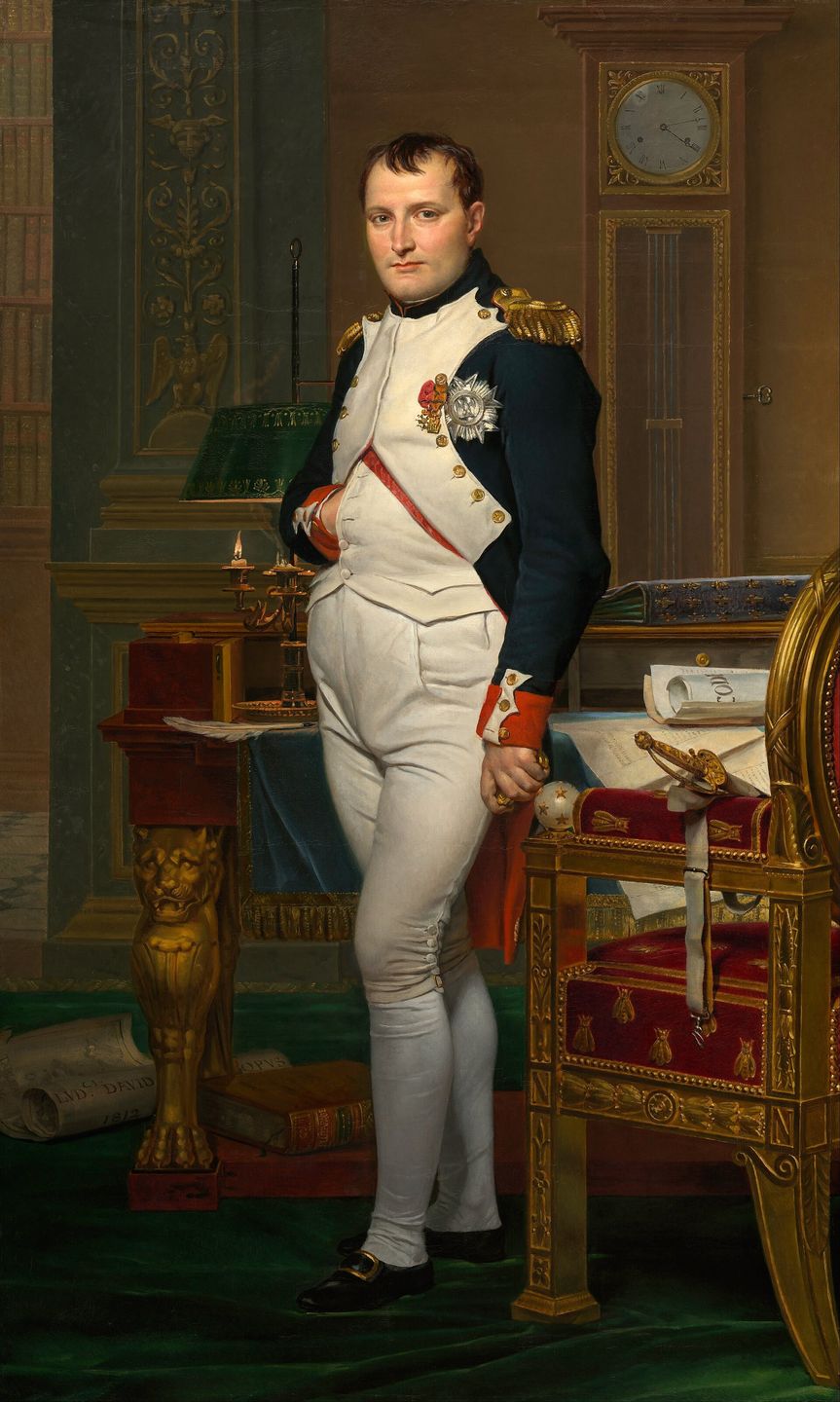
Napoleon Bonaparte in his study at the tuileries, Jacques-Louis David, 1812. Jacques-Louis David, Public domain, via Wikimedia Commons
The Emperor Who Redesigned Europe
On this day in 1769 — Napoleon Bonaparte was born, and would redraw the borders of Europe and rewrite its laws in his own image.
3 min read
Napoleon Bonaparte was born on August 15, 1769, in Ajaccio, Corsica, a small island that had only become part of France the year before. He was an outsider, Corsican in a French world, speaking with an accent he never lost. He rose through the military ranks during the chaos of the French Revolution, became a general at 24, and seized control of France in a coup at 30. By 35, he had crowned himself Emperor. By 40, he controlled most of Europe. His life was a case study in systems thinking applied to conquest, governance, and control.
Napoleon was a military genius, but his real innovation was logistics. He understood that wars are won by supply lines, communication, and speed. He reorganized the French army into self-sufficient corps that could move independently and converge on a battlefield from multiple directions. This allowed him to fight larger armies by concentrating force at decisive points faster than his enemies could respond. His campaigns were exercises in coordination and timing. He didn't just win battles. He designed systems that made winning inevitable.
But Napoleon's most lasting contribution was not military. It was legal. In 1804, he established the Napoleonic Code, a comprehensive legal system that replaced the patchwork of feudal laws, local customs, and ecclesiastical rules that had governed France. The Code was rational, secular, and universal. It codified equality before the law, protected property rights, and eliminated hereditary privilege. It was the operating system for a modern state. And it spread. As Napoleon conquered Europe, he imposed the Code in occupied territories. Long after his empire collapsed, the legal principles remained. Over 70 countries still base their civil law on the Napoleonic Code.
Napoleon also standardized measurements, reformed education, centralized government, and reorganized the tax system. He built roads, bridges, and canals. He established the Bank of France and stabilized the currency. He appointed people based on merit rather than birth, creating a meritocratic bureaucracy that survived his downfall. He was not a democrat. He was an autocrat. But he was an efficient one. He treated governance as an engineering problem and applied systematic solutions at national scale. The France he left behind was a different country than the one he inherited.
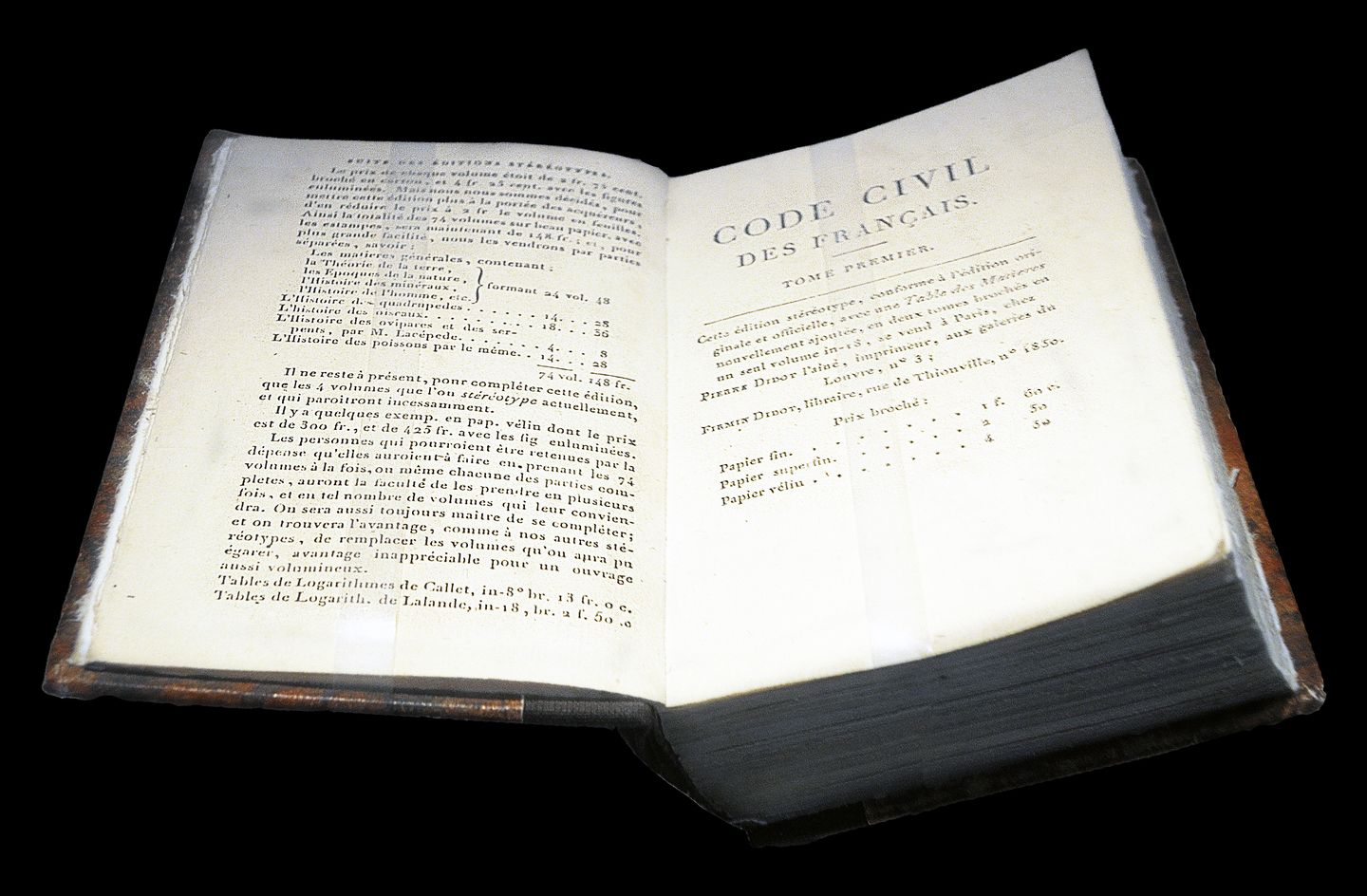
A copy of the Code civil des Français, Napoleon's legal Code of 1804, which replaced the patchwork of feudal laws across France and remains the basis for civil law in over 70 countries. DerHexer, CC BY-SA 4.0, via Wikimedia Commons
His ambition eventually outran his capacity. The invasion of Russia in 1812 was a catastrophe. The retreat from Moscow destroyed his army. Coalition forces defeated him in 1814 and exiled him to Elba. He escaped, returned to power for the Hundred Days, and was finally defeated at Waterloo in 1815. He spent the last six years of his life imprisoned on the island of Saint Helena, dictating his memoirs and rewriting his legacy. He died in 1821, at 51, of stomach cancer, far from the empire he had built.
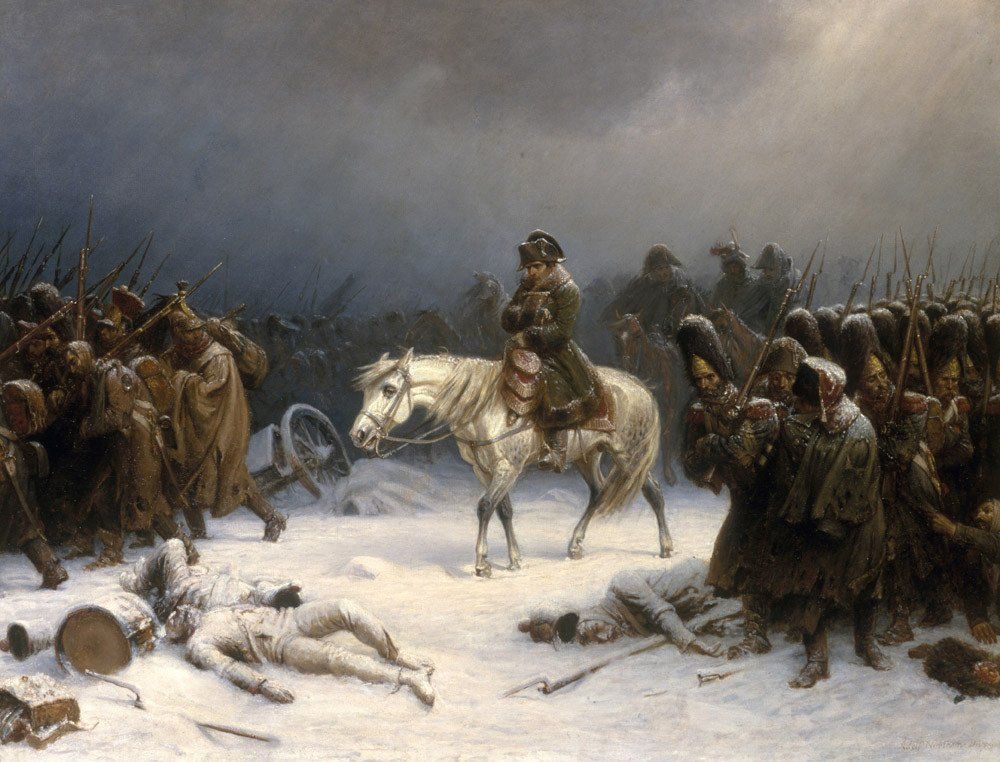
Napoleon's retreat from Moscow, adolph Northen, late 19th century. The catastrophic 1812 Russian campaign destroyed his army and began the collapse of his empire. Adolph Northen, Public domain, via Wikimedia Commons
Napoleon's legacy is contradictory. He spread Enlightenment ideals of legal equality and rational governance, but imposed them through authoritarian rule and military conquest. He dismantled feudalism, but created a cult of personality. He abolished serfdom in territories he controlled, but reinstated slavery in French colonies. He championed merit, but crowned himself Emperor. He was a product of the French Revolution and its gravedigger. He was a liberator and a tyrant. He redesigned Europe, but the design did not last. What survived was not his empire, but the systems he built: the laws, the institutions, the infrastructure. Those are still here, embedded in the structure of modern states.
Systems outlive their designers. Napoleon understood that. He built for permanence, not just victory. Borders change. Governments fall. Empires collapse. But a well-designed legal code, a standardized measurement system, a rational bureaucracy, these persist. They become the invisible architecture of daily life. Napoleon's battlefield victories are studied in military academies. His legal code is studied in law schools. The battles are history. The code is still in force. That is the difference between conquest and design. One is temporary. The other reshapes everything that comes after.
studio / on-this-day / Aug 15