studio / on-this-day / Aug 13
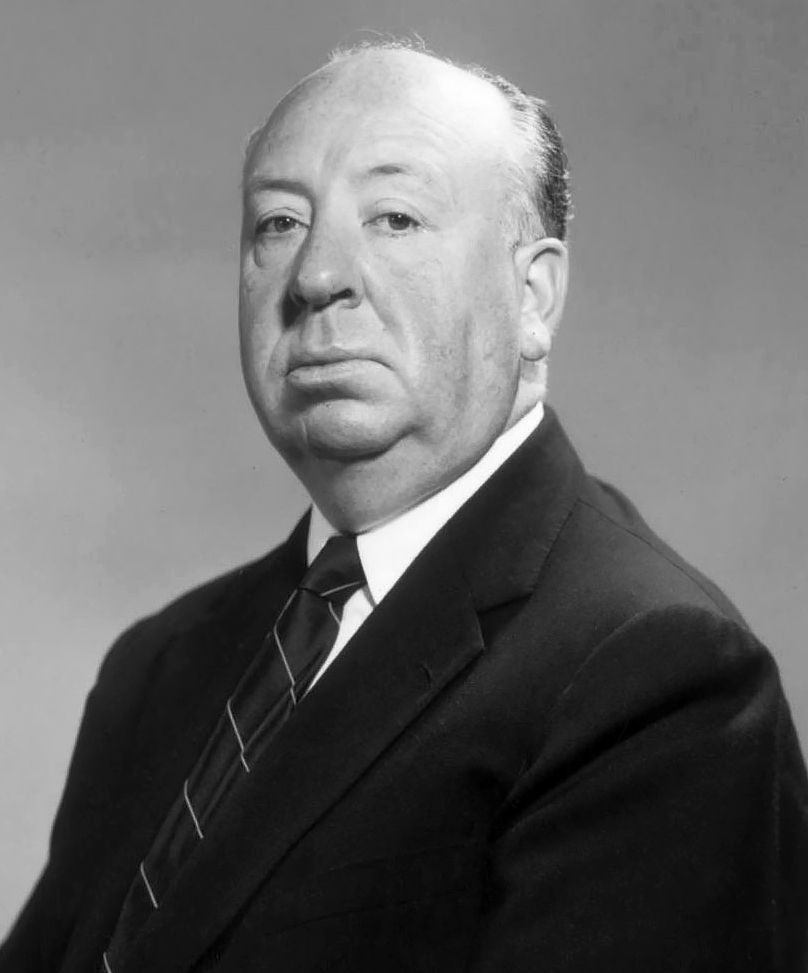
Alfred Hitchcock. Ante Brkan, Public domain, via Wikimedia Commons
The Architect of Anxiety
On this day in 1899 — Alfred Hitchcock was born, and would engineer suspense and dread with the calm precision of a draftsman.
2 min read
Alfred Hitchcock was born on August 13, 1899, in London. He would grow up to become the most influential filmmaker in the history of suspense, a director who understood that fear is not what you show, but what you withhold. His films were designed like machines, constructed with precision to elicit specific emotional responses at specific moments. He called it pure cinema, storytelling through image and sound rather than dialogue. Every frame was planned. Every cut was deliberate. Hitchcock did not capture reality. He engineered it.
His method was meticulous. He storyboarded entire films before shooting, sketching every angle, every movement. By the time cameras rolled, the movie already existed in his mind. The actors were not collaborators but components. The sets were not spaces but instruments. He famously said that actors should be treated like cattle, a statement that horrified some but revealed his approach. For Hitchcock, performance was just one element in a larger system. The real art was in the editing, the music, the pacing. The way a shot lingered. The moment a sound dropped out. These were the tools of suspense.
Hitchcock understood the difference between shock and suspense. Shock is immediate and short-lived. A bomb explodes under a table, the audience jumps. But suspense is prolonged. The audience knows the bomb is there. They see the characters talking, unaware. The tension builds because the audience has information the characters lack. Time stretches. Every second becomes unbearable. Hitchcock weaponized anticipation. He made waiting into an art form.
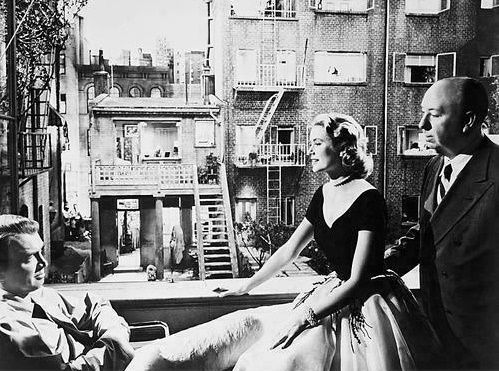
Hitchcock with James Stewart and Grace Kelly on the set of Rear Window (1954), where the entire film was engineered around a single confined point of view. Paramount Pictures, Public domain, via Wikimedia Commons
His influence extends far beyond film. Hitchcock invented a visual grammar that video games, television, and advertising still use. The Vertigo shot, a simultaneous zoom and dolly that distorts space, conveys psychological disorientation. The MacGuffin, an object that drives the plot but ultimately doesn't matter, focuses attention on character and tension rather than logic. The cameo, his brief appearance in each of his films, turned the director into a recognizable brand. Hitchcock understood that cinema was a designed experience, and he designed himself into it.
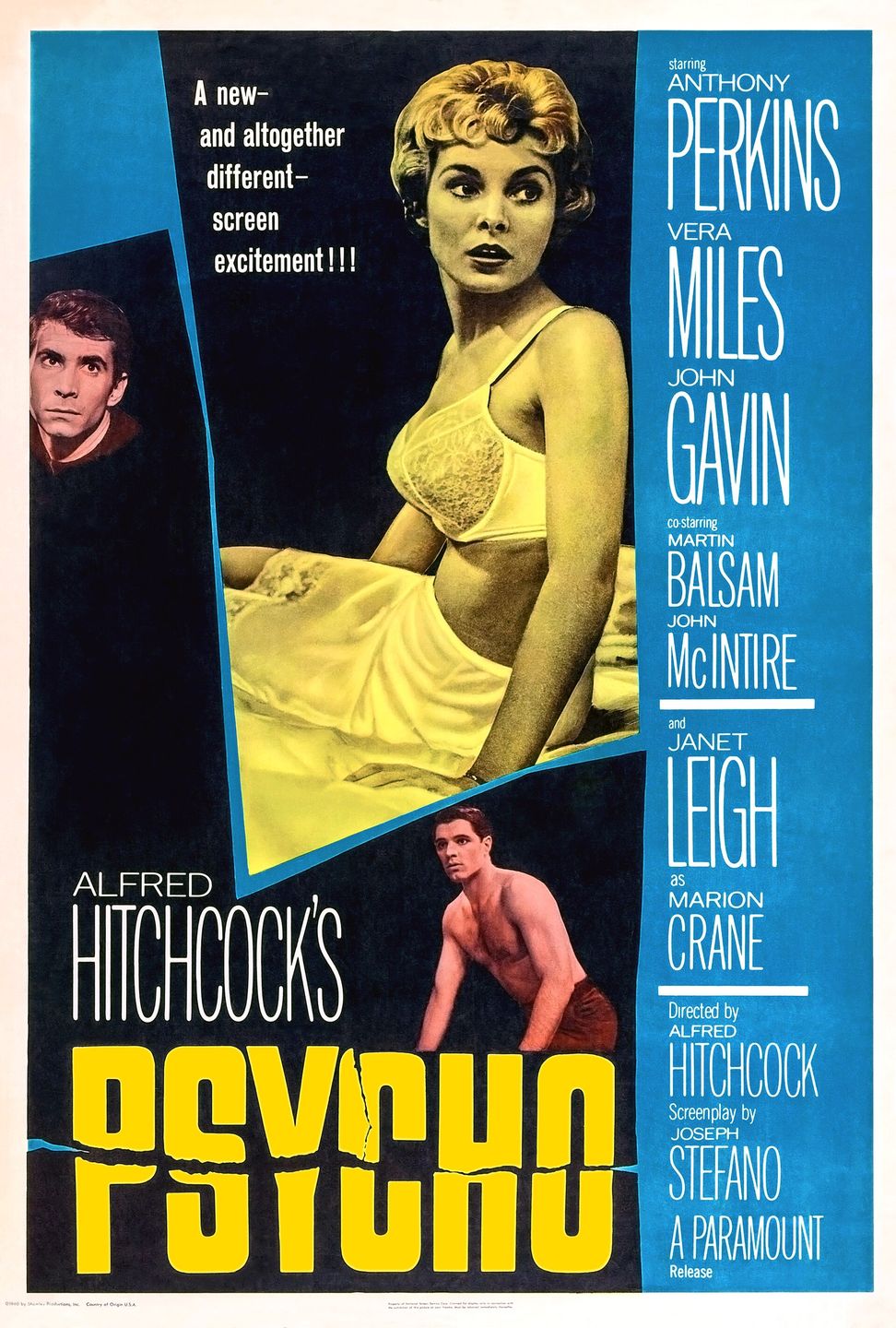
Theatrical poster for Psycho (1960), one of Hitchcock's most influential films, designed to work as a piece of graphic communication as precisely as the film itself. Designed by Macario Gómez Quibus. "© Shamley Productions, Inc.", Public domain, via Wikimedia Commons
He made over 50 films, including Psycho, Rear Window, Vertigo, North by Northwest, and The Birds. Each one was an experiment in control. How much information to reveal. How long to hold a shot. When to break the rules. Hitchcock's work is proof that design is not decoration. Design is structure. It is the blueprint that determines how a thing functions, how it feels, how it moves through time. Every filmmaker since has worked in the language Hitchcock perfected. Fear is design. Suspense is architecture. And Alfred Hitchcock was the master builder.
studio / on-this-day / Aug 13