studio / on-this-day / May 10
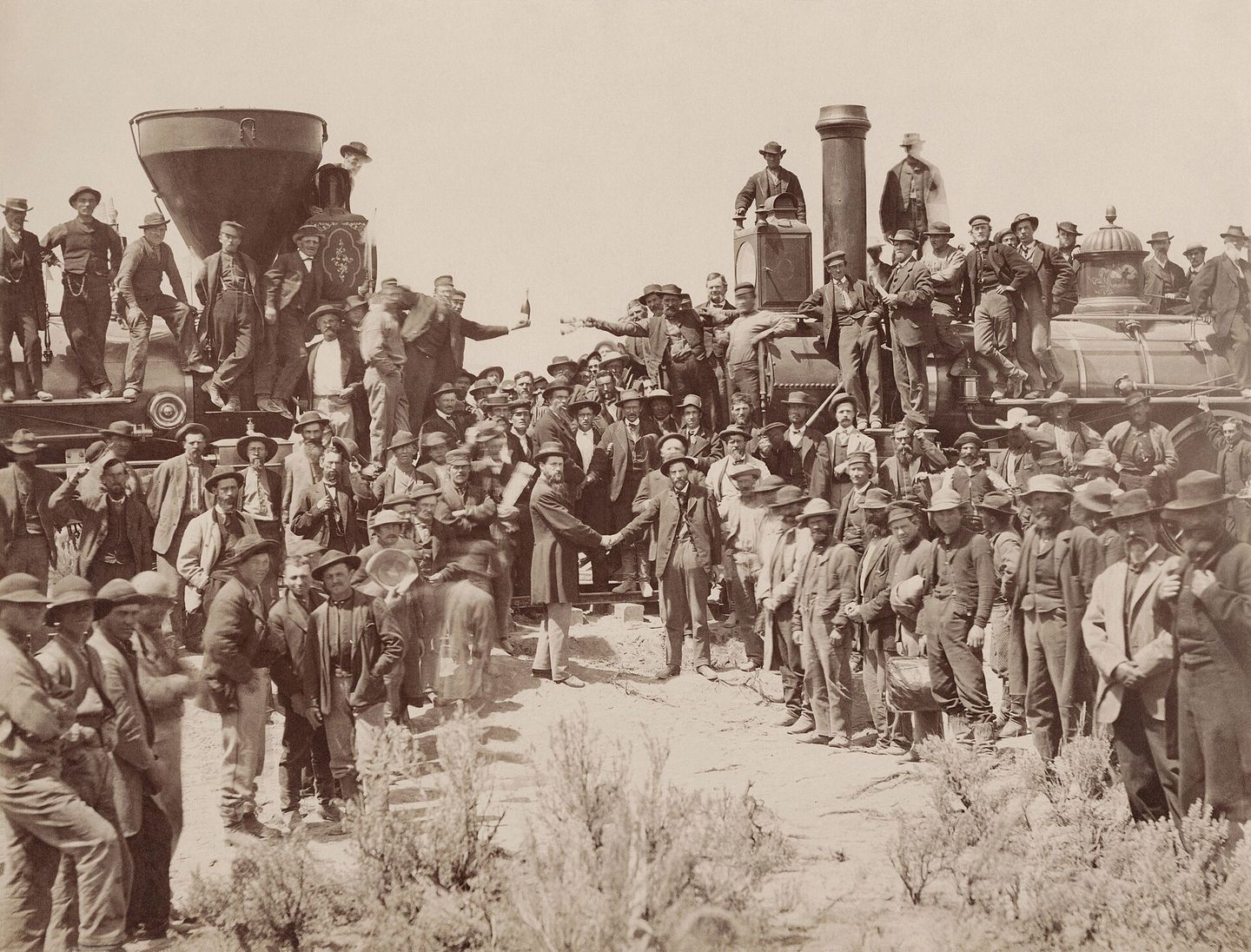
East and west crews shake hands at the completion of the transcontinental railroad, Promontory Summit, Utah, May 10, 1869. Andrew J. Russell / Adam Cuerden, Public domain, via Wikimedia Commons
The Golden Spike
On this day in 1869 — a golden spike joined the transcontinental railroad, and two American coasts were suddenly days apart instead of months.
3 min read
On May 10, 1869, at Promontory Summit, Utah, two railroad lines met. The Central Pacific had built eastward from California. The Union Pacific had built westward from Omaha. When the final rail was laid, Leland Stanford, president of the Central Pacific, swung a silver hammer and drove a golden spike into a pre-drilled hole. Telegraph lines carried the sound of the hammer strike across the country. Celebrations erupted in cities from coast to coast. The transcontinental railroad was complete.
The project had taken six years and cost over $100 million, financed largely by government bonds and land grants. Over 20,000 workers, many of them Chinese and Irish immigrants, laid 1,776 miles of track across plains, deserts, and mountains. The work was brutal. Temperatures ranged from freezing winters in the Sierra Nevada to scorching summers on the Great Plains. Workers blasted tunnels through granite using nitroglycerin. They built trestles over canyons and graded roadbeds across marshland. Hundreds died from accidents, disease, and exposure.
The Chinese laborers, who made up the majority of the Central Pacific workforce, were paid less than their white counterparts and assigned the most dangerous tasks. They worked with explosives, hung from cliffs in wicker baskets to place charges, and cleared avalanches. They lived in camps along the line, often in makeshift shelters. When the railroad was finished, many were laid off immediately and left to find their own way home. The iconic photograph of the golden spike ceremony includes railroad executives and workers, but not a single Chinese laborer.
The railroad transformed the United States. Before 1869, traveling from New York to California took months by wagon or ship. After the railroad, the journey took a week. Goods could be shipped across the continent in days. Agriculture, mining, and manufacturing expanded rapidly. Cities along the route grew from outposts into hubs. The railroad was not just transportation infrastructure. It was an economic engine that reorganized the entire geography of the country.
It also accelerated the destruction of Native American societies. The railroad brought settlers, soldiers, and industrial-scale buffalo hunting to the Great Plains. Tribes that had negotiated treaties and maintained control of their lands found themselves encircled and outnumbered. The U.S. government used the railroad to move troops quickly, making resistance harder and more costly. The same technology that connected the coasts severed the lifelines of indigenous communities.
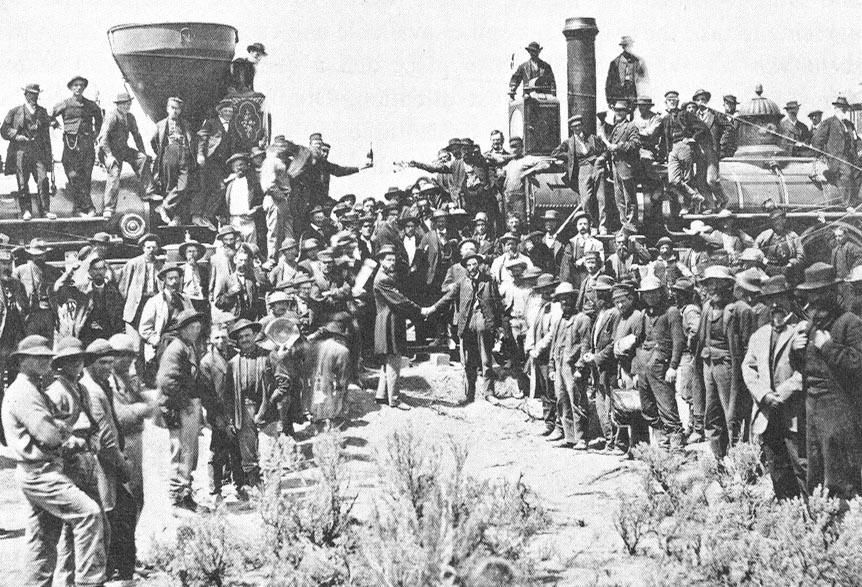
The golden spike ceremony at Promontory, Utah, May 10, 1869, showing the two locomotives meeting. Andrew J. Russell, Public domain, via Wikimedia Commons
The golden spike itself was symbolic, not functional. It was removed shortly after the ceremony and replaced with an ordinary iron spike. The golden one was engraved with the names of railroad directors and presented as a commemorative object. The real work had been done by the thousands of laborers whose names were not recorded. The spike was theater. The rail bed was infrastructure.
What the transcontinental railroad demonstrated was that large-scale systems could be built at national scale if the incentives were aligned. The government provided land and capital. Private companies provided labor and logistics. The result was a network that lasted over a century and reshaped the economy. The cost was borne by workers who were underpaid, by communities that were displaced, and by environments that were altered permanently.
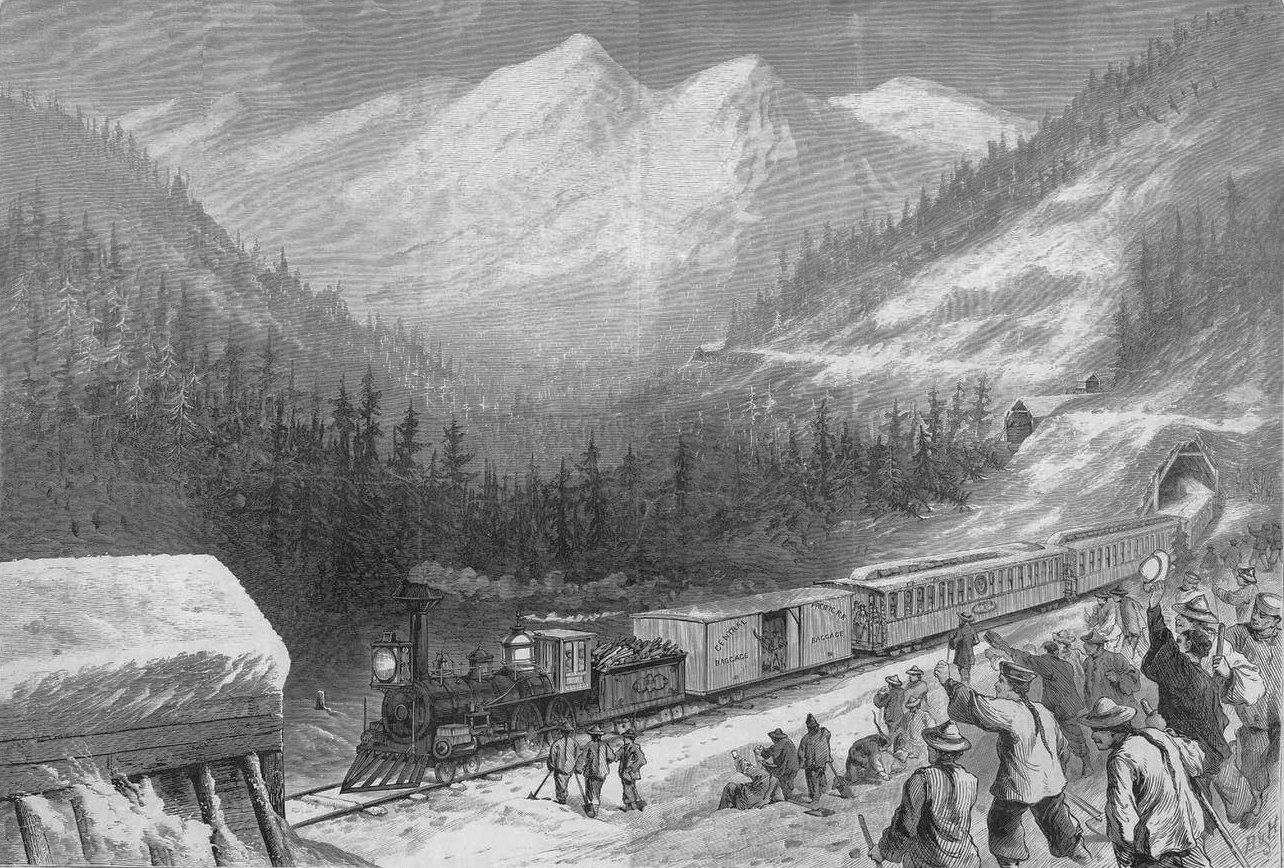
Chinese laborers building the Central Pacific line through the Sierra Nevada, where the most dangerous work fell to them. "B&H", illustrator; sketch by Joesph Becker (1841-1910), Public domain, via Wikimedia Commons
Today, the golden spike is in a museum. The railroad still runs, though much of the original route has been replaced or abandoned. What remains is the proof that infrastructure is never just engineering. It is a set of choices about who benefits, who pays, and what gets built. The transcontinental railroad connected two coasts. It also divided a continent.
studio / on-this-day / May 10