studio / on-this-day / Mar 9
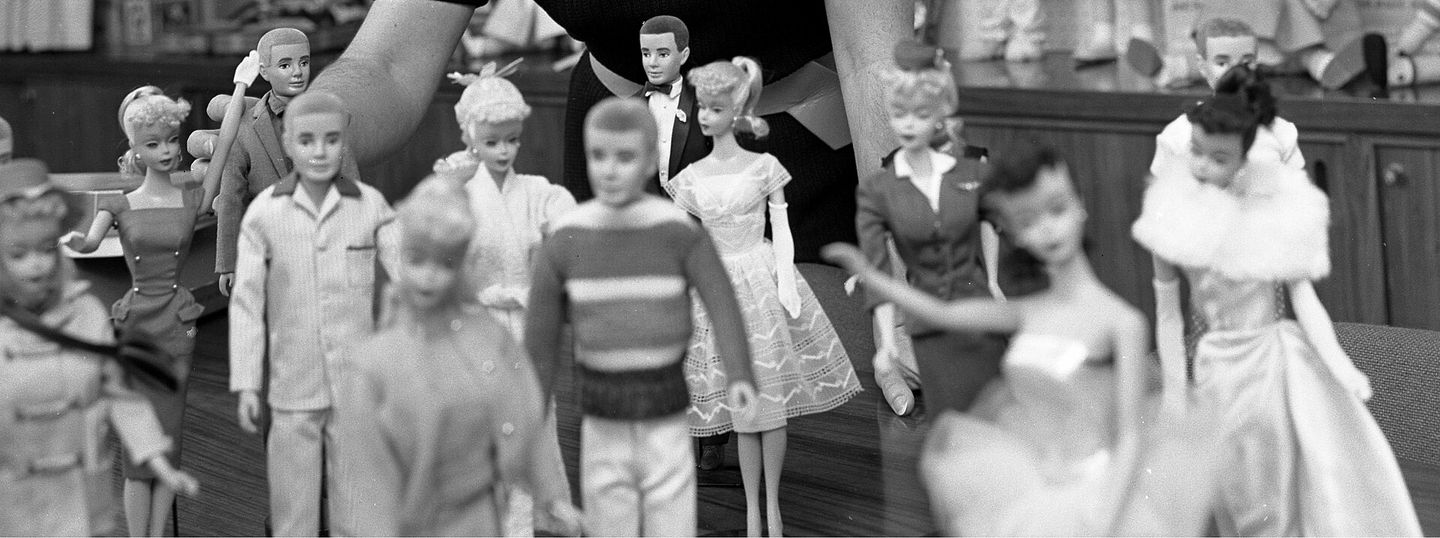
Early Barbie dolls, circa 1960s. CC BY 4.0, via Wikimedia Commons
Plastic, Posture, and Identity
On this day in 1959 — the Barbie doll debuted at a toy fair, a small piece of industrial design that would carry an outsized cultural load.
3 min read
On March 9, 1959, Ruth Handler introduced the Barbie doll at the American International Toy Fair in New York. The doll was 11.5 inches tall, made of molded plastic, and had an adult body. This was radical. At the time, nearly all dolls marketed to children were baby dolls, designed to teach girls maternal caregiving. Barbie was different. She had a career wardrobe, high heels, and articulated joints. She was not a baby to be cared for. She was an aspirational figure, a miniature adult built for role-play beyond motherhood.
Handler got the idea while watching her daughter Barbara play with paper dolls. Barbara preferred the adult-shaped dolls to the baby ones, creating scenarios where the dolls had jobs, went on dates, and lived independent lives. Handler realized there was no three-dimensional toy that enabled this kind of play. She pitched the concept to Mattel, the company she had co-founded with her husband. The male executives were skeptical. They thought parents would never buy a doll with breasts. Handler went ahead anyway.
The design was inspired by a German doll called Bild Lilli, originally marketed as a gag gift for adult men. Lilli was based on a comic strip character, a working woman with a sharp wit and a suggestive wardrobe. Handler bought a Lilli doll during a trip to Europe and brought it back to her designers. They modified the proportions, softened the features, and redesigned the face to look less overtly sexual. Barbie became a sanitized, Americanized version of Lilli, transformed from adult novelty into childhood toy.
The first Barbie wore a black-and-white striped swimsuit, cat-eye sunglasses, and ponytail. She came in blonde or brunette. Her face had arched eyebrows, red lips, and a sideways glance. The design was specific, polished, and intentionally aspirational. Barbie looked like the women in fashion magazines, not like the children who would play with her. This was the point. She represented a future self, a projection of what a girl might become.
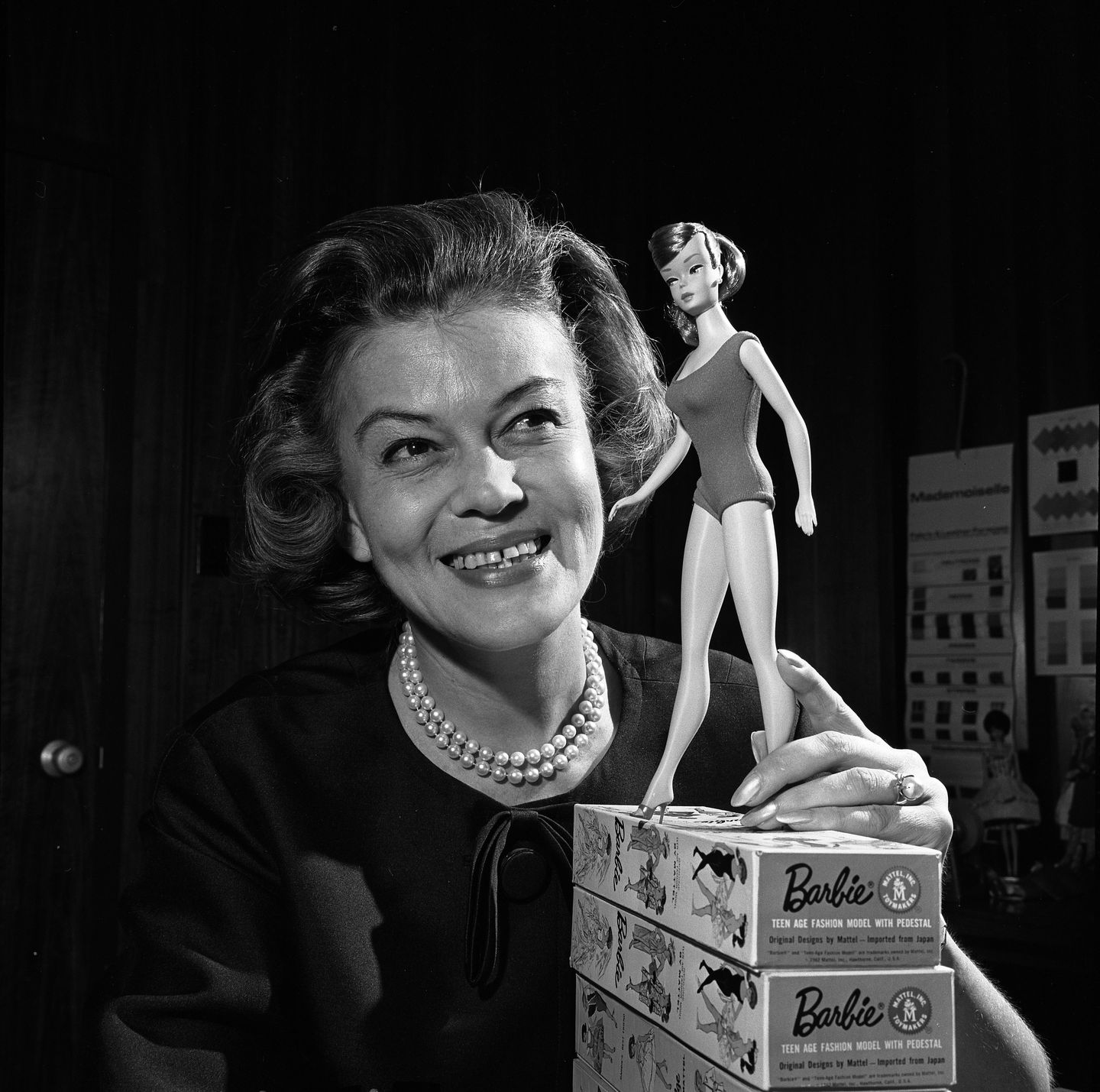
Charlotte johnson, Barbie's fashion designer, with a 1965 Barbie doll. Nelson Tiffany, Los Angeles Times, CC BY 4.0, via Wikimedia Commons
Barbie's body was anatomically impossible. Her proportions, if scaled to human size, would make it physically difficult to stand or walk. Critics have argued for decades that the doll promotes unrealistic beauty standards. Defenders point out that Barbie is a fashion doll, designed to display clothing at small scale, not to represent average human anatomy. The tension between these perspectives has never been resolved. Barbie is both a design object optimized for costume display and a cultural symbol carrying weight far beyond her plastic form.
What made Barbie a commercial success was not the doll itself but the system around it. Mattel sold Barbie as a platform. New outfits, accessories, and playsets were released constantly. Barbie had careers: astronaut, doctor, teacher, fashion designer. She had vehicles, houses, and an entire social circle of friends and family. The business model was not one-time purchase but continuous engagement. A child who owned Barbie would want more Barbie. The toy became a ecosystem.
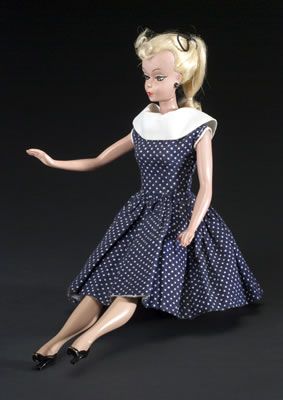
The German Bild Lilli doll, the adult novelty Toy Handler reworked into Barbie. OGL 3, via Wikimedia Commons
Barbie also became a canvas for cultural change. As social attitudes shifted, so did the doll. Mattel introduced dolls of different ethnicities, body types, and professions. Wheelchair Barbie, President Barbie, Firefighter Barbie. Each iteration responded to criticism, market demand, or both. The doll has been simultaneously criticized for reinforcing stereotypes and praised for expanding representation. She is a mass-produced object, but also a mirror. Whatever people want to see in her, they do.
Over a billion Barbie dolls have been sold since 1959. The design has been refined, updated, and contested, but the core concept remains. Barbie is a figure of transformation, a tool for imagining different selves. She is industrial design at scale, a plastic object produced in factories and shipped globally. But she is also something more abstract: a space for projection, a form that holds whatever meaning the player assigns to it. That flexibility, more than any specific design choice, is what has kept her relevant for over six decades.
studio / on-this-day / Mar 9