studio / on-this-day / Oct 14
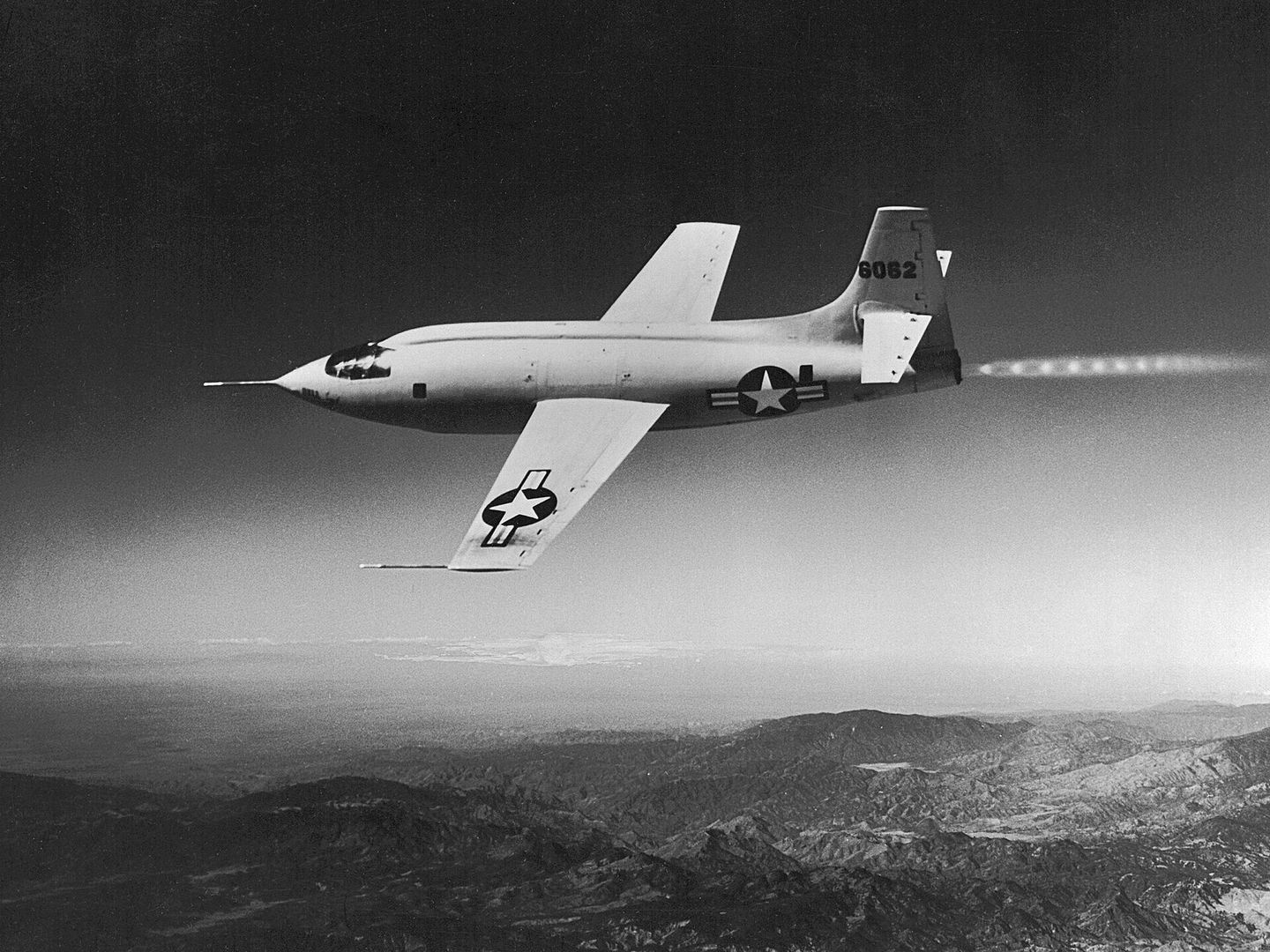
The Bell x-1 in flight, the aircraft that first broke the sound barrier in 1947. NASA, Public domain, via Wikimedia Commons
Faster Than Sound
On this day in 1947 — Chuck Yeager broke the sound barrier in the Bell X-1, a plane he had named Glamorous Glennis.
3 min read
On October 14, 1947, Captain Charles "Chuck" Yeager climbed into the cockpit of the Bell X-1, a rocket-powered aircraft shaped like a .50 caliber bullet. He was nursing two broken ribs from a horseback riding accident two days earlier, a fact he kept secret from his superiors. At 45,000 feet, dropped from the belly of a B-29 bomber, Yeager ignited the X-1's rocket engine and accelerated into history. At Mach 1.06, he became the first person to fly faster than the speed of sound.
The sound barrier was not a physical wall. It was an aerodynamic threshold. As an aircraft approaches the speed of sound, air compresses in front of it, creating shock waves that buffet the plane and disrupt airflow. Conventional aircraft experienced violent shaking, loss of control, and structural failure near Mach 1. Many pilots died trying. Some engineers believed supersonic flight was impossible, that the forces involved would tear any aircraft apart. Yeager proved them wrong.
The X-1 was designed specifically to break the sound barrier. Its rocket engine, fueled by liquid oxygen and alcohol, could generate 6,000 pounds of thrust, enough to push the plane past Mach 1. The airframe was reinforced to withstand the stress. The wings were thin and straight, designed to minimize drag. The cockpit was cramped, the fuel volatile, and the margin for error nonexistent. Yeager flew it anyway.
The moment he broke the sound barrier was anticlimactic. The needle on the Mach meter flickered past 1.0, and the buffeting stopped. The ride smoothed out. On the ground, observers heard a double boom, the sonic shockwave created by the aircraft compressing air faster than sound could propagate. It was the first time a human-made object had produced that sound in controlled flight. Yeager radioed back: "I'm still here."
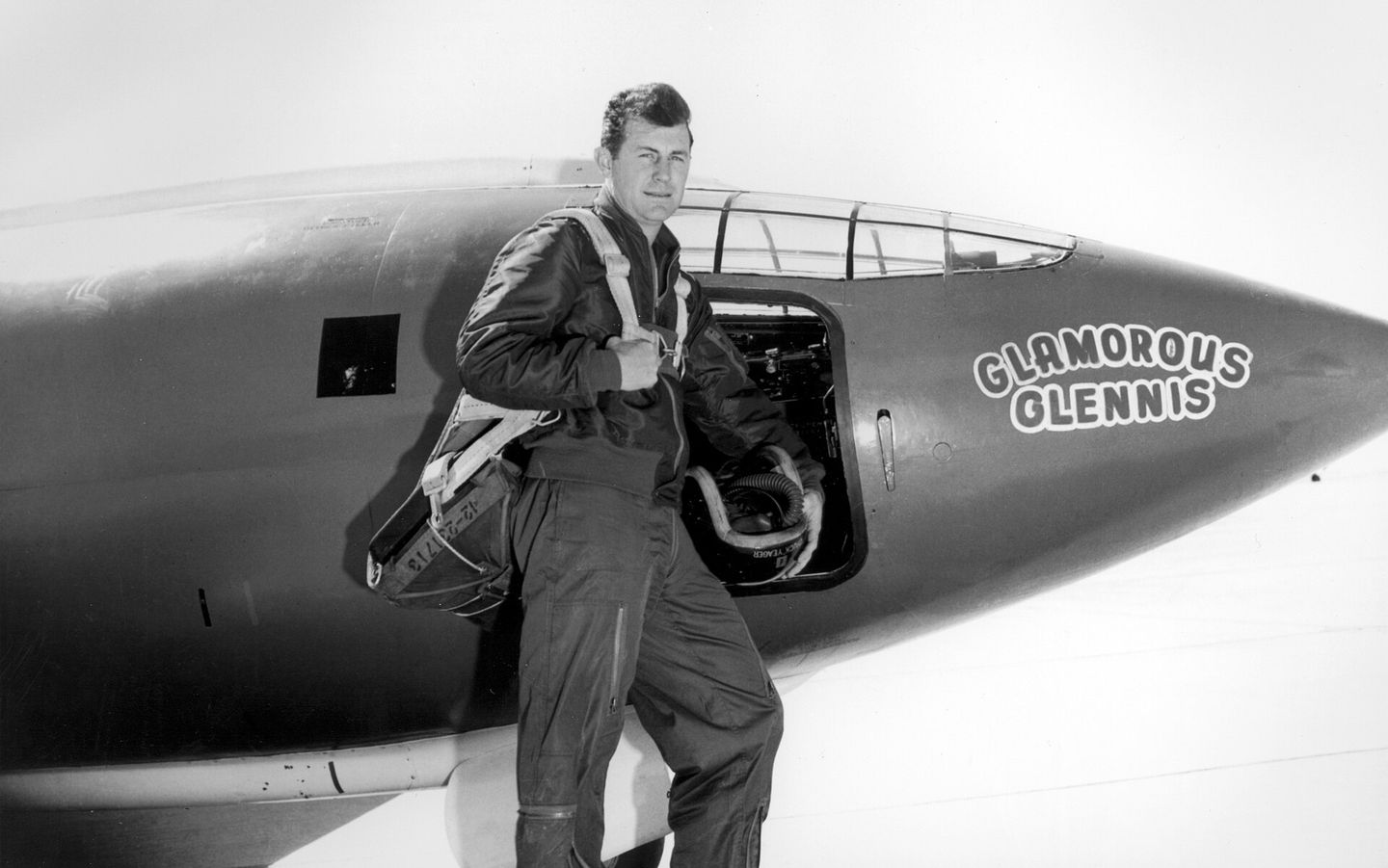
Chuck Yeager, the test pilot who first broke the sound barrier on October 14, 1947. U.S. Air Force photo, Public domain, via Wikimedia Commons
The flight was classified. The U.S. Air Force did not publicly announce the achievement until 1948. By then, the X-1 program had moved on to faster speeds and higher altitudes. Yeager himself would go on to fly at Mach 2.44, more than twice the speed of sound. The sound barrier, once thought insurmountable, became routine.
Breaking the sound barrier opened the door to supersonic flight. Within a decade, military jets routinely flew faster than Mach 1. In 1976, the Concorde began commercial supersonic passenger service, cutting transatlantic flight times in half. The Concorde was retired in 2003, a victim of high costs, limited range, and a fatal crash. But the technology it represented remains, embedded in military aircraft, spacecraft, and experimental prototypes.
The X-1 also demonstrated the value of incremental testing. The aircraft made 77 flights before Yeager's historic run, each pushing slightly faster, slightly higher, gathering data on how the plane behaved at different speeds. This methodical approach, testing at the edge of performance and then pushing further, became standard practice for experimental flight programs. The same philosophy guided the development of the space shuttle, the SR-71 Blackbird, and every other aircraft that pushed the boundaries of what was possible.
Yeager's flight was a triumph of engineering, piloting skill, and calculated risk. But it was also the product of wartime research. The X-1 program was funded by the military to develop faster fighters and bombers. The same technology that enabled Yeager's flight enabled weapons systems designed to deliver destruction at supersonic speeds. This is the pattern of aerospace development: military needs drive innovation, and civilian applications follow.
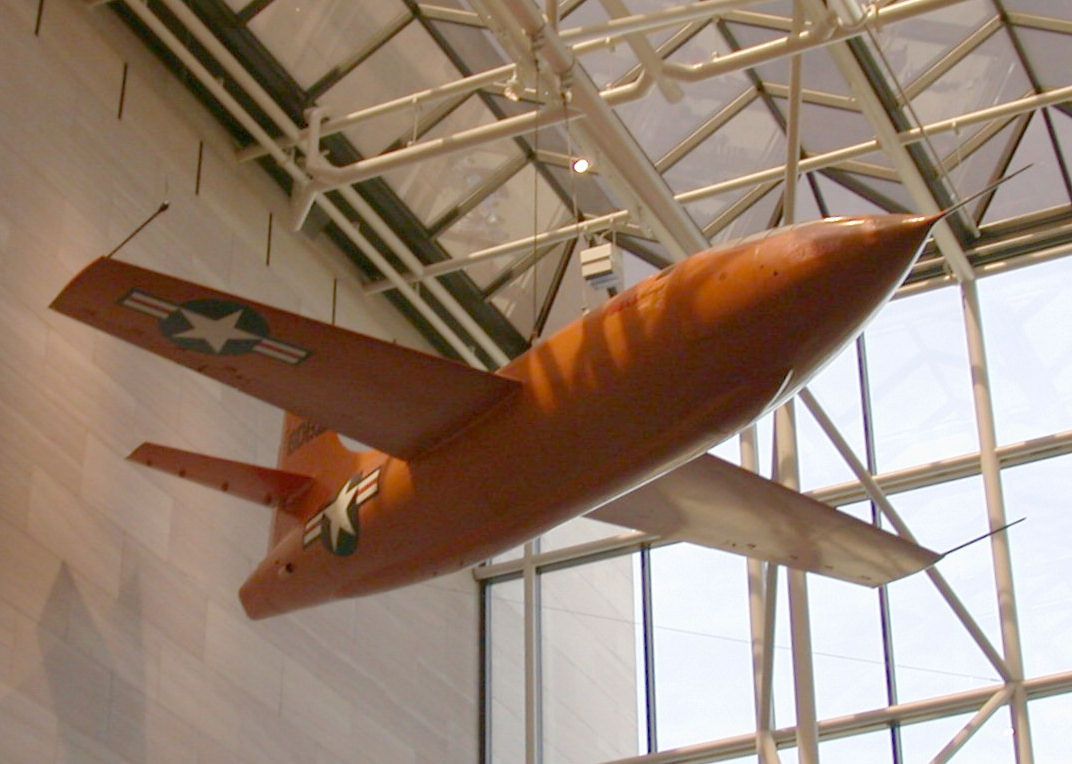
Glamorous Glennis on display at the Smithsonian National Air and Space Museum. Unbekannt (via burningwell.org), CC0, via Wikimedia Commons
Chuck Yeager died in 2020 at the age of 97. The Bell X-1, Glamorous Glennis, named after his wife, hangs in the Smithsonian National Air and Space Museum. October 14, 1947, is the day humans learned that the sound barrier was not a wall but a threshold. What seemed impossible became routine. What seemed like a limit turned out to be a starting point. Yeager flew faster than sound not because it was easy, but because someone needed to prove it could be done. The rest was just engineering.
studio / on-this-day / Oct 14